
Cintia Dicker is a Brazilian fashion model known for commercial campaigns, catalog work, and runway bookings that depend on a bright, high-impact photographic presence. Born in Campo Bom, Rio Grande do Sul, and of German descent, she built a career in the mainstream fashion and beauty market rather than in a single niche, appearing in work for brands such as Ann Taylor, Macy’s, L’Oréal, American Eagle Outfitters, and Yves Saint Laurent.
Stories from Cintia Dicker
1 story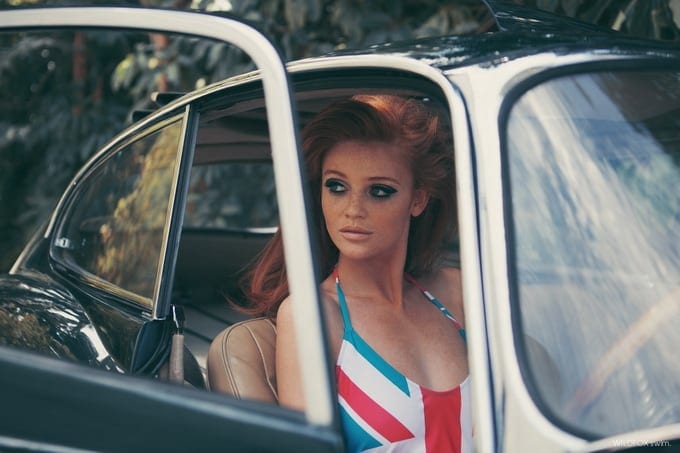
About Cintia Dicker
| Field | Detail |
|---|---|
| Born | December 6, 1986 |
| Birthplace | Campo Bom, Rio Grande do Sul, Brazil |
| Nationality | Brazilian |
| Known for | Fashion modeling, advertising campaigns, and catalog work |
| Notable clients | Ann Taylor, Macy’s, L’Oréal, American Eagle Outfitters, Yves Saint Laurent, Victoria’s Secret, H&M, Gap, bebe stores, Lands’ End |
Read the full overviewWhat kind of model is Cintia Dicker?, Where did she come from?, Why did brands hire her?, How does her work appear in practice?
What kind of model is Cintia Dicker?
Cintia Dicker is the kind of model used when a brand needs a face that can carry both commercial clarity and fashion polish. Her portfolio includes beauty, casualwear, lingerie, and retail catalog work, which means she has worked across different image systems: glossy ad campaigns, seasonal lookbooks, and mass-market brand photography. That range matters because it depends less on a single editorial persona and more on adaptability in front of the camera.
Models like Dicker are often chosen for consistency. Their job is not to dominate the image with performance, but to give shape to the product, clothing, or beauty message. In practice, that can mean clean lighting, controlled poses, and a face that reads clearly at many sizes, from magazine spreads to in-store posters and digital banners.
Where did she come from?
Dicker was born in Campo Bom, a city in southern Brazil in Rio Grande do Sul. Her German descent places her within one of the many European-descended communities that have long shaped the cultural makeup of the region. That background is part of her public profile, but her career was built through the international fashion system rather than through a local scene alone.
Brazil has produced many globally visible models because the country has a large, well-connected modeling industry and a strong export pipeline to New York, Milan, Paris, and major commercial markets. Dicker’s career fits that pattern: she moved into the broader fashion and advertising circuit, where Brazilian models have often been in demand for their versatility, strong screen presence, and ease in both editorial and commercial work.
Why did brands hire her?
Brands hire models like Cintia Dicker for reliability, image coherence, and cross-market appeal. Her work for Ann Taylor, Macy’s, L’Oréal, American Eagle Outfitters, and Yves Saint Laurent shows that she could move between categories with very different visual languages. A beauty campaign, a high-street clothing catalog, and a luxury house all ask for different styling, makeup, and pacing, but the model still has to hold the image together.
Her catalog work for Victoria’s Secret, H&M, Gap, bebe stores, and Lands’ End points to another important part of modeling: scale. Catalog and retail images must be easy to read, repeatable, and persuasive. The pose, expression, and body language are often designed to help clothing fit visible in a straightforward way, which makes these assignments central to commercial fashion even when they receive less attention than runway work.
How does her work appear in practice?
In practice, a campaign with Dicker would usually be shaped around the product first. For a fashion brand, that means clothing silhouette, fit, and movement; for a beauty brand, it means skin, hair, and facial structure under controlled light. The model’s presence has to stay legible after cropping, retouching, and layout, so the photographs are built to survive reproduction across print, web, and retail settings.
The reference to a Wildfox advertising campaign places her in the language of youth-oriented fashion marketing, where the body and wardrobe are styled to feel casual but highly art-directed. That kind of work depends on mood as much as garment display. Models like Dicker help create that mood through expression, stance, and physical ease, while the production team handles styling, set design, photography, and post-production.
Frequently Asked Questions
Is Cintia Dicker mainly a runway model or a commercial model?
Her best-known work sits closer to commercial and campaign modeling than to runway exclusivity. She has appeared in advertisements and catalogs for major brands, which is a strong sign of a career built across retail and beauty image-making. That does not exclude runway or editorial work, but it shows where her visibility has been strongest.
Why is her Brazilian background often mentioned?
Nationality matters in modeling because the industry is organized through international casting networks, and certain countries become known for producing exportable talent. Brazil has long been one of those countries. Dicker’s background helps place her within that wider modeling circuit, but it does not define the content of her work on its own.
What makes catalog modeling different from advertising campaigns?
Catalog modeling is usually more straightforward and product-centered. The aim is to show clothing or accessories clearly and consistently, often in a format that supports retail decisions. Advertising campaigns are more stylized and atmospheric, using a model to create a mood or brand identity rather than just to display an item.