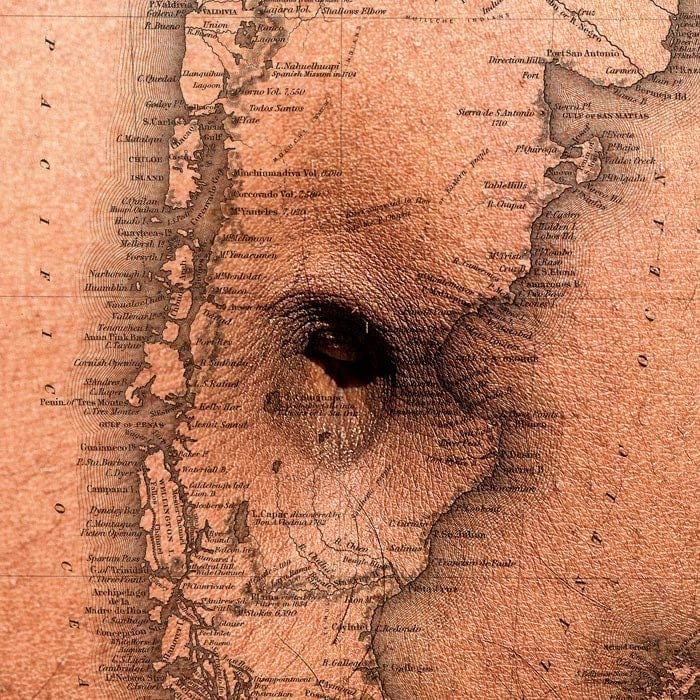
Comodoro Rivadavia is a port city on Argentina’s Patagonian coast, in the province of Chubut, built around the San Jorge Gulf and the foot of Chenque Hill. It grew into the main urban centre of the San Jorge Basin, a region shaped by oil, shipping, and the infrastructure needed to move people and fuel across southern Argentina. It is usually shortened to Comodoro.
| Essential fact | Details |
|---|---|
| Country | Argentina |
| Province | Chubut |
| Region | Patagonia |
| Setting | Atlantic coast, on the San Jorge Gulf |
| Known for | Oil industry, port activity, regional administration |
| Historic role | Capital of Comodoro Rivadavia Territory from 1943 to 1955 |
Why Comodoro Rivadavia matters
The city matters because it sits at the centre of one of Argentina’s most important energy landscapes. The San Jorge Basin has long been associated with petroleum extraction, and Comodoro Rivadavia became the urban and logistical base that supported it. That gave the city a practical importance beyond its size: workers, pipelines, storage, transport links, and service industries all clustered there.
Its coastal position also gave it a second role as a port city facing the Atlantic. In Patagonia, distance is a major fact of life, and towns that can connect sea, land, and industry tend to grow differently from inland settlements. Comodoro Rivadavia’s development reflects that mix of isolation, extraction, and maritime access.
What does the city look like in practice?
Comodoro Rivadavia is not a picturesque colonial centre or a planned garden city. It is a working Patagonian city with an industrial edge, shaped by wind, slope, and utility. The built environment tends toward practical construction: low and mid-rise buildings, transport corridors, service yards, harbour facilities, and neighbourhoods that spread between the coast and higher ground.
Chenque Hill is one of the city’s defining physical markers. The hill anchors the urban landscape and makes the geography immediately legible: sea at one side, steep land behind, and a city laid out in response to both. In a place like this, topography is not decorative. It governs streets, views, and the everyday movement of goods and people.
How did Comodoro Rivadavia develop?
Comodoro Rivadavia’s modern history is tied to national resource policy. As petroleum exploration expanded in the early twentieth century, the city became a strategic site for extraction and administration. The creation of the Comodoro Rivadavia Territory in 1943 formalised its importance and placed the city at the centre of a federal arrangement that lasted until 1955.
That status did not make it a capital in the conventional provincial sense, but it did recognise the city’s regional weight. When territories are organised around resource frontiers, cities often become a mixture of company town, administrative centre, and transport hub. Comodoro Rivadavia fits that pattern closely.
Why does it appear in visual culture?
Comodoro Rivadavia appears in visual culture because it offers a clear case of landscape shaped by extraction. The city’s coast, hills, and industrial edges provide a strong visual contrast: Atlantic light against hard infrastructure, open space against drilling and logistics. That makes it useful in projects concerned with maps, identity, labour, and the way a place is read from the body outward.
Its name is also often encountered as shorthand for a larger set of conditions: Patagonian distance, energy economies, and urban life built on a frontier of movement rather than permanence. Artists, designers, and writers may use it not only as a location but as a coordinate in a wider story about Argentine modernity and the materials that powered it.
Frequently Asked Questions
Is Comodoro Rivadavia just an oil town?
Oil has defined much of the city’s modern growth, but the city is not only an industrial site. It is also a port, an administrative centre, and the largest urban focus in its region. Those roles overlap in everyday life, where shipping, services, housing, and public institutions all depend on the same geography.
Where exactly is it located?
Comodoro Rivadavia sits in southern Argentina, in Chubut province, on the coast of the San Jorge Gulf. The gulf opens onto the Atlantic Ocean, and the city lies near the base of Chenque Hill. Its position places it firmly in Patagonia, far from the country’s main northern population centres.
Why was there a Comodoro Rivadavia Territory?
The territory was created in 1943 to organise an area of strategic importance, especially because of its petroleum resources and regional administration needs. It existed until 1955, when the territorial arrangement ended. The fact that the city served as its capital shows how central Comodoro Rivadavia had become to the surrounding region.
At a glance
- Address
- Escalante Department, Argentina
- Coordinates
- -45.864723, -67.480835
Articles mentioning Comodoro Rivadavia