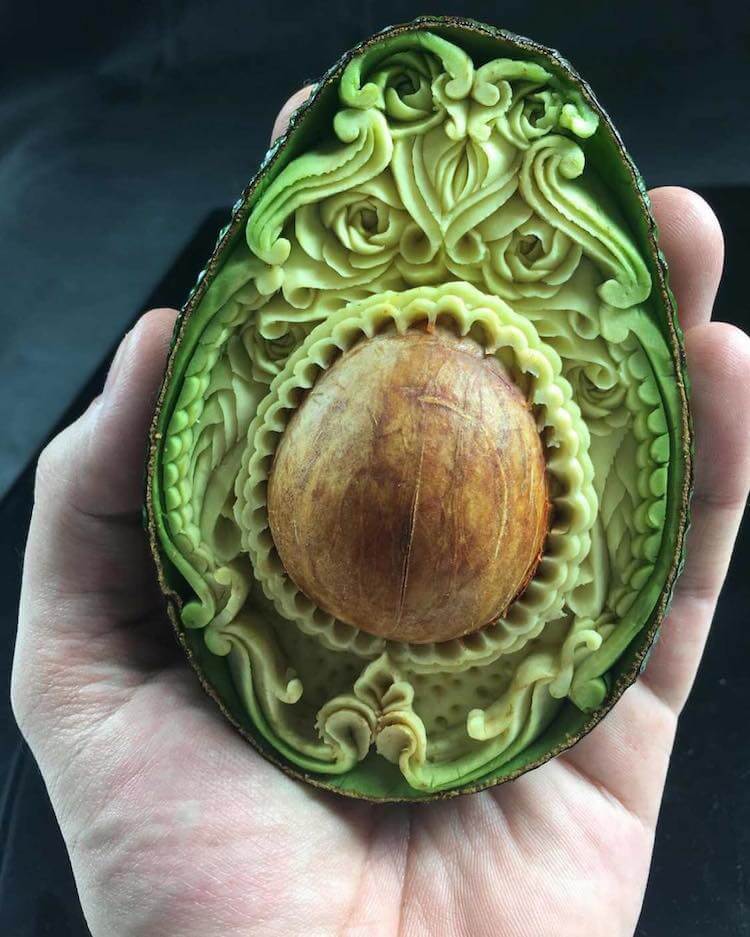
Daniele Barresi is an Italian food artist and fruit and vegetable carver known for turning produce into highly detailed patterned sculptures. His work sits between decoration, craft, and performance: a melon, pumpkin, radish, or pineapple becomes a temporary surface for relief carving, latticework, and floral motifs.
| Field | Food carving, edible sculpture |
|---|---|
| Nationality | Italian |
| Materials | Melons, pumpkins, watermelons, pineapples, root vegetables, citrus fruits |
| Known for | Precise patterned carvings and competition-style presentation |
| Medium | Perishable foods shaped with knives and fine carving tools |
What does Daniele Barresi make?
Barresi makes carved food objects, usually from fruit and vegetables with firm flesh and a clear skin. He works by cutting into the surface to create repeated motifs, pierced patterns, rosettes, and layered textures that read almost like lace or engraving. The result is not cooking in the usual sense, but a visual transformation of raw produce into exhibition pieces and display centrepieces.
His carvings depend on control of depth, symmetry, and the structure of each ingredient. A watermelon allows broad, deep patterning; a radish or carrot invites smaller, sharper detail; a pumpkin offers a thick shell that can hold ornate relief. The medium matters because the design has to survive in a living, fragile material that bruises, softens, and dries out.
How is food carving done?
Fruit and vegetable carving uses small knives, gouges, and pointed tools to remove skin and flesh in measured cuts. The carver usually works from the outside in, using the natural shape of the produce as part of the composition. Shallow incisions create contrast in colour; deeper cuts create shadow and texture; repeated cuts build pattern. Timing is important because fresh ingredients can oxidise or lose moisture while the work is underway.
Barresi’s style is associated with precision and surface rhythm rather than loose sculpting. The finished piece often looks built from repeating units: petals, scales, spikes, or geometric openings. In practice, the work is part design exercise, part manual skill, and part knowledge of how each food behaves under the blade.
Why does his work matter?
Barresi is part of a broader tradition of edible carving that has long existed in banquet culture and hospitality display, but his work brings that tradition into the frame of contemporary visual culture. It treats ordinary supermarket produce as a sculptural material and shows how craft can turn common ingredients into spectacle without changing their basic identity. The viewer recognises the fruit or vegetable at once, but also sees it as pattern, form, and surface.
That tension gives the work its force. It is temporary, often made for competitions, events, photography, or short-lived display, and it exists at the point where decoration becomes sculpture. Because the materials are familiar and perishable, the work makes technique visible: the hand, the knife, and the limits of the ingredient all remain part of the image.
What does his practice say about craft and display?
Barresi’s practice belongs to a world where display is not separate from making. In food carving, the object is shaped to be seen quickly and closely, often under bright light and alongside other highly finished foods. The carved surface has to read well from a distance and reward inspection up close, which pushes the maker toward bold patterning and clean edges.
It also shows how ornamental skill survives in contemporary form. Rather than using precious materials, the work uses humble ones; rather than lasting for decades, it may last for hours or days. That brevity is part of the point. The value lies in the labour, the precision, and the transformation of an everyday object into something ceremonious.
Frequently Asked Questions
Is Daniele Barresi a chef or an artist?
He is best understood as a food artist, though his work overlaps with culinary craft and presentation. The focus is not on cooking recipes but on carving and visual transformation. His pieces belong to the same world as banquet display, competition carving, and decorative food design.
What materials does he use most often?
He works with fruits and vegetables that hold detail well, especially melons, pumpkins, watermelons, and other produce with firm flesh or sturdy skin. The exact material depends on the desired effect and the size of the piece. Different foods offer different contrasts, colours, and carving depths.
Are his artworks meant to be eaten?
They are usually edible in principle, since they are made from food, but their main purpose is visual. Many pieces are created for display, photography, events, or competition rather than serving. Their short lifespan is part of the medium, since fresh produce changes quickly after carving.
Articles mentioning Daniele Barresi