David Beckham is an English former professional footballer, global sports celebrity, and brand figure whose image has moved far beyond the pitch into advertising, fashion, fragrance, and ownership roles in football. Born in 1975, he built his reputation at Manchester United and with the England national team, then used his recognisable look, disciplined presentation, and media-savvy public persona to become one of the most visible athletes of the late 20th and early 21st centuries.
- Known first as a midfielder for Manchester United and England, where he became famous for crossing, passing, and set-piece delivery.
- His public image helped turn a footballer into a highly marketable media figure.
- He became a frequent presence in fashion editorials, luxury campaigns, and charity advertising.
- Beckham’s career shows how elite sport, celebrity styling, and brand work now overlap.
How did David Beckham become so famous?
Beckham rose through Manchester United’s youth system and made his first-team debut in 1992. At the club, he became known for precise long passes, curling free kicks, and high work rate, especially during United’s dominant 1990s run under Alex Ferguson. His profile grew quickly because he played for one of the world’s best-known clubs and because his performances often carried dramatic, visible moments: goals from distance, decisive crosses, and memorable set pieces.
His fame widened through England. Beckham’s appearances at major tournaments, especially during intense scrutiny after the 1998 World Cup and his eventual redemption arc in the public press, made him a figure known even to people who did not follow football closely. That mix of sporting skill, controversy, and constant media attention turned him into a household name.
What does Beckham represent in visual culture?
Beckham matters because he helped define the modern sports celebrity: polished, highly photographed, and usable in many different visual registers. He could appear as an elite athlete, a fashion model, a family man, or a luxury lifestyle figure, often within the same year. That flexibility made him unusually valuable to magazines, advertisers, and brands looking for a face that signalled style without losing mass appeal.
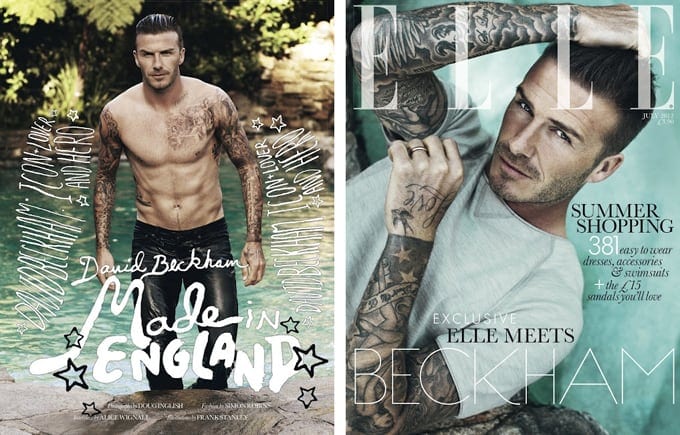
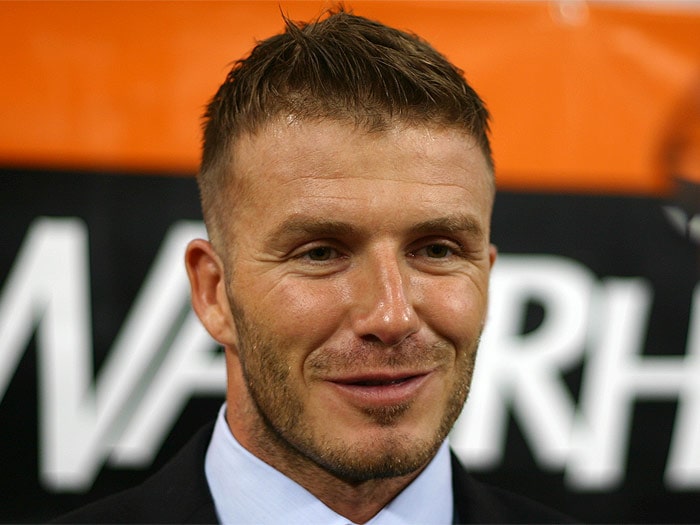
His image has been managed with unusual care. Haircuts, tattoos, tailored suiting, undercuts, sportswear, and clean menswear all became part of the Beckham visual language. For fashion editors and commercial art directors, he offered a male celebrity who could be styled across class codes: working athlete, metropolitan icon, or aspirational consumer. That made him especially useful in campaigns where masculinity needed to look disciplined, glossy, and emotionally accessible at once.
Where does his appeal show up in advertising and magazines?
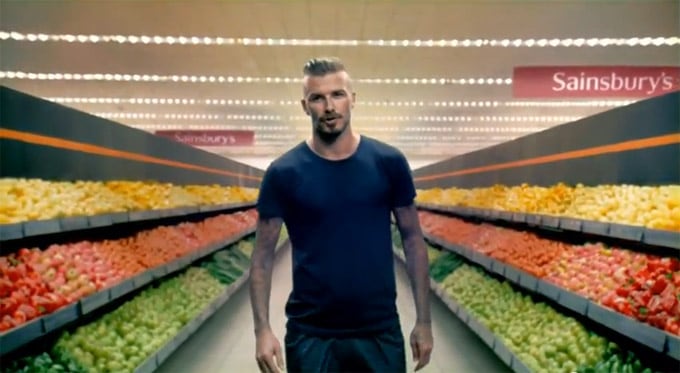
Beckham has appeared in campaigns for everything from underwear and grooming products to high-street fashion and global luxury labels. In print and video advertising, his presence often depends less on dialogue than on posture, grooming, and wardrobe. A fitted suit, plain white vest, tattooed forearm, or close-cropped haircut can carry as much of the message as the product itself.
Editorial fashion work has used him in a similar way. In magazines such as Elle, he was not simply presented as a retired athlete or a famous husband, but as a carefully composed image: a body, a face, and a silhouette that could be lit and styled like any other fashion subject. That made him part of a wider shift in which men’s celebrity photography borrowed the codes of fashion portraiture rather than sports journalism.
Why does he matter beyond football?
Beckham became important because he showed how an athlete could function as a cross-market cultural object. He did not only promote products; he also helped normalise the idea that a footballer could move between sport, fashion, luxury branding, and philanthropy without losing commercial value. Later public figures in sport have followed a similar path, building careers that rely as much on visibility and image control as on competition.
He also helped reshape the visual expectations of male celebrity in Britain. His public life made grooming, styling, family branding, and body presentation part of mainstream masculinity rather than niche fashion culture. That is why he appears so often in coverage that is not strictly about football. He stands at the point where sport became one of the most powerful image industries in popular culture.
Frequently Asked Questions
Was David Beckham only famous because of football?
No. Football made him famous, but his cultural reach came from the way his image was circulated and styled across media. His celebrity expanded through tabloid coverage, fashion work, advertising, and his relationship with Victoria Beckham, which became part of a broader entertainment brand.
What is Beckham’s most recognisable visual style?
His style has changed over time, but it is usually associated with sharp grooming, fitted tailoring, visible tattoos, and short, often heavily discussed haircuts. He has moved between streetwear, formalwear, and underwear campaigns with unusual ease, which is part of why he remains so visually legible.
Why do magazines and advertisers keep using him?
Beckham offers instant recognition and a controlled sense of glamour. He can signal sport, aspiration, and Britishness without needing much explanation, and that makes him efficient for editorial and commercial use. His image has also stayed flexible enough to fit changing ideas of masculinity over several decades.
Articles mentioning David Beckham