
Emilia Clarke is an English actor known for her screen work in television, film, and stage, especially as Daenerys Targaryen in HBO’s Game of Thrones. She became one of the defining faces of a global fantasy franchise, then used that profile to move between large-scale studio projects, independent films, and theatre.
Stories from Emilia Clarke
1 story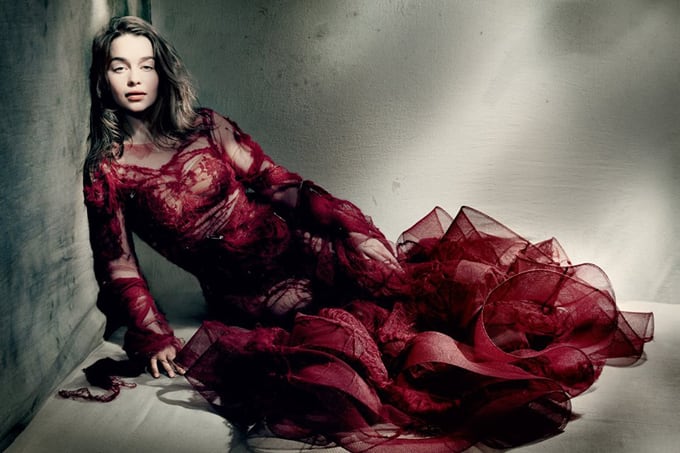
About Emilia Clarke
| Born | 1986, London, England |
|---|---|
| Nationality | English |
| Known for | Television, film, stage acting |
| Breakthrough role | Daenerys Targaryen in Game of Thrones |
| Notable work | Me Before You, Solo: A Star Wars Story, Above Suspicion, The Seagull |
Read the full overviewHow did Emilia Clarke become widely known?, What kind of actor is she?, Why does she matter in visual culture?, What has her career looked like beyond Game of Thrones?
How did Emilia Clarke become widely known?
Clarke’s career changed rapidly when she was cast in Game of Thrones in 2011. The role of Daenerys Targaryen demanded a performance that could shift from fear and vulnerability to command, often within the same scene, and the show’s scale made her face familiar across television audiences far beyond fantasy fans.
That visibility mattered because it made her a recognizable public figure, not just a working actor. It also fixed a very specific visual identity in the public mind: platinum-blonde hair, armor and gowns, and a character arc built around power, spectacle, and control.
What kind of actor is she?
Clarke’s work has often relied on contrast. She has played high-intensity fantasy leads, romantic leads, and more restrained contemporary characters, which shows a range that is easier to overlook when one role becomes dominant in popular memory.
On stage, that flexibility matters even more. Theatre depends on timing, voice, and physical precision rather than editing or visual effects, so a screen actor who works well there usually has strong control over rhythm and presence.
Why does she matter in visual culture?
Clarke matters because she helped define the look of a hugely influential television character. Daenerys Targaryen became a reference point for costume design, fan styling, beauty imagery, and fantasy portraiture, especially the use of pale hair, draped silhouettes, and a controlled, almost ceremonial sense of power.
Outside the series, Clarke has also appeared in fashion and editorial contexts, where her image is shaped less by fantasy iconography and more by styling, photography, and celebrity presentation. That shift is important in visual culture: it shows how an actor’s public image can be built and rebuilt through clothes, lighting, pose, and publication design.
What has her career looked like beyond Game of Thrones?
After her breakthrough, Clarke worked across romantic drama, science fiction, crime drama, and theatre. She appeared in major commercial releases such as Me Before You and Solo: A Star Wars Story, while also taking on smaller or less predictable roles that moved away from the scale of fantasy television.
That range is typical of actors who become famous through one defining part and then try to avoid being locked into it. In practical terms, it means changing register: different accents, different costumes, different modes of camera performance, and different forms of publicity.
Frequently Asked Questions
Is Emilia Clarke mainly known for one role?
Yes. Daenerys Targaryen is the role most people associate with her, and it remains the main reason she is widely recognized. The scale and cultural reach of Game of Thrones made that performance unusually visible.
Does she work only in television?
No. Clarke has worked in film and theatre as well as television. Her later roles show an effort to build a broader acting career rather than remain tied to one franchise.
Why does she appear in fashion and magazine coverage?
Actors with strong public recognition are often used in editorial fashion because their image carries existing cultural meaning. In Clarke’s case, magazines can play with the contrast between her fantasy-era persona and more contemporary styling. That makes her useful in fashion imagery, where identity is often constructed through clothing, pose, and publication context.