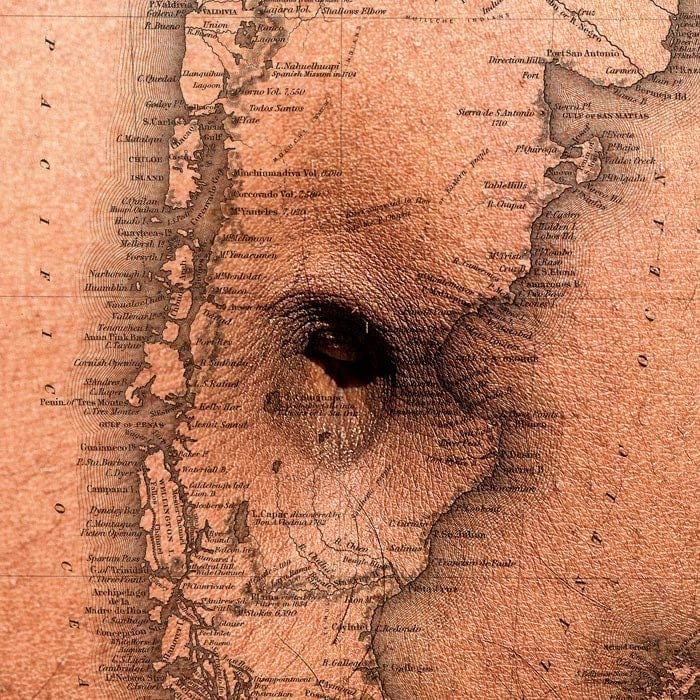
Esquel is a town in northwestern Chubut, in Argentine Patagonia, and the administrative seat of Futaleufú Department. It sits near the Andes, in a landscape shaped by cold winds, sheep ranching, forestry, rail history, and tourism. The name is usually traced to Tehuelche, though sources differ on the exact original word and meaning.
| Fact | Detail |
|---|---|
| Country | Argentina |
| Province | Chubut |
| Region | Argentine Patagonia |
| Department | Futaleufú Department |
| Status | Department seat |
| Origin of name | Tehuelche, with disputed etymology |
Where is Esquel?
Esquel lies inland from the Atlantic coast, close to the Andean foothills and not far from the Chilean border. That position gives it a distinct Patagonian character: dry air, large skies, and a settlement pattern tied more to transport routes and regional administration than to a single dominant industry.
As the seat of Futaleufú Department, Esquel concentrates local government offices, services, and cultural institutions for the surrounding area. It is one of the main urban points in a sparsely populated part of Patagonia, which makes it important beyond its size.
Why does Esquel matter?
Esquel matters because it links several histories that shaped Patagonia. It developed through settlement, ranching, railway expansion, and migration, then became a base for travel into mountain and lake country. For many readers, it appears as a place-name in maps, regional narratives, and descriptions of southern Argentina rather than as a major metropolitan center.
The town also carries the marks of Indigenous presence. Its name comes from Tehuelche, the language family of the original peoples of much of Patagonia, and that origin keeps Indigenous geography visible in a region often described only through later Argentine settlement.
What does Esquel look like in practice?
In practical terms, Esquel is a service town. Its streets, public buildings, shops, and transport links support a wider territory of farms, small settlements, and tourism routes. The built environment tends to be functional rather than monumental, with low-rise construction suited to a cold, windy climate.
Its identity is also shaped by circulation: people pass through it on the way to lakes, mountains, and remote estancias, and goods and services move through it as a regional hub. That makes Esquel less a destination defined by a single signature object than a working town whose form follows its role in Patagonia.
How is the name used and understood?
The etymology of Esquel is not fully settled. It is generally connected to Tehuelche, but published accounts vary on the precise source word and meaning. That uncertainty is common in Patagonia, where many place-names were recorded through Spanish transcription and later local usage rather than through a single authoritative written tradition.
For reference writing, the important point is not a fixed folk etymology but the presence of Indigenous linguistic material in the map itself. Esquel is one of many Patagonian toponyms whose sound and origin carry older histories even when the modern town is defined by municipal administration and contemporary mobility.
Frequently Asked Questions
Is Esquel a city or a town?
Esquel is usually described as a town, though it functions as a regional center. In Argentine administrative terms, its importance comes from being the seat of Futaleufú Department rather than from city status alone. The everyday distinction matters less than its role as the main service center in its area.
What is Esquel known for?
Esquel is known for its Patagonian setting, its role as a local administrative hub, and its access to nearby mountain and lake landscapes. It also appears in discussions of regional transport and settlement history. For many people, it is best known as a gateway town in western Chubut.
Where does the name Esquel come from?
The name is commonly said to come from Tehuelche, but the exact derivation is disputed. Different sources give different original words or meanings. What remains consistent is that the name reflects Indigenous Patagonian language rather than later Spanish invention.
At a glance
- Address
- Futaleufú Department, Argentina
- Coordinates
- -42.9, -71.316666
Articles mentioning Esquel