Ivan Belikov is a Russian independent artist and illustrator known for detailed drawings that mix contemporary visual language with nature motifs and older, less time-bound forms. His work often appears in sketchbooks and illustration projects where line, texture, and decorative observation carry the image more than narrative does.
| Born | 1991, Chelyabinsk, Russia |
|---|---|
| Based in | Moscow, Russia |
| Profession | Independent artist and illustrator |
| Known for | Detailed illustration, sketchbook practice, nature motifs |
What kind of work does Ivan Belikov make?
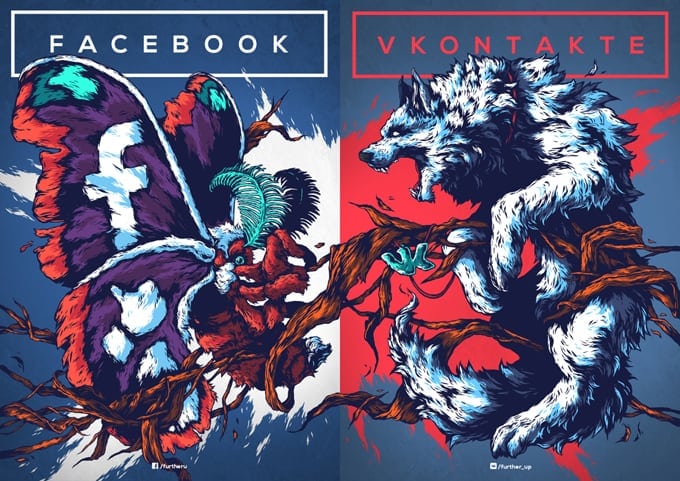
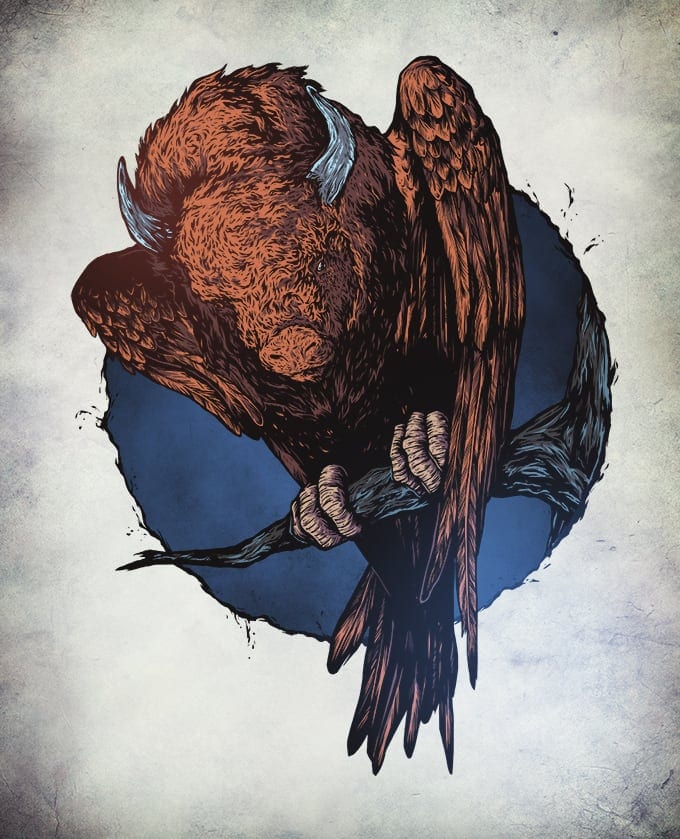
Belikov’s drawings focus on precision and accumulation. Rather than reducing forms to a few economical marks, he tends to build surfaces through line, pattern, and closely observed detail. That gives his images a hand-made density that can feel both contemporary and old-fashioned, depending on the subject matter and composition.
Nature is central in that approach. Leaves, stems, organic shapes, and other botanical references often become structural elements in the image, not just decoration. The result is illustration that borrows from natural history drawing, but keeps a more personal and immediate sketchbook character.
How did his practice emerge?
Belikov was born in Chelyabinsk in 1991 and later moved to Moscow, where he works as an independent artist. That position matters: independent illustration usually means moving between commissioned work and self-directed drawing, with no single house style dictating the outcome. Sketchbooks are important in that kind of practice because they preserve experiments, studies, and visual ideas before they become finished pieces.
His published presence around sketchbooks suggests that process is part of the work itself. Pages of tests, fragments, and studies can reveal how an illustrator thinks: where an image begins, which motifs recur, and how a drawing develops from observation into a finished composition.
Why does he matter in contemporary illustration?
Belikov belongs to a current of illustration that values drawing as craft rather than only as a carrier for information. In his case, the appeal lies in the tension between modern illustration culture and imagery that feels less tied to a passing trend. Nature motifs give the work an enduring visual vocabulary, while the density of the mark-making keeps it rooted in present-day graphic practice.
That combination helps explain why his work travels well across editorial, sketchbook, and social media contexts. It reads clearly on a screen, but it also rewards slow looking on the page. Details matter because they are not decorative afterthoughts; they are the method by which the image is built.
What does his style look like in practice?
In practice, Belikov’s images often rely on tight linework, layered textures, and a careful balance between filled and open space. Subjects may appear framed by organic forms or surrounded by intricate marks that push the drawing toward pattern. Even when the image is compact, it usually carries a sense of elaboration and attention.
The strongest impression his work leaves is one of sustained looking. Rather than flattening nature into generic motifs, he treats it as a source of structure, rhythm, and variation. That makes his illustration feel closer to a drawn study of visual detail than to a simple decorative style.
Frequently Asked Questions
Is Ivan Belikov mainly a fine artist or an illustrator?
He is described as both an artist and an illustrator, but the illustration side is the clearest public frame for his work. The distinction matters less than the way he uses drawing: the images function well as independent pieces, yet they also fit editorial and project-based contexts.
What themes recur in his work?
Nature motifs recur most clearly, especially organic and botanical forms. Detail is another constant, along with an interest in marks that make the surface feel built rather than simply outlined. That gives the work a patient, accumulative quality.
Why are sketchbooks important to understanding him?
Sketchbooks show the process behind the finished image. For an illustrator like Belikov, they can reveal repeated forms, early studies, and the way details are tested before being used in a final composition. They also make clear that drawing itself is a central part of the practice, not just a preliminary step.
Articles mentioning Ivan Belikov