
Jan Banning is a Dutch photographer known for long-form documentary work on power, bureaucracy, and the way states shape everyday life. Born in 1954, he studied social and economic history at Nijmegen University before turning to photography in 1981. His pictures often look plain at first glance, but they are built to expose the structures beneath ordinary scenes: files, uniforms, waiting rooms, desks, portraits, and the administrative habits that organise public life.
Jan Banning on FreeYork

What kind of photographer is he?
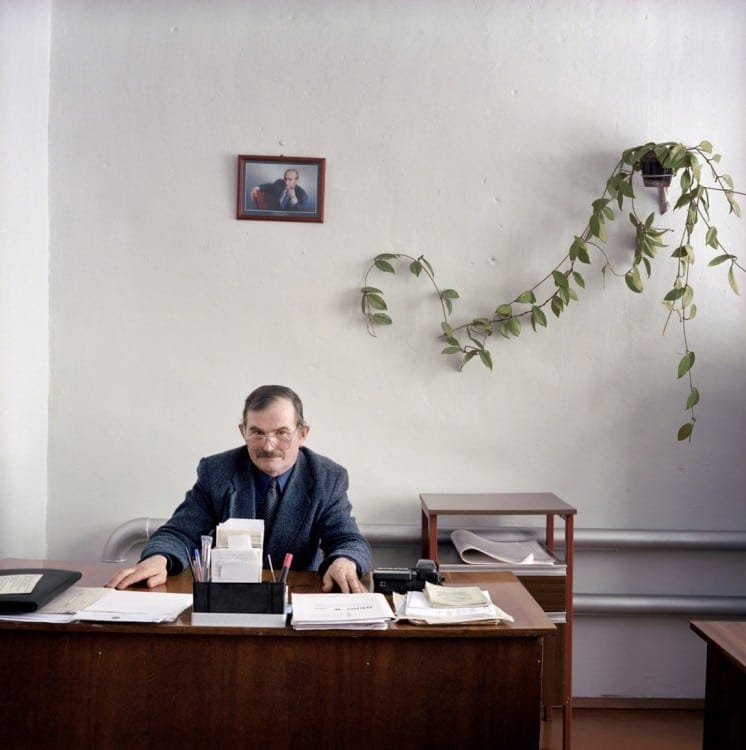
Banning works in documentary photography, but his approach is more analytical than journalistic in the quick-response sense. He often builds projects around a single social system and photographs it with consistency: the same framing, the same restrained distance, the same attention to detail. That method lets him compare institutions and reveal how much power can be expressed through layout, paperwork, posture, and routine.
His background in history matters. Banning tends to treat photography as a way of investigating social structures rather than simply recording appearances. The result is work that feels studied and constructed, even when it depicts the everyday.
Why does his work focus on bureaucracy and power?
Banning’s best-known photographs examine the offices, rituals, and visual codes of government. Bureaucracy can seem dull, but his work shows how it shapes the experience of citizenship: who is seated where, how officials are pictured, what a stamped form or a crowded desk communicates about authority. He makes systems visible by photographing their material surfaces.
This is where his work becomes political. Instead of relying on dramatic events, he shows how power is embedded in paperwork, architecture, clothing, and institutional behaviour. His photographs often contain very little action, which makes the structures inside them easier to read.
How does he work in practice?
Banning usually works through sustained projects rather than isolated images. He researches a subject, enters institutions, and develops a visual format that can be repeated across locations or across groups of people. That repetition is part of the meaning: it strips away anecdote and makes patterns easier to see.
His images are typically direct, carefully lit, and frontal. People are often posed in plain interiors or against neutral backgrounds, with objects and settings left visible rather than hidden. This clarity gives the work its force. The photographs do not theatricalise bureaucracy; they let its ordinary details speak for themselves.
What makes Jan Banning important?
Banning belongs to a tradition of socially engaged photography that uses composition and seriality to think about institutions, not just individuals. His work has been especially influential because it makes administrative power legible without needing satire or overt commentary. It can be quiet, but it is rarely neutral.
For readers coming from a story about bureaucracy, his photographs offer a visual language for systems that are usually encountered as paperwork, delay, or procedure. He shows that those systems have surfaces, and that those surfaces carry meaning. In that sense, his work is both documentary and forensic.
Questions
What subjects does Jan Banning photograph most often?
He often photographs institutions, officials, and the visual signs of government administration. Bureaucracy, war aftereffects, and the social organisation of power recur in his work. Even when the subject changes, he tends to look for the same thing: how large systems appear in ordinary settings.
Is Jan Banning mainly a portrait photographer?
Portraits are central to his practice, but they are usually not intimate character studies. He uses portraiture as a tool for comparing roles, offices, and social positions. The person in the frame matters, but so does the system around them.
Why is his background in history relevant?
History training gives his work a strong sense of structure and context. He approaches photography like an inquiry into how institutions develop and how they continue to shape people’s lives. That perspective helps explain why his images often feel precise, systematic, and socially pointed.