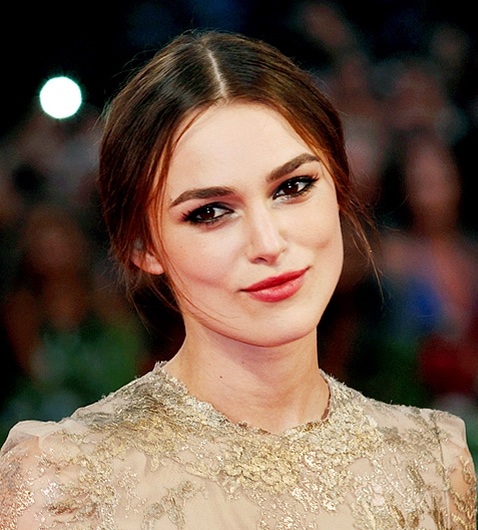
Keira Knightley is an English actor known for work across period drama, studio franchise films, and fashion photography. She began acting as a child, moved into film in the 1990s, and became widely known in the early 2000s through Bend It Like Beckham and the Pirates of the Caribbean series. Her career has since split between mainstream visibility and more controlled, image-conscious work in costume drama, independent film, and magazine portraiture.
- English actor from London, active since childhood.
- Rose to prominence with Bend It Like Beckham and Pirates of the Caribbean.
- Often cast in historical or literary roles that rely on posture, costume, and period styling.
- Frequently appears in fashion editorials and cover shoots, where her face and silhouette are used as part of the visual design.
- Her public image has been shaped as much by photography and styling as by film roles.
How did Keira Knightley become known?
Knightley started acting young, first in television and then in film, where early roles gave her experience before she had any major fame. Her breakthrough came with Bend It Like Beckham in 2002, a film that used sport, family conflict, and youth culture to introduce her to a broad audience. A year later, Pirates of the Caribbean: The Curse of the Black Pearl pushed her into international celebrity and placed her in one of the most visible studio franchises of the decade.
That trajectory matters because it established a pattern that has followed her ever since: she can be read as a mainstream star, but she is also closely associated with costume, historical drama, and editorial imagery. Her fame was built not just on performance, but on a face and body type that photographers and costume designers could use very effectively.
Why does she matter in fashion and visual culture?
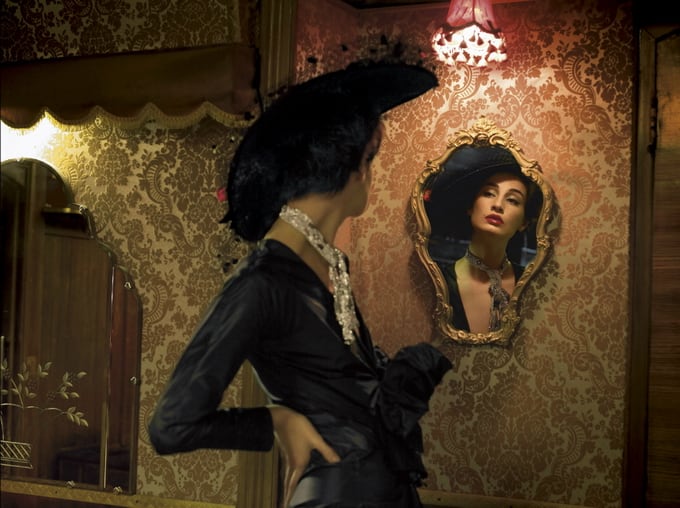
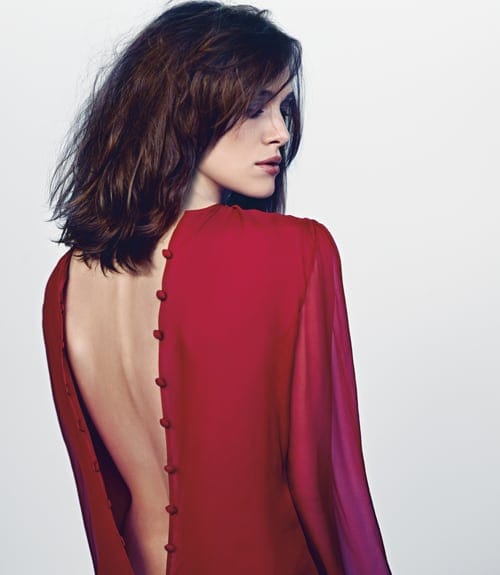
Knightley matters in visual culture because she has become a reliable image of refined, controlled femininity. Fashion magazines often place her in minimal or sharply tailored clothing, where the shot depends on clean lines, pale skin tones, and a composed expression rather than overt glamour. In cover work and editorial spreads, she often reads as elegant, slightly severe, and deliberately stylized.
That makes her useful to publications and photographers who want a look that feels polished but not overtly commercial. Her features can be softened or sharpened by lighting, styling, and retouching, which gives editors flexibility. In portraits by photographers such as Uli Weber, her image can shift from romantic to severe without changing the underlying vocabulary of the shoot: careful pose, disciplined framing, and strong use of wardrobe.
What kind of roles is she associated with?
Knightley is strongly associated with period pieces and literary adaptations, including films such as Pride & Prejudice, Atonement, and The Imitation Game. These roles depend on performance details that photograph well: straight posture, formal dress, restrained expression, and a strong profile. Even in contemporary settings, casting often uses her for characters who seem intelligent, composed, or emotionally guarded.
Her screen work has also helped define a particular modern type: the actress whose fame comes from classic beauty, but whose career is built on playing women under pressure. Costume, hair, and makeup do much of the visual work in these roles, and Knightley has been a consistent subject for designers who want period elegance without softness or excess.
How is she presented in magazine photography?
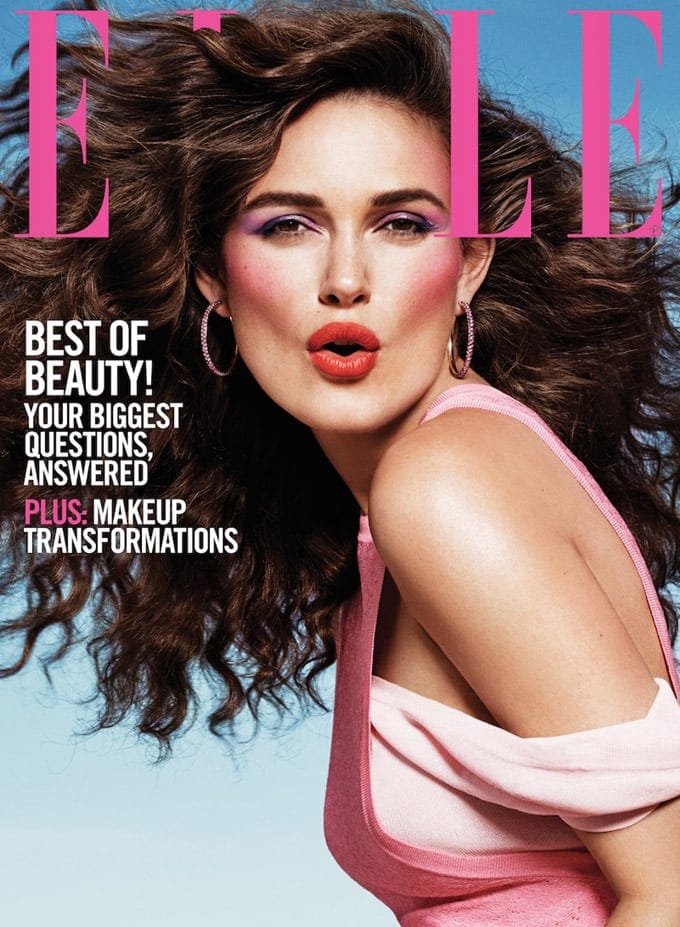
Magazine photography tends to use Knightley as a subject who can carry strong styling without losing recognizability. On covers, that often means structured dresses, precise makeup, and poses that emphasize neck, shoulders, and bone structure. The image usually aims for clarity rather than spontaneity, which suits editorial pages that want elegance, control, and a little distance.
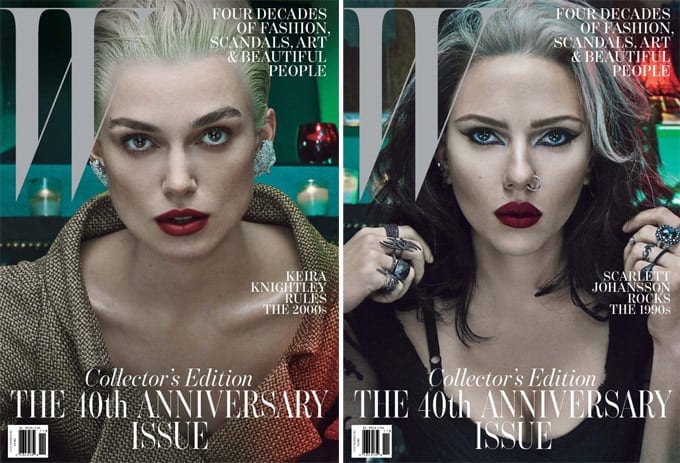
Her appearance in publications such as Elle, Marie Claire, and W Magazine shows how closely her public image is tied to the photography industry. The clothes, lighting, and composition are not just background; they are part of what makes her legible as a celebrity. In that sense, Knightley is both an actor and a recurring visual type in fashion media.
Frequently Asked Questions
Is Keira Knightley mainly a film actor or a fashion figure?
She is first and foremost a film actor, but fashion photography is a major part of her public identity. Editorial work has amplified the traits that casting directors and costume designers already use: poise, angularity, and a strong period look. That is why she appears so often in magazines and cover shoots.
Why is she linked to period drama?
Knightley’s face, posture, and vocal style suit historical settings, and directors have often used her in roles where costume and restraint matter. In period drama, clothing and body language do a lot of storytelling, and her screen presence fits that approach. The result is a career with a clear visual signature.
What makes her useful to photographers?
She photographs cleanly and can carry highly styled images without looking overwhelmed by them. That gives photographers room to work with lighting, silhouette, and wardrobe detail. In magazine portraiture, those qualities make her a strong subject for controlled, polished images.
Articles mentioning Keira Knightley