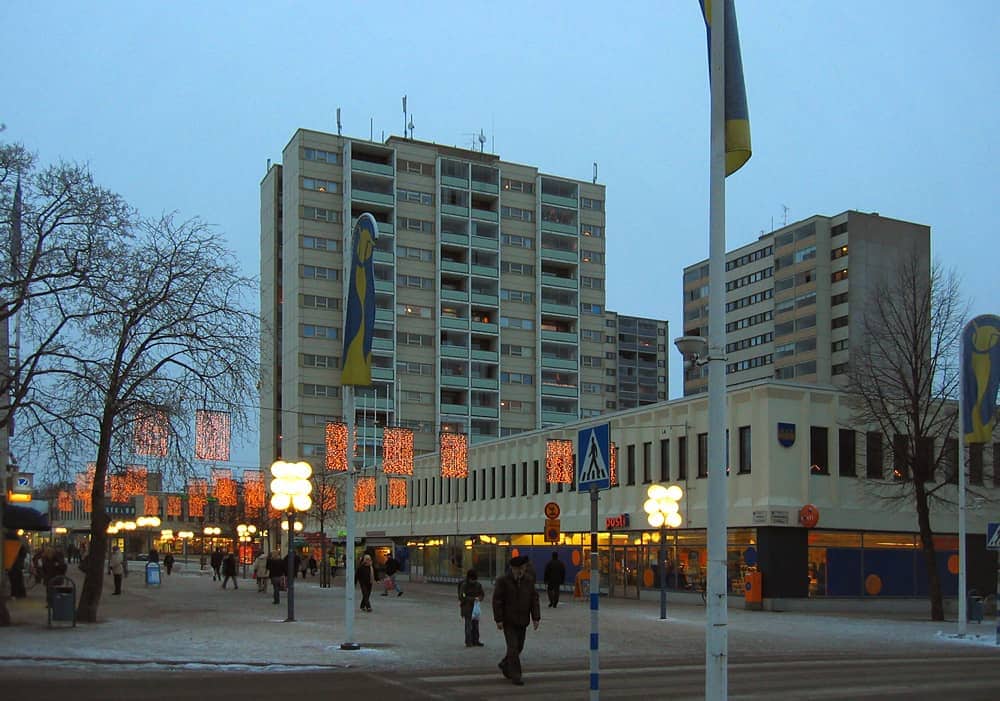
Kerava is a town and municipality in southern Finland, in the Uusimaa region north of Helsinki. It is a compact, mostly urban place known more for its rail connections, everyday built landscape, and proximity to the capital than for any single landmark.
| Type | Town and municipality |
|---|---|
| Country | Finland |
| Region | Uusimaa |
| Language | Finnish |
| Area | 30.79 km² |
| Water area | 0.17 km² |
What kind of place is Kerava?
Kerava functions as a commuter town within the Helsinki metropolitan area, with a dense settlement pattern and a strong connection to regional transport. Its size makes it legible at a glance: streets, apartment blocks, schools, shops, rail infrastructure, and patches of green sit close together rather than spreading into a large rural frame. That density shapes how the town is experienced visually. It feels built, lived-in, and highly organised, with little distance between domestic life and public space.
The municipality is unilingually Finnish, which matters in a country where some places use both Finnish and Swedish in public life. In practical terms, that means its official signage, administration, and local identity are anchored in Finnish language and Finnish-speaking culture. For a town of this scale, that gives Kerava a clear civic profile even without the administrative complexity of a larger city.
How did Kerava develop?
Kerava grew along the transport and settlement patterns of southern Finland, especially through rail and suburban expansion from Helsinki. Like many towns in the region, it developed from a smaller local centre into a more densely populated municipality as the capital area expanded. That shift left traces in the town’s form: compact neighbourhoods, infrastructure that prioritises movement to and from the capital, and public spaces designed for everyday use rather than tourism.
The town’s modern identity is therefore tied less to a historic old centre than to ordinary metropolitan life. Kerava is the sort of place that appears in regional maps, transit routes, and local planning documents before it appears in travel writing. That makes it useful as a reference point for understanding how Finnish urban life extends beyond Helsinki itself.
What does Kerava look like in practice?
Kerava’s visual character comes from the combination of housing, infrastructure, and the flat southern Finnish landscape around it. In photographs, it often reads as a sequence of streets, railway edges, apartment buildings, industrial or service spaces, and open patches of land. The town’s low-rise and mid-rise built fabric can feel quiet and orderly, especially in winter light or under long northern skies.
For a visual culture reader, Kerava matters as an example of how small Finnish towns can be strongly urban without being monumental. It offers a setting where design is embedded in the ordinary: station architecture, municipal planning, road surfaces, signage, lighting, and the arrangement of public space. Those details shape the town’s identity more than any single iconic building would.
Why does Kerava matter in Finnish visual culture?
Kerava matters because it represents a familiar but often under-described type of place: the peripheral urban municipality that supports a capital region. Such places rarely dominate national imagery, yet they hold the visual logic of everyday Finland. They show how housing, transit, and municipal services are organised at the edge of a major city.
In photography, this kind of town can serve as a counterpoint to the dramatic landscapes usually associated with Finland. Kerava is not defined by wilderness or spectacle; it is defined by settlement, weather, and the practical architecture of daily life. That makes it useful for artists and photographers interested in scale, atmosphere, and the textures of the ordinary built environment.
Frequently Asked Questions
Is Kerava a city or a town?
Kerava is officially a town and municipality in Finland. In Finnish administrative terms, it functions as a local government area with its own municipal responsibilities. In everyday use, it reads as a small urban centre rather than a rural settlement.
Where is Kerava located?
Kerava sits in southern Finland, in the Uusimaa region. It lies north of Helsinki and forms part of the wider metropolitan area. Its location gives it a strong commuter and regional transport role.
What is Kerava known for visually?
Kerava is known less for landmarks than for its compact urban fabric and everyday suburban architecture. Rail infrastructure, apartment districts, streetscapes, and local public space shape its appearance. In images, it often feels measured, practical, and closely tied to the rhythms of metropolitan Finland.