
Mary Katrantzou is a Greek fashion designer known for digitally printed clothing, sharply engineered silhouettes, and collections that turn garments into vivid visual surfaces. Born in Athens in 1983 and based in London, she built a career in luxury fashion by combining textile innovation with precise tailoring and a strong graphic sensibility.
Stories from Mary Katrantzou
2 stories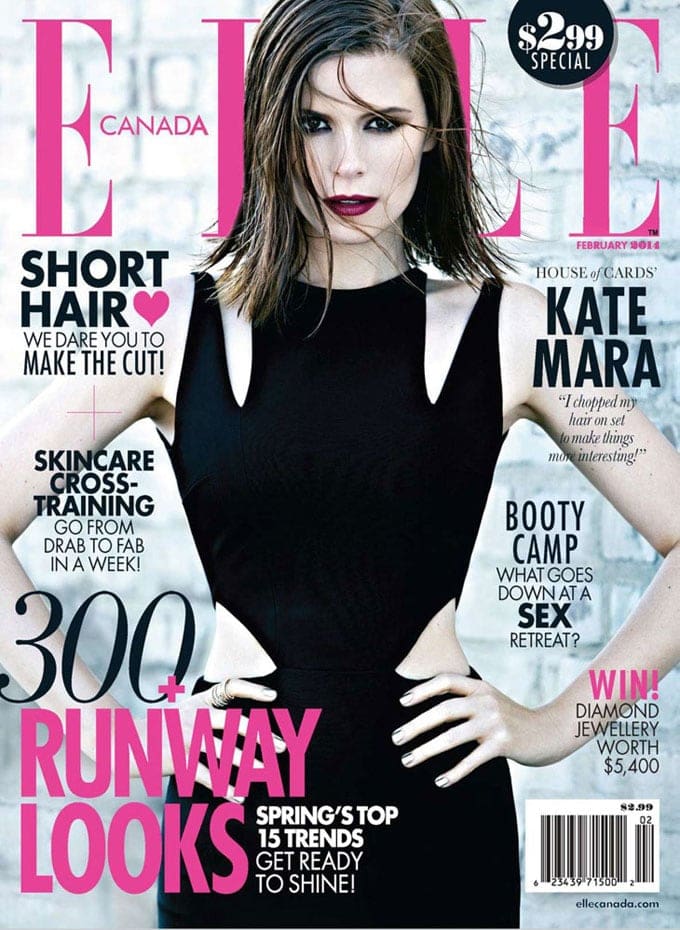
About Mary Katrantzou
| Born | 1983, Athens, Greece |
|---|---|
| Nationality | Greek |
| Based in | London, United Kingdom |
| Field | Fashion design |
| Known for | Digital prints, trompe-l’œil effects, sculptural silhouettes |
Read the full overviewHow did Mary Katrantzou become known?, What does her work look like?, Why was digital print so important to her?, What is her place in contemporary fashion?
How did Mary Katrantzou become known?
Katrantzou rose to prominence in the late 2000s and early 2010s, when fashion was still adjusting to the possibilities of digital printing at high-end scale. Her work stood out because the print was not decoration added at the end of a garment; it was often the starting point for the whole design. She used imagery drawn from interiors, stamps, perfume bottles, typefaces, lamps, and other objects associated with domestic display and consumer culture.
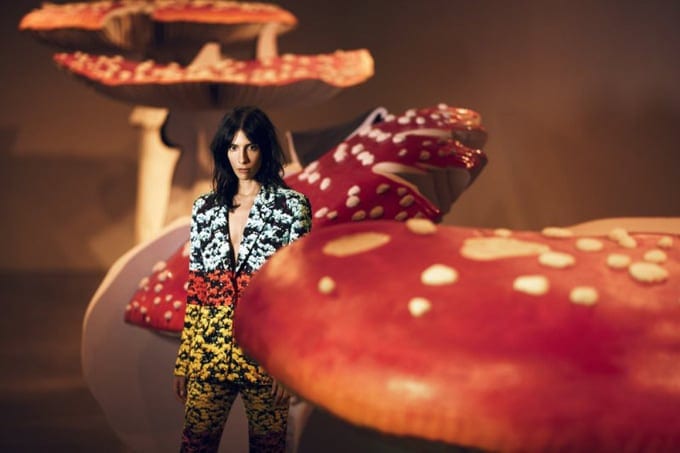
That approach gave her clothes a distinct identity. A dress might appear to be made from pleated fabric, but on closer inspection the surface could be a printed illusion. A skirt might resemble a room, a bouquet, or a cabinet of curiosities. The effect was immediate and bright, but the construction behind it was usually exacting and disciplined.
What does her work look like?
Mary Katrantzou’s signature style mixes saturated color, intricate pattern, and silhouette control. She often works with A-line shapes, ball skirts, and structured waists because they create large, readable surfaces for print. The garments rely on clean cutting and careful placement so that the image lands where the body needs volume, emphasis, or balance.
Her clothes frequently use trompe-l’œil, the visual trick that makes one material or object look like another. In practice, that can mean a print that mimics embroidery, brocade, beading, or woven texture. It can also mean printed clothing that suggests an object, such as a shoe, a vase, or a piece of furniture, without actually becoming a costume.
Why was digital print so important to her?
Digital printing changed the economics and scale of image-making in fashion. It allowed Katrantzou to place complex, multicolored imagery across a garment with far more control than older screen-print methods. That mattered because her designs often depended on precision: the alignment of an image across seams, darts, and folds could determine whether the illusion worked.
She used that technology to push fashion away from surface as ornament and toward surface as structure. A print could guide the eye around the body, create depth, or make a garment seem heavier or more architectural than it was. The result was fashion that read quickly from a distance but rewarded close looking, especially in editorial photography where image and garment reinforce each other.
What is her place in contemporary fashion?
Katrantzou became one of the designers associated with the London fashion scene’s willingness to mix technical experimentation with spectacle. Her work helped normalize the idea that print could be central to luxury design rather than secondary to cut. That influence reached beyond runway collections into collaborations, styling, and editorial production, where strong visual identity became increasingly valuable.
She also belongs to a generation of designers who made fashion feel more like an image field than a purely material one. Her garments are still clothes, meant to be worn on the body, but they are designed to be read almost instantly. That is part of why her work appears so often in fashion magazines: it delivers shape, color, and narrative in a single frame.
Frequently Asked Questions
Is Mary Katrantzou mainly a print designer?
Yes, but that label only tells part of the story. Print is central to her work, yet the garments also depend on tailoring, proportion, and construction. Without the silhouette, the print would lose much of its force.
What materials does she commonly use?
Her collections often use lightweight luxury fabrics that hold print well and allow structured shapes, such as silk and similar fine textiles. The specific materials vary by collection, but the key point is that the fabric has to support both image clarity and garment engineering. The material choice is usually in service of the visual effect.
Why do fashion magazines use her clothes so often?
Her designs photograph well because they create immediate contrast, color, and pattern. Editorial fashion depends on garments that can hold attention in a single image, and Katrantzou’s work does that efficiently. The clothes read clearly both as fashion and as visual composition.