
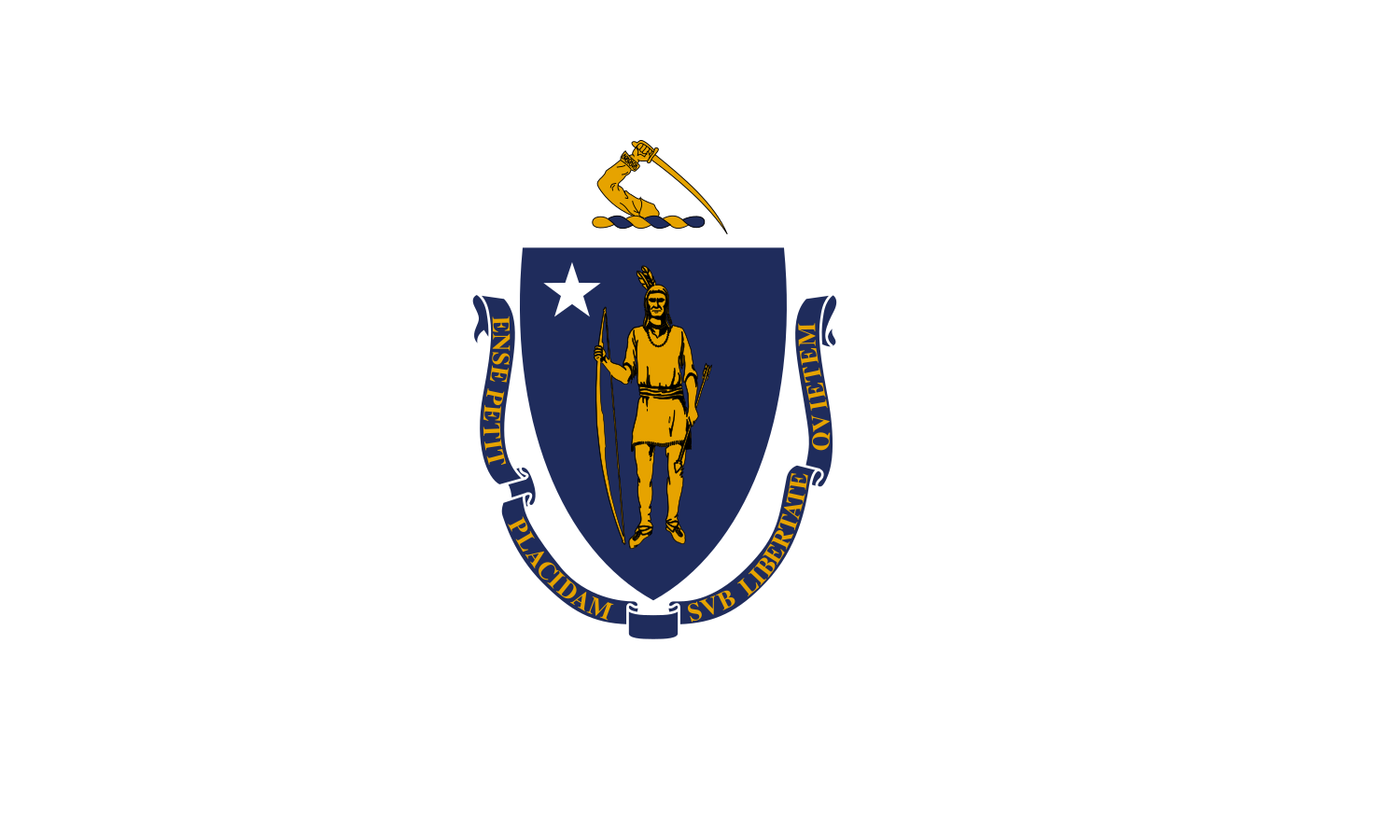
Massachusetts is a state in the northeastern United States, the core of the New England region and one of the country’s oldest centers of settlement, commerce, education, and print culture. Its capital is Boston. The state’s coastal harbors, industrial cities, farm towns, and dense network of colleges have made it an important setting for American art, architecture, publishing, and craft.
| Essential fact | Details |
|---|---|
| Official name | Commonwealth of Massachusetts |
| Region | New England, northeastern United States |
| Capital | Boston |
| Largest city | Boston |
| Borders | New Hampshire, Vermont, New York, Connecticut, Rhode Island, and the Atlantic Ocean |
| Statehood | 1788 |
Why Massachusetts matters in American culture
Massachusetts has played an outsized role in the making of the United States. It was a major site of colonial settlement, revolution, abolitionism, and labor organizing, and many of the institutions associated with American letters and design took root there. Boston, Cambridge, and nearby towns have long supported museums, universities, publishers, studios, and galleries that shape national taste well beyond the state line.
For visual culture, Massachusetts matters because it mixes old civic architecture with contemporary creative production. Brick town centers, shipbuilding ports, mill cities, and Ivy League campuses sit close together, creating a landscape where historic preservation and new experimentation coexist. That combination has helped sustain everything from fine art and printmaking to furniture, textiles, and architectural restoration.
What does Massachusetts look like on the ground?
The state changes quickly from one zone to another. The eastern edge holds Boston, the harbor islands, dense suburbs, and coastal towns shaped by trade and migration. Central Massachusetts has college towns, former manufacturing centers, and a landscape of rivers and mills. The west rises into the Berkshires, where mountains, museums, summer festivals, and rural studios create a very different rhythm.
This variety affects how things are made. In Boston and Cambridge, making often means institutions: museums, academic studios, fabrication labs, archives, and small design firms. In former industrial towns, it can mean reuse, repair, and adaptation of brick factories and warehouse spaces into workshops or artist studios. On the Cape and islands, the visual language shifts toward weather, marine light, clapboard houses, fishing infrastructure, and seasonal building.
How did it become so important?
Massachusetts developed early importance because it was a colonial port with access to Atlantic trade. Ships, books, paper, textiles, and skilled labor moved through its harbors, and those exchanges supported a strong local economy. The region’s schools and churches also produced a literate public that valued argument, record-keeping, and improvement, all of which helped build enduring cultural institutions.
During the 19th century, textile mills and shoe factories transformed the state. Cities such as Lowell, Lawrence, and Fall River became manufacturing centers where industrial architecture, immigrant labor, and mechanized production reshaped the built environment. Many of those mills now serve as evidence of that history as much as places of work; they have been converted into museums, apartments, studios, and arts organizations.
What is Massachusetts known for today?
Today Massachusetts is known for universities, hospitals, publishing, biotechnology, and a strong museum and gallery network, especially in Greater Boston. But its cultural identity is not limited to elite institutions. The state also supports folk arts, historic preservation, public sculpture, regional craft traditions, and a dense calendar of community festivals and town-based arts programming.
That mix shows up in practice as a preference for craft with intellectual framing. An artist or designer in Massachusetts may work with paper, wood, glass, textiles, or digital fabrication while drawing on local archives, history, or environmental observation. The result is often precise and materially attentive, whether the work is installed in a museum, a storefront, a campus gallery, or a former mill space.
Frequently Asked Questions
Is Massachusetts a state or a region?
Massachusetts is a U.S. state. It also sits inside the broader New England region, which includes six northeastern states with related colonial histories and cultural traditions. In everyday use, “Massachusetts” usually means the state itself, while “New England” names the larger regional frame.
Why do people call it a commonwealth?
“Commonwealth” is the state’s official constitutional style, not a different political status. Massachusetts uses the same governing structure as other states in the Union. The term survives from early English political language and signals a tradition of civic self-government.
What parts of Massachusetts matter most for art and design?
Boston and Cambridge matter because of their museums, schools, and publishing culture. The former mill cities matter because their industrial buildings have become studio and exhibition space. The Berkshires matter because they support museums, summer programs, and rural artists’ communities that connect landscape to making.