
Paul Mobley is an American portrait photographer known for making quick, direct connections with subjects and producing close, polished photographs that feel relaxed rather than staged. His work spans editorial, advertising, and corporate portraiture, and he has built a reputation on capturing public figures and everyday people with the same calm, readable style.
Paul Mobley on FreeYork
About Paul Mobley
- He works primarily in portrait photography, where rapport and timing matter as much as technical control.
- His pictures aim for an intimate, timeless look rather than a heavily manipulated one.
- He has photographed celebrities as well as people in professions he has documented in long-term book projects.
- His published books include American Farmer, Everyday Heroes, If I Live to Be 100, and American Firefighter.
- His best-known work often turns ordinary settings into carefully composed character studies.
What kind of photographer is Paul Mobley?
Paul Mobley works as a portrait photographer, which means his subject is usually a person rather than a place, object, or event. Portrait photography depends on more than lighting and camera settings; it also depends on how the photographer handles the room, the subject’s nerves, and the short amount of time available to make something worthwhile. Mobley’s reputation rests on that part of the job. He is known for moving quickly, building trust, and getting subjects to relax enough for images that feel direct and personal.
His portraits are meant to look authentic rather than flashy. That makes sense for the range of clients he has photographed, from entertainers and public personalities to workers, older adults, and people in small communities across the United States. The goal is not just to show a likeness, but to frame character in a way that reads immediately.
How does he work in practice?
Mobley’s approach combines speed, confidence, and a careful eye for expression. In portrait work, a subject often gives the strongest image in a brief window, before stiffness or self-consciousness takes over. Photographers who work well in that window usually keep the set simple, direct the subject clearly, and wait for a gesture or expression that feels unforced. Mobley’s pictures often suggest that kind of working method: controlled, efficient, and focused on the person rather than the surrounding spectacle.
He has also worked across editorial, advertising, and corporate assignments, which usually demand portraits that are usable, consistent, and legible at a glance. That background matters because it rewards clarity and discipline. Even when the subject is famous, the photograph still needs to communicate personality without losing professional polish.
Why are his books important?
Mobley’s book projects expand his practice beyond single commissioned portraits. American Farmer (2008), Everyday Heroes (2012), If I Live to Be 100 (2016), and American Firefighter (2017), all published with Welcome Books, each focus on a defined group of people. These projects use portraiture to describe occupations, values, and social roles. The result is not documentary reporting in a journalistic sense, but a sustained visual survey built from repeated face-to-face encounters.
American Farmer is especially characteristic of his work because it centers on people “leading extraordinary lives” in ordinary settings. That premise fits Mobley’s strengths: he does not need elaborate staging to make a subject matter. A farm, a firehouse, or a plain studio backdrop can be enough if the expression, posture, and light are handled well.
What does his portrait style look like?
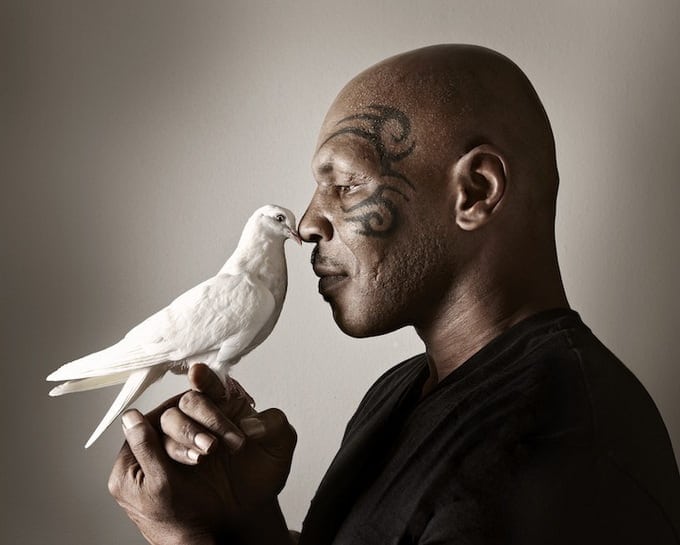
Mobley’s portraits typically emphasize a straightforward composition and a clear view of the subject. The photographs tend to avoid busy visual tricks. Instead, they rely on strong eye contact, careful framing, and the small shifts in expression that make a face feel alive. That approach suits celebrity portraiture, where the challenge is often to find an image that feels less manufactured than the subject’s public image.
In practice, this can mean a subject placed against a plain or subdued background, lit to preserve natural facial detail, and presented in a pose that feels composed but not rigid. The pictures often read as polished magazine portraiture with a human tone. They are made to be remembered for the person in them, not for decorative effects.
Questions
What is Paul Mobley best known for?
He is best known for portrait photography that feels immediate and intimate. His work includes celebrity portraits as well as long-form projects about farmers, firefighters, and other groups. The common thread is a direct, character-driven approach.
Has Paul Mobley only photographed celebrities?
No. Celebrity work is part of his portfolio, but it is only one part of it. He has also built book projects around people whose lives are outside the entertainment industry, which gives his practice a wider social range.
What makes a Paul Mobley portrait recognizable?
The images usually look composed but not overly posed, with attention on expression and presence. They often feel clean, professional, and easy to read, with little visual clutter competing for attention. That clarity is a major part of their appeal.