
Pernambuco is a state in northeastern Brazil, bordered by the Atlantic Ocean and known for a long coastline, a dense urban core around Recife, and a strong tradition of carnival, music, and hand-made visual culture. Its capital, Recife, anchors much of the state’s creative life, while inland and along the coast, woodworking, embroidery, printmaking, and vernacular architecture shape the local built environment.
Stories from Pernambuco
1 story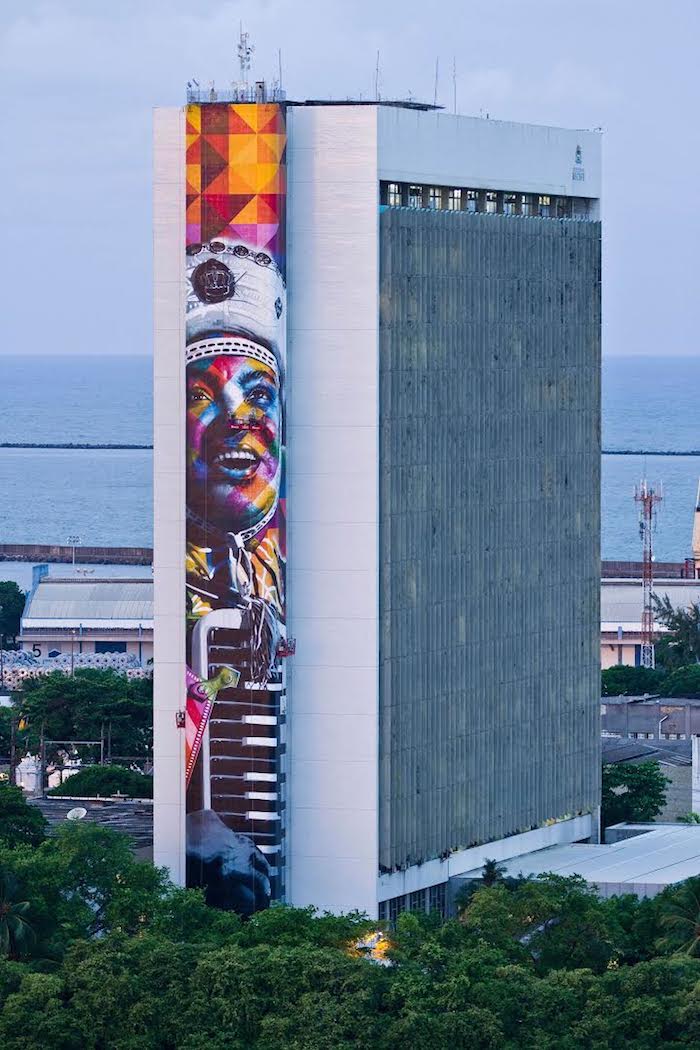
About Pernambuco
| Country | Brazil |
|---|---|
| Region | Northeast |
| Capital | Recife |
| Coastline | About 187 km |
| Borders | Paraíba, Ceará, Piauí, Alagoas, Bahia, and the Atlantic Ocean |
| Known for | Beach towns, carnival traditions, public murals, Recife’s cultural scene, and coastal craft practices |
Read the full overviewWhere is Pernambuco, and what defines it?, Why does Pernambuco matter in Brazilian visual culture?, What does Pernambuco look like in practice?, How did Pernambuco develop its cultural identity?
Where is Pernambuco, and what defines it?
Pernambuco sits on Brazil’s northeastern Atlantic edge, with a landscape that moves from busy port city to beach strip to drier inland areas. Recife, the capital, is the state’s largest cultural reference point and a major center for contemporary art, design, and publishing. The coastline includes resort and fishing towns such as Porto de Galinhas, Carneiros, and Calhetas, but Pernambuco is not only a beach destination; it is also a place of strong civic identity and visible street culture.
The state’s geography has helped shape its visual character. Coastal humidity, bright light, and dense urban neighborhoods encourage painted façades, tiled surfaces, shade structures, and outdoor gathering spaces. In Recife and nearby cities, public walls often carry murals, political imagery, and graphic interventions that sit comfortably beside older craft traditions.
Why does Pernambuco matter in Brazilian visual culture?
Pernambuco matters because it has long produced and supported forms of culture that are public, social, and handmade. Its festivals, especially carnival traditions, rely on costume design, masks, banners, sound systems, and mobile performance objects. That mix of image, movement, and fabrication gives the state a strong place in Brazil’s visual history.
Recife, in particular, has been a site where contemporary mural painting and older urban textures coexist. Large-scale artworks in the city often respond to local history, Afro-Brazilian identity, and neighborhood life. A mural in Recife is not just decoration; it usually enters a crowded visual field shaped by signage, colonial architecture, concrete apartment blocks, and the weathering effects of heat and rain.
What does Pernambuco look like in practice?
In practice, Pernambuco is visible through contrast. The coast presents bright hotels, beach houses, fishing boats, and tourist signage, while older quarters in Recife show tiled facades, narrow streets, and buildings adapted to heat and flood conditions. In many towns, painted color carries as much weight as ornament, and surfaces are maintained as part of everyday civic life.
The state also appears through material culture. Local craft traditions include lace, embroidery, ceramics, wood carving, and fabric work, often sold in markets or used in religious and festive settings. Public art projects, including murals, often draw on these same textures: flat fields of color, bold outlines, figurative scenes, and references to local dance, music, and labor.
How did Pernambuco develop its cultural identity?
Pernambuco’s identity formed through colonial trade, plantation economies, port activity, and later urban growth around Recife. Those histories created inequalities, but they also produced a highly mixed cultural field shaped by Indigenous, African, and European influences. The result is a place where religious imagery, carnival imagery, commercial graphics, and street art all share space.
Modern visual culture in Pernambuco grew from that layered history rather than replacing it. A mural by a contemporary artist in Recife may borrow the scale of advertising, the color density of festival banners, or the narrative clarity of popular art. The state’s significance lies in that overlap: art here often functions in public, addresses local memory, and uses ordinary materials and surfaces rather than separating itself from the city around it.
Frequently Asked Questions
Is Pernambuco only known for beaches?
No. The beaches are famous, but they are only one part of the state’s identity. Pernambuco is also important for Recife’s urban culture, carnival traditions, and public art scene. Its visual character comes from the combination of coastline, city life, and craft traditions.
Why is Recife so often mentioned with Pernambuco?
Recife is the capital and principal cultural center of the state. Many of the best-known examples of contemporary art, architecture, and street culture in Pernambuco are concentrated there. For that reason, descriptions of the state often pass through Recife even when they refer to Pernambuco as a whole.
What kinds of materials and techniques are associated with Pernambuco?
Pernambuco is associated with painted walls, tilework, textiles, embroidery, lace, ceramics, and carved wood. In public art, artists often use acrylic paint, spray paint, and large-scale mural techniques suited to humid, outdoor conditions. In craft settings, the emphasis is usually on handwork, repetition, and materials that can be displayed, worn, or carried in public.