
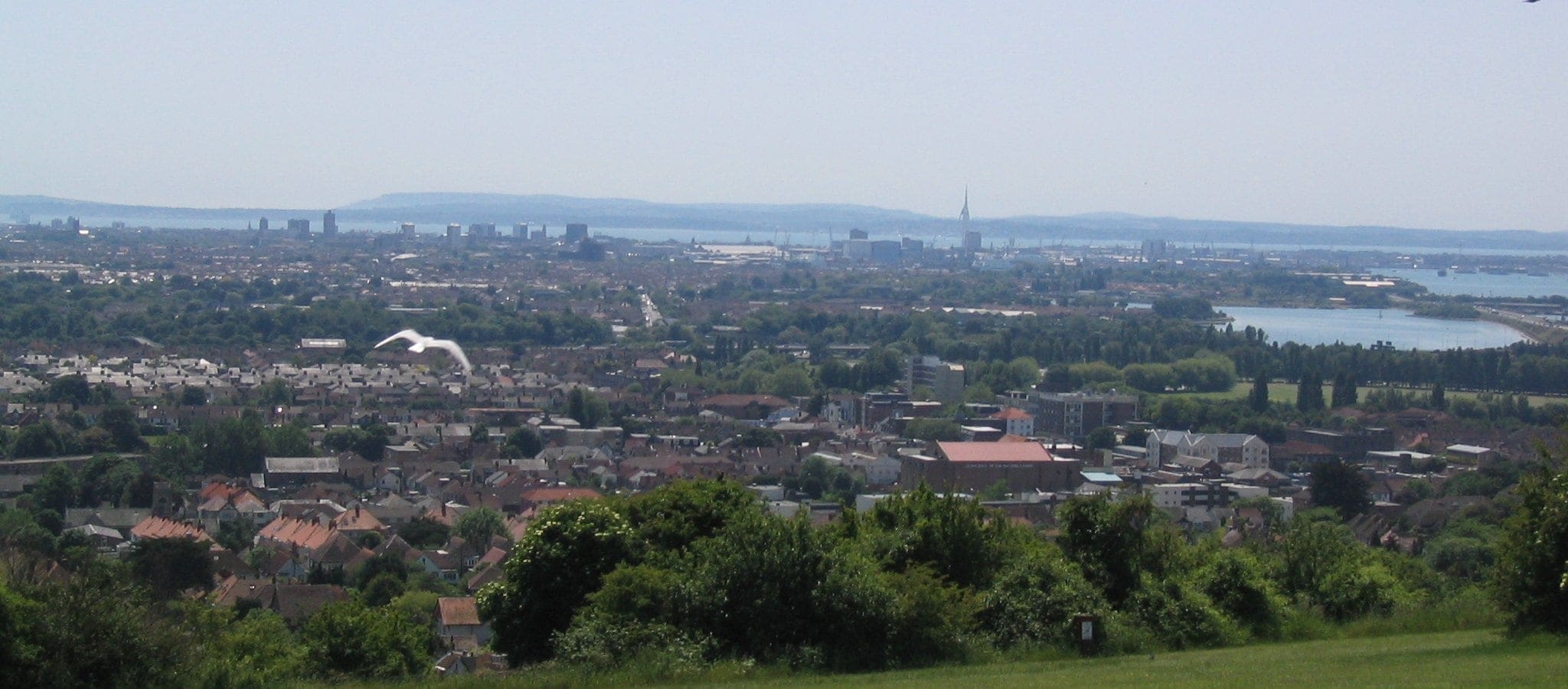
Portsmouth is a historic port city on the south coast of England, on Portsea Island in Hampshire. It is the United Kingdom’s only island city, and its identity has long been shaped by dockyards, naval infrastructure, dense urban housing and a working waterfront facing the Solent.
- Second-largest city in Hampshire
- Built mainly on Portsea Island
- Major naval and maritime centre
- Known for compact streets, terraces and seafront views
- About 64 miles south-west of London
Why does Portsmouth matter?
Portsmouth matters because its city form grew from industry, defence and trade rather than from a planned civic core. The harbour, dockyard and shoreline created a settlement packed tightly into limited land, which gave the city a distinctive scale: narrow streets, rows of terraced housing, tight blocks and a skyline shaped by masts, cranes and later towers. That urban density still influences how Portsmouth looks and works.
The city also has a strong cultural life tied to making and display. Its university, museums, shipyards and creative businesses support work in design, fashion, illustration and heritage interpretation. In a publication focused on visual culture, Portsmouth appears as a place where maritime history and contemporary creative production sit close together.
What does Portsmouth look like on the ground?
Portsmouth is not read as a single monumental centre but as a layered coastal city. Old naval quarters, Victorian terraces, postwar housing and newer waterfront development sit close together. The land itself is low and compact, so streets often feel enclosed and direct, while long views open suddenly toward the sea, the harbour or ferry terminals.
The city’s materials tell part of the story: brick terraces, rendered façades, painted timber, brick industrial buildings, concrete seawalls and metal dockside structures. Colour can be muted by weather and salt air, but it is often sharpened by maritime signage, ferries, emergency infrastructure and the bright fronts of shops and homes. In illustrations and photography, Portsmouth often reads as a city of edges – water against land, old stone and brick against newer interventions.
How did the city take shape?
Portsmouth developed from a small settlement into a major naval base because of its sheltered harbour and strategic position. The Royal Navy and associated dockyard work drove expansion, bringing labour, storage, repair facilities and military planning into the city’s fabric. That history made the waterfront central to local life and tied the city’s economy to shipbuilding, maintenance and defence.
Because Portsea Island has limited land, growth happened under pressure. The result is an urban fabric that is more compressed than many English cities of similar size. That compression influenced housing types, street widths and the relationship between residential districts and industrial or military zones, and it remains visible even where the economy has changed.
Frequently Asked Questions
Is Portsmouth actually an island city?
Yes. Portsmouth is the only city in the United Kingdom that lies mainly on an island, Portsea Island. It is separated from the mainland by channels and ports, with bridges and roads connecting it to surrounding areas.
What is Portsmouth best known for?
It is best known for its naval history, dockyards and coastal identity. The city is also recognised for its dense urban form, seafront, ferry links and a built environment shaped by maritime trade and defence.
Why might a design or culture publication mention Portsmouth?
Portsmouth often appears in stories about place-based identity, urban colour, seaside architecture and the visual language of working cities. It is also home to creative institutions and makers whose work draws on the city’s maritime, industrial and residential character.
At a glance
- Address
- City of Portsmouth, United Kingdom
- Coordinates
- 50.816666, -1.083333
Articles mentioning Portsmouth


