
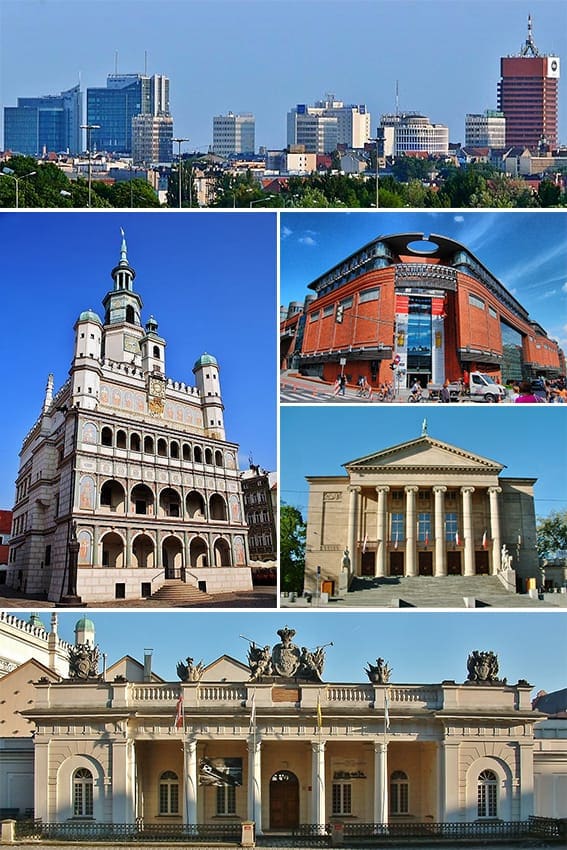
Poznań is a major city in west-central Poland on the Warta River, and one of the country’s oldest urban centres. It grew as an important seat of early Polish state power, with the rulers of the first Piast dynasty buried at its cathedral. Today it is known for a dense historic core, a large regional economy, and a strong civic identity shaped by trade, education, and industry.
| Country | Poland |
|---|---|
| Region | West-central Poland, Greater Poland |
| River | Warta |
| Role | Historic capital, commercial and cultural centre |
| Known for | Cathedral Island, Old Market Square, fair and trade traditions |
Why Poznań matters
Poznań matters because it sits at the intersection of Polish state formation, trade, and modern urban life. The city’s early religious and political importance made it one of the key centres of medieval Poland, and that status left a lasting mark on its architecture and street plan. The cathedral on Ostrów Tumski remains tied to the earliest chapters of the Polish kingdom.
The city also became a commercial hub. Its position on transport routes across western Poland helped it develop a merchant class, industrial districts, and later a strong service economy. That mix of old civic ambition and practical trade has long shaped how the city looks and functions.
What does Poznań look like on the ground?
The most recognisable parts of Poznań are its historic centre and riverside districts. The Old Market Square has colourful burgher houses and a tight urban scale, while nearby streets show layers of rebuilding, wartime damage, and postwar repair. Cathedral Island, or Ostrów Tumski, feels older and more monumental, with religious buildings set apart from the busier commercial city.
Beyond the centre, Poznań spreads into broad avenues, housing estates, factories, campuses, and green corridors. That contrast is typical of a city that has grown by accumulation rather than by one single plan. For visual culture, it offers a useful mix of medieval, Prussian, modernist, and contemporary fabric.
How did the city develop?
Poznań began as one of the main centres of the early Polish state. Its cathedral quarter was tied to the first rulers of Poland, which gave the city a symbolic status far beyond its size. Later centuries brought repeated political change, especially under Prussian rule, which altered the city’s administration, fortifications, and built form.
In the 19th and 20th centuries, Poznań developed as an industrial and exhibition city. Rail links, trade fairs, and manufacturing increased its regional reach, while universities and cultural institutions strengthened its intellectual life. The modern city still carries that practical, organised character.
What kind of city is it today?
Today Poznań is a large metropolitan centre with a diversified economy and a strong public realm. It combines business services, manufacturing, higher education, and events such as trade fairs. Its institutions and urban scale make it one of Poland’s most important western cities.
For artists, designers, and photographers, the city offers clear visual contrasts: sacred and civic architecture, market traditions and office districts, older masonry and newer glass, quiet river edges and busy transport corridors. Those contrasts help explain why the city appears often in work concerned with social order, memory, and the pressures of modern urban life.
Frequently Asked Questions
Is Poznań a historic capital of Poland?
Poznań is not the only city associated with early Polish power, but it was one of the most important centres of the first Polish state. The cathedral on Ostrów Tumski is linked to the burial place of early rulers, which gives the city exceptional historical weight. That early role makes it central to the story of Polish state formation.
What is Poznań best known for visually?
The city is best known for its Old Market Square, its cathedral district, and its mix of historic and modern urban fabric. The colours and scale of the rebuilt centre stand out, as do the older ecclesiastical buildings on Cathedral Island. The city also has a strong identity shaped by order, commerce, and civic monumentality.
Why might Poznań appear in an art or design article?
Poznań appears in art and design writing because it offers a readable cityscape with clear historical layers. Its architecture, public spaces, and social history provide strong material for commentary on urban life, memory, and power. The city’s blend of sacred, commercial, and industrial structures makes it useful as a visual reference point.
At a glance
- Address
- Greater Poland Voivodeship, Poland
- Coordinates
- 52.4, 16.916666
Articles mentioning Poznań
