Schmidt Hammer Lassen Architects is a Danish architectural firm founded in Aarhus in 1986 by a group of architects who set out to build contemporary public architecture with a clear Nordic character. The practice now works internationally from offices in Copenhagen, Aarhus, and Shanghai.
| Founded | 1986 |
|---|---|
| Founders | A group of Danish architects |
| Origin | Aarhus, Denmark |
| Head offices | Copenhagen and Aarhus, Denmark; Shanghai, China |
| Type | Architectural firm |
What kind of practice is it?
Schmidt Hammer Lassen works across cultural, civic, educational, and commercial projects, with a strong record in large public buildings. Its reputation rests on restrained massing, careful daylighting, and interiors that feel open without becoming bland. The firm often treats architecture as part of a larger urban setting rather than as a self-contained object.
That approach fits the broader Scandinavian tradition, where materials, light, and social use matter as much as formal expression. In practice, the buildings often combine stone, concrete, timber, glass, and metal in compositions that are calm rather than flashy. The work tends to favor clarity of structure and circulation, so entrances, atria, and common spaces do a lot of the visual and social work.
How did the firm come about?
The practice began in Aarhus in the mid-1980s, a period when Danish architecture was increasingly outward-facing and internationally competitive. From the start, the firm grew from a local base into a studio handling larger commissions beyond Denmark. That expansion helped turn it into one of the best-known Danish practices working abroad.
The name signals the founders’ surnames rather than a single-star architect model. That matters because the firm has usually presented itself as a collaborative office with many hands shaping a project. The result is a body of work that reads as consistent in values even when the building types vary widely.
What does Schmidt Hammer Lassen architecture look like?
The firm’s buildings often use strong geometric forms, often articulated with deep openings, generous glazing, and pronounced structural rhythm. Facades may appear quiet from a distance, then reveal more texture, shadow, and circulation at closer range. Public interiors are frequently organized around atriums, ramps, and staircases that make movement visible and give a building a civic center.
Several projects show how the office handles light as a material. In museum and cultural work, daylight is controlled carefully, not simply admitted. In more demanding building types such as prisons, the same discipline appears in a different form: repeated units, secure thresholds, and robust materials arranged to create order, legibility, and a less punitive atmosphere.
Why does it matter?
Schmidt Hammer Lassen matters because it helped define a contemporary Danish architectural language that can scale up to major institutions without losing its composure. The firm’s projects show that public architecture can be expressive without relying on spectacle. That makes its work useful as a reference point for libraries, museums, campuses, and civic buildings where dignity and function must coexist.
The firm is also notable for taking on architecture with social responsibilities, including prison design. In that context, materials and planning have ethical weight: natural light, clear sightlines, controlled acoustic conditions, and durable finishes all affect how a building feels and operates. The practice’s work in this area shows how architecture can shape behavior while still leaving room for humane design.
Which projects are most associated with the firm?
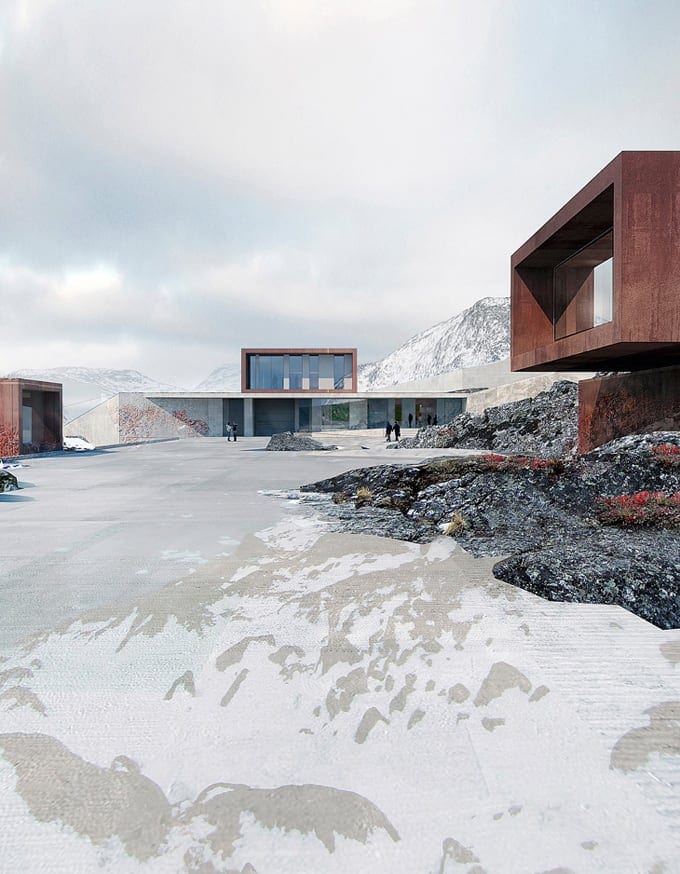
Among the best-known projects linked to the office are ARoS Aarhus Art Museum and Ny Anstalt, the prison in Greenland referenced in FreeYork articles. ARoS is associated with large-scale cultural architecture and dramatic spatial sequencing, including the kind of setting that can host a major installation like James Turrell’s Skyspace. Ny Anstalt demonstrates the firm’s ability to work in harsh northern conditions and within the exacting requirements of correctional architecture.
Those projects are different in program but similar in method. Both depend on disciplined planning, strong environmental control, and a building envelope that works hard. In one case the result is an expansive museum; in the other, a secure institution that aims to reduce stress and support daily life through layout and material choice.
Frequently Asked Questions
Is Schmidt Hammer Lassen Architects a single architect or a studio?
It is a studio, not a single architect. The firm was founded by a group of Danish architects and has continued as a collaborative practice. That structure helps explain why the office’s work feels consistent across many project types.
What kind of materials does the firm usually use?
The practice often uses materials associated with Scandinavian modern architecture: concrete, timber, stone, glass, and metal. The choice depends on the building type, but the surfaces are usually handled with restraint and clarity. Materials are selected as much for durability and atmosphere as for appearance.
Why is the firm relevant to a design or visual culture reader?
Its projects show how architecture shapes public experience through light, sequence, and material. Museums, prisons, and civic buildings all become more legible when those elements are handled well. The firm’s work is useful because it connects design decisions to the way institutions are actually lived in and seen.
At a glance
- Founded
- 1986
- Address
- Aarhus Municipality, Denmark
Articles mentioning Schmidt hammer lassen architects