
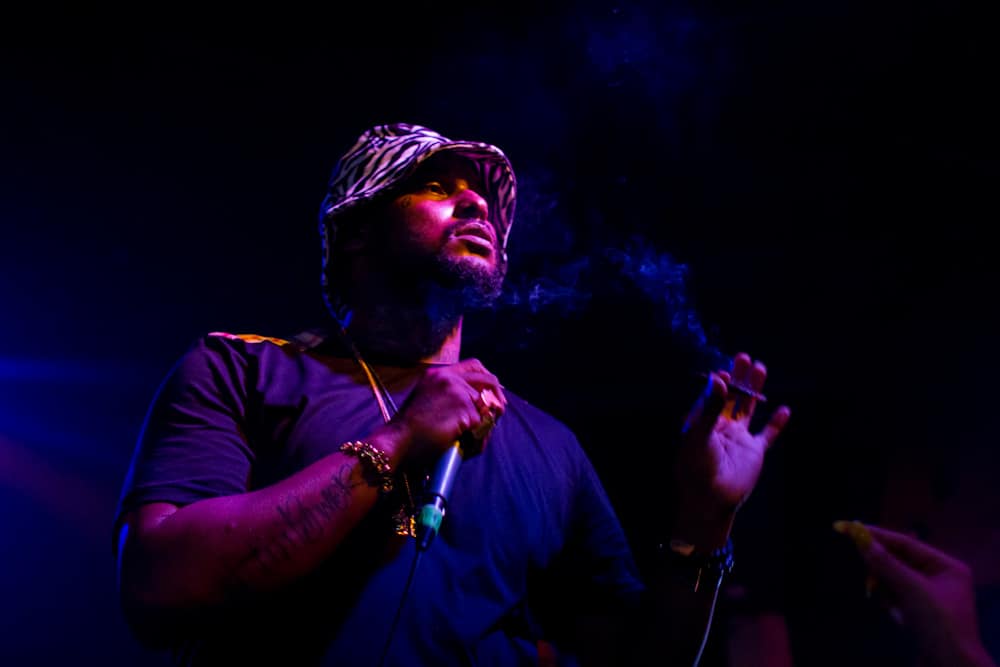
Schoolboy Q is the stage name of Quincy Matthew Hanley, an American rapper from South Central Los Angeles known for hard-edged West Coast hip hop and a clipped, conversational delivery. He emerged through Top Dawg Entertainment, recorded for Interscope Records, and became part of Black Hippy alongside Ab-Soul, Jay Rock, and Kendrick Lamar.
| Born | October 26, 1986 |
|---|---|
| Birth name | Quincy Matthew Hanley |
| Also styled as | ScHoolboy Q |
| Origin | South Central Los Angeles, California |
| Known for | Rapping, songwriting, and membership in Black Hippy |
| Labels | Top Dawg Entertainment; Interscope Records |
How Schoolboy Q fits into West Coast rap
Schoolboy Q belongs to a generation of Los Angeles rappers who rebuilt the city’s mainstream rap presence in the 2010s. His music draws on gangsta rap, club records, and hazy, bass-heavy production, but he often undercuts menace with humor, self-awareness, and a rough-edged, talkative flow. That combination made him useful both as a solo artist and as part of a larger label identity.
Top Dawg Entertainment gave him a platform alongside Kendrick Lamar and other Los Angeles artists who helped define the label’s sound. Black Hippy, the informal supergroup formed by those artists, functioned less like a separate band than a way of presenting a shared scene: overlapping features, shared audiences, and a common sense of place.
What does his music sound like?
Schoolboy Q’s records usually rely on thick drums, dark synth lines, and production that leaves room for his voice to sound both relaxed and threatening. He often raps in a drawl that feels conversational rather than polished, which gives his lines a loose, street-level texture. That style works especially well in songs that balance bravado with detail about everyday life, money, violence, drugs, and survival.
His appeal also comes from contrast. He can sound comic in one line and severe in the next, and that instability gives his verses momentum. The songs tend to feel lived-in rather than posed, which is one reason his work has been absorbed into visual culture projects that use rap lyrics as public text.
Why does Schoolboy Q matter?
Schoolboy Q matters because he helped broaden the image of Los Angeles rap beyond a single commercial lane. His music sits between street rap, party music, and introspective storytelling, and that range made him a useful figure in the city’s 2010s hip hop revival. He also helped show how a local label like Top Dawg Entertainment could build a national profile without losing its regional accent.
His presence in Black Hippy matters for the same reason. The group signaled collaboration instead of competition, and it gave listeners a way to hear Los Angeles rap as a network rather than a set of solo brands. That idea has been important for artists, designers, and curators who treat rap not just as sound but as a visible urban culture.
How Schoolboy Q appears in public space
Schoolboy Q’s lyrics and persona have been used in public art and text-based projects, including Jay Shells’ “RAP QUOTES,” which placed lines from rap songs at their original locations in Los Angeles. In that context, he becomes more than a recording artist: his words act as markers of neighborhood memory and city identity.
That kind of reuse depends on the concreteness of his writing. The references to streets, local habits, and social codes make his lyrics easy to relocate back onto the map. As a result, his work travels well between recording, performance, and visual display.
Frequently Asked Questions
Is Schoolboy Q part of a group or mainly a solo artist?
He is primarily a solo artist, but he is also a member of Black Hippy. That collective included Ab-Soul, Jay Rock, and Kendrick Lamar, all of whom were closely tied to Top Dawg Entertainment. The group mattered as a symbol of shared Los Angeles momentum rather than as a conventional supergroup with one fixed catalog.
What is Schoolboy Q’s style?
His style mixes rough Los Angeles street rap with humor, menace, and a conversational cadence. The production around him often uses heavy drums and dark, spacious beats that let his voice stay front and center. The result is music that sounds both local and highly marketable.
Why is he associated with visual culture projects?
His lyrics are specific enough to work as public text, especially in projects that place rap lines back into their neighborhood settings. That makes his writing useful for artists and designers interested in mapping culture onto the city. His songs do not just describe Los Angeles; they can be displayed as part of its visual language.
}{