
Sebastian Magnani is a Swiss photographer known for staged image-making that blends portraiture, costume, and animal heads to create uncanny, comic scenes. He was born in 1985 in Canton Valais and is based in Zurich. Magnani came to photography after training as a media designer and working in advertising, then turned freelance in 2011. His best-known work, including Underdogs and UnderCats, has circulated widely in magazines, newspapers, websites, and television.
Sebastian Magnani’s work on FreeYork

What kind of photographer is Sebastian Magnani?
Magnani works at the point where commercial polish meets personal concept. His images are usually highly controlled, with clean lighting, simple compositions, and carefully chosen props or costumes. The effect depends on an immediate visual joke that still feels precise and crafted rather than casual.
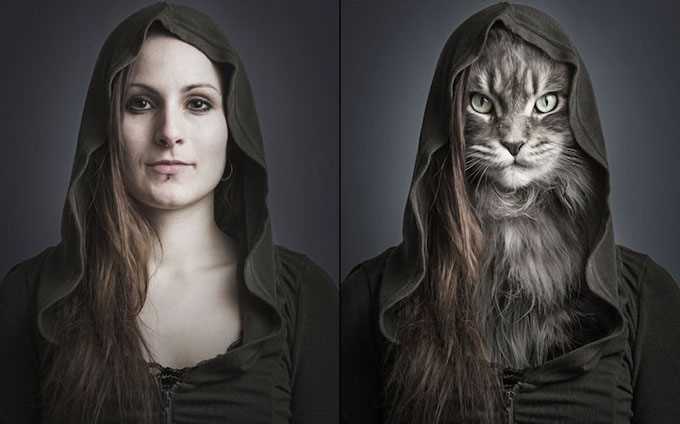
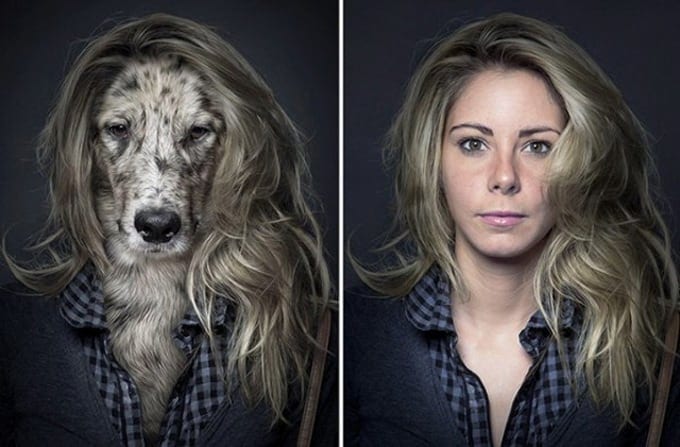
His most recognisable pictures place animal heads on human bodies or human figures, often in contemporary clothing. That mismatch makes the photographs read as both playful and slightly disquieting. The joke lands because the images are built with the logic of studio portraiture: believable surfaces, exact framing, and strong graphic clarity.
Where did his style come from?
Magnani’s background helps explain the sharpness of his work. Training as a media designer gave him a visual language shaped by layout, composition, and communication. His years in advertising likely reinforced the value of an idea that can be understood instantly and reproduced cleanly across different media.
He began photographing professionally in 2011, but the projects that made his name are rooted in independent, self-directed work. That matters because the images are not just assignments or editorial illustrations; they are concept-led series in which the idea comes first and the photograph is the execution of that idea.
Why did Underdogs get so much attention?
Underdogs became widely shared because it is easy to read at a glance and hard to forget. The series shows dogs with human bodies in formal or everyday settings, often dressed in clothes that suggest personality, class, or social role. The result is funny, but it also has an edge: the human world looks absurd when mapped onto animal faces and bodies.
That clarity made the work travel well across print and digital media. It also fit a wider appetite for surreal, immediately legible image concepts that can move quickly across social platforms. The pictures are memorable not because they are complicated, but because they are so exactly constructed.
What does his work look like in practice?
Magnani’s photographs usually rely on a few repeated methods: studio-style presentation, careful post-production, and a strong central conceit. He often uses clean backgrounds or controlled environments so that the viewer focuses on the figure and the mismatch between body and identity. The images tend to be crisp, flatly readable, and designed for immediate recognition.
Across projects, he keeps returning to identity as something performative and unstable. The animal-headed figures are masks, but they are also characters. That gives the work a double life: it functions as humorous visual storytelling, and it also asks how much of a person is costume, pose, or projection.
Questions
Is Sebastian Magnani mainly a fine art photographer or a commercial photographer?
He works in a space between the two. His images have the controlled finish associated with commercial photography, but the subjects and series structure come from self-directed, concept-based practice. That combination is part of why his work has been widely published.
What is UnderCats?
UnderCats is another of Magnani’s animal-headed portrait series, extending the visual idea behind Underdogs. Like the earlier project, it uses staged photography and costume to produce a comic but precise image world. The series shows how he develops a single concept through variations rather than abandoning it after one version.
Why do magazines and websites publish his images so often?
His work has a strong thumbnail effect: it communicates quickly, even without explanation. Editors tend to value images that are both visually striking and easy to describe, and Magnani’s photographs meet both conditions. They also suit stories about art, humor, and contemporary image culture because they move between those categories cleanly.