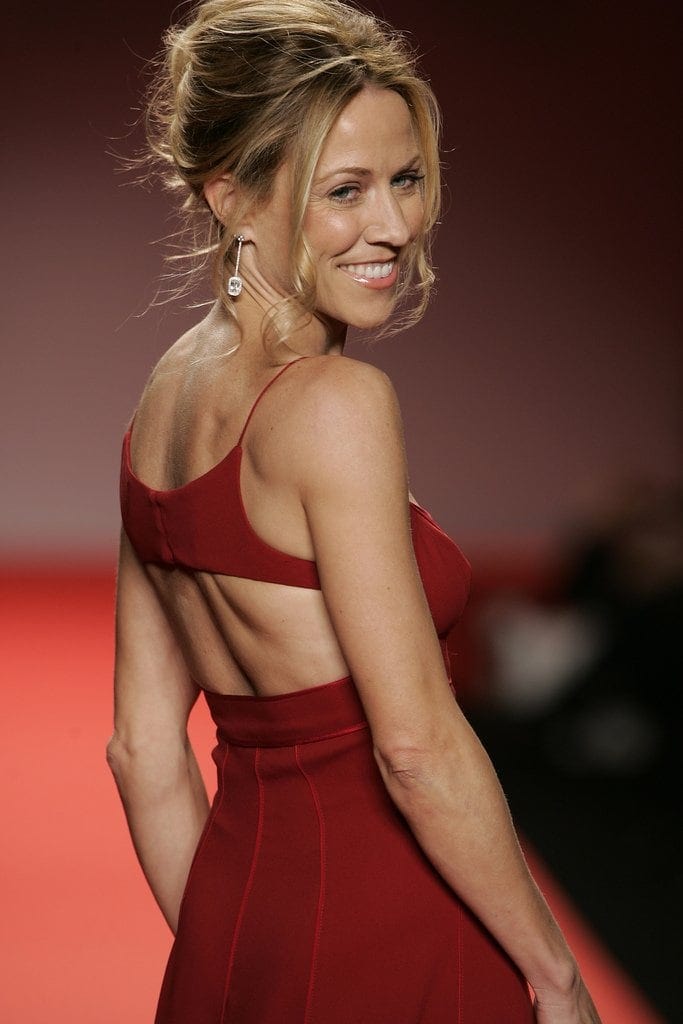
Sheryl Crow is an American singer-songwriter, guitarist, record producer, and actor whose work blends rock, pop, country, folk, and soul. She emerged in the early 1990s and became known for compact, radio-ready songwriting, a scratchy mezzo-soprano voice, and arrangements that often mix acoustic instruments with electric guitar, organ, and layered backing vocals.
| Born | 11 February 1962, Kennett, Missouri, United States |
|---|---|
| Known for | Songwriting, singing, guitar-based pop rock, production work, film soundtrack contributions |
| Active since | 1980s |
| Notable reach | Multiple platinum-selling albums and wide crossover success in the US and internationally |
How did Sheryl Crow become known?
Crow first worked as a session singer and commercial jingle vocalist before moving into album-length work. That background matters: it gave her a practical sense of phrasing, studio discipline, and how to build songs that sound immediate on first listen. Her breakthrough came with Tuesday Night Music Club in 1993, an album shaped by Los Angeles studio collaboration and led by the hit single “All I Wanna Do.”
After that breakthrough, she built a durable career by changing the balance of her sound without losing its center. Some records lean toward country, others toward rock or introspective folk-pop, but her writing usually stays anchored in short narrative scenes, melodic hooks, and plainspoken details.
What does her music sound like?
Crow’s songs often rely on live-band feel rather than heavily synthetic production. Guitars sit close to the front, whether jangling acoustically or pushed through distortion, and the rhythm section tends to stay steady and uncluttered. Even when a track uses hip-hop-inflected beats or polished pop arrangements, the performance usually sounds performed by a group in a room rather than assembled as a pure studio artifact.
Lyrically, she moves between social observation, romantic fatigue, self-protection, and political commentary. Her best-known songs combine sharp hooks with conversational lines, which makes them easy to remember without sounding empty. That combination helped her cross from adult contemporary radio into rock and country audiences.
Why does Sheryl Crow matter?
Crow matters because she became one of the most visible American female rock-pop artists of the 1990s while keeping authorship at the center of her career. She wrote or co-wrote much of her material, played guitar onstage and in the studio, and helped normalize a mainstream female singer-songwriter identity that was neither fragile acoustic confession nor hard-edged arena rock alone.
She also showed how commercial success and stylistic flexibility can coexist. Her discography moves across genres without reading as a series of reinventions for their own sake. Instead, each shift tends to preserve the same basic strengths: concise songwriting, strong melodic sense, and a grounded, human-scale delivery.
How is she represented in photography and popular culture?
In portrait photography and editorial imagery, Crow is often presented with a visual language that matches her sound: denim, boots, guitars, studio settings, and daylight rather than heavy spectacle. That look fits her public image as a working musician rather than a highly stylized pop character. When photographers emphasize candid posture, instrument handling, or mid-performance expression, the image usually reinforces her credibility as a performer who actually plays.
Her wider public identity also includes activism and occasional acting, which broadens the kinds of images attached to her. Still, the strongest and most persistent visual shorthand remains musical labor itself: a singer with a guitar, onstage or in a rehearsal-like setting, presented with directness instead of glamour excess.
Frequently Asked Questions
What genre is Sheryl Crow?
Sheryl Crow is usually described as rock or pop rock, but that label is only part of the picture. Her records draw from country, folk, soul, and occasional hip-hop production touches. The genre blend is one reason her music has stayed legible across different radio formats.
What is Sheryl Crow best known for?
She is best known for her 1990s breakthrough and for songs such as “All I Wanna Do,” “If It Makes You Happy,” and “Everyday Is a Winding Road.” Those tracks established her as a major mainstream songwriter with a strong melodic instinct. She is also known for sustained album success rather than a single isolated hit.
Does Sheryl Crow write her own songs?
Yes. Songwriting is central to her career, and she has often co-written or written her material herself. That authorship is part of why her records feel personal even when they are built for wide commercial release.
Articles mentioning Sheryl Crow