
VELUX is a Danish manufacturer of roof windows, skylights, and related roof-integrated daylight and ventilation products. The company also makes blinds, roller shutters, installation accessories, remote-control systems, and solar thermal panels designed to sit within or on roof structures. Founded in Denmark and now owned by VKR Holding A/S, VELUX has become one of the best-known names in roof glazing.
Stories from VELUX
2 stories
About VELUX
- Specialises in roof windows, skylights, and roof-mounted daylight systems
- Makes shading products, shutters, and installation components alongside glazing units
- Operates manufacturing companies in 10 countries and sales companies in nearly 40
- Employs around 10,000 people worldwide
- Commonly appears in architecture and renovation projects where daylight, ventilation, and roof detailing matter
Read the full overviewWhat VELUX makes, Where did VELUX come from?, Why does it matter in architecture and interiors?, What does it look like in practice?
What VELUX makes
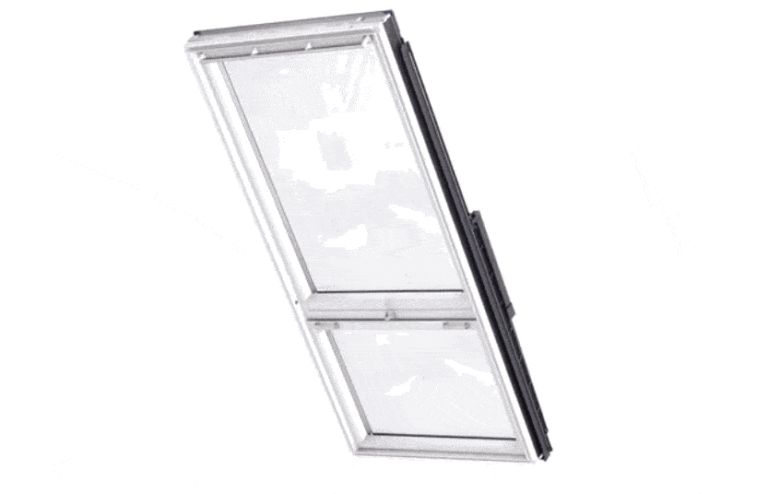
VELUX is best known for roof windows that bring daylight and fresh air into rooms built directly under pitched roofs. These are not ordinary façade windows moved upward; they are engineered for roof planes, weatherproof flashing, insulation, and controlled ventilation. The company’s products often appear in loft conversions, attics, timber-frame houses, and contemporary homes that use the roof as a source of light rather than a barrier against it.
Its catalogue extends beyond the glazing unit itself. VELUX sells blinds and sun screening for light control, roller shutters for shading and security, installation kits for builders, and remote-control systems for opening windows and operating accessories. Some systems include integrated thermal solar panels, which lets the roof opening work alongside energy and climate-management equipment.
Where did VELUX come from?
VELUX began in Denmark, a country with a strong tradition of practical, well-detailed domestic design. The company grew around a simple architectural problem: how to make upper-floor rooms usable, bright, and comfortable without turning the roof into a leaky compromise. Its brand became closely associated with pitched roofs, attic conversions, and the modernisation of older buildings that needed more daylight.
The name itself has become almost generic in some contexts, especially where people use “Velux window” as shorthand for any roof window. That kind of brand recognition reflects how deeply the company’s products have entered building culture. In projects across Europe and beyond, the VELUX system is often part of the default language of roof design.
Why does it matter in architecture and interiors?
Roof windows change the quality of a room more dramatically than many other building components. They pull in overhead light, which is stronger and more evenly distributed than light entering from a wall. They also support stack ventilation, letting warm air escape through the highest point in the building. In homes, studios, and small public spaces, this can make compact interiors feel far larger and more habitable.
VELUX matters because it packages that architectural function into standardized products that contractors can install reliably. The company’s importance is not only aesthetic but technical: flashing details, insulation frames, opening mechanisms, and shading systems all affect whether a roof opening performs well over time. In practice, its products sit at the meeting point of carpentry, glazing, roofing, and environmental control.
What does it look like in practice?
On a building site, a VELUX installation is usually visible as a roof plane interrupted by a framed glazed opening, often set flush with the surrounding roofing. In interiors, the effect is immediate: light drops into an otherwise shallow or compressed room, and the ceiling line gains a sense of depth. In lofts and converted attics, paired roof windows can create cross-ventilation and a more balanced daylight pattern than a single dormer opening.
In more ambitious architecture, the system can become part of a larger design gesture. A roof window may be grouped into a rhythm across a timber roof, paired with automated blinds, or combined with a balcony-style opening mechanism that changes how the roof edge is used. Even when the brand is not visible, its hardware often shapes how these spaces are framed, sealed, and operated.
Frequently Asked Questions
Is VELUX a product name or a company?
VELUX is a company, but the name is often used as a product name in everyday speech. Many people use it to mean any roof window, even when another manufacturer made it. In architecture and construction, the distinction matters because VELUX also refers to a specific range of systems and accessories.
What kinds of projects use VELUX products?
VELUX products appear most often in houses with pitched roofs, attic conversions, extensions, and renovations that need more daylight and ventilation. They also show up in schools, studios, and small commercial spaces where overhead light improves working conditions. The products are especially common where keeping the roofline clean and functional matters more than adding a full dormer.
Why are roof windows so important in design?
Roof windows change both light and air movement, two of the most basic qualities that shape how a room feels. They can make small or enclosed spaces usable for longer periods of the day and reduce reliance on artificial lighting. In design terms, they are a structural, environmental, and spatial tool at once.