
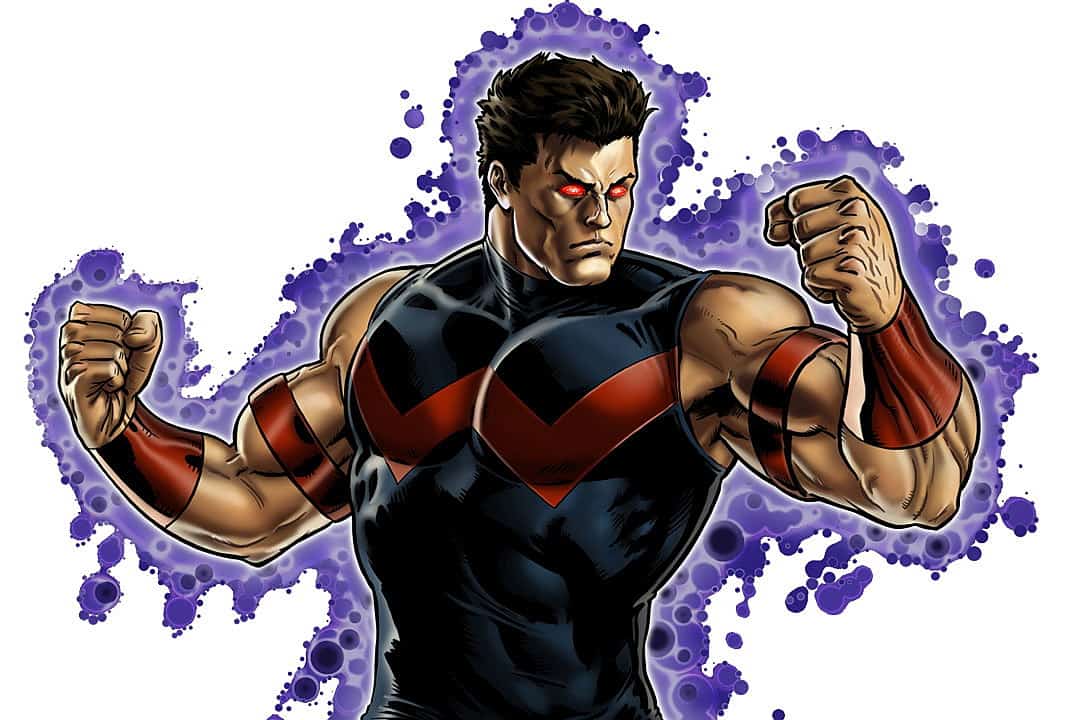
Wonder Man is a Marvel Comics superhero and fictional character who first appeared in The Avengers #9 in October 1964. Created by Stan Lee, Don Heck, and Jack Kirby, he entered Marvel’s universe as a powerful, conflicted figure whose body and powers were tied to scientific experimentation and later to a more self-aware role as an actor and public personality.
- Wonder Man debuted in the Silver Age of American superhero comics.
- His origin centers on ion-based powers and experimental science rather than magic or alien heritage.
- The character moves between villain, antihero, and team member, especially in Avengers stories.
- He is often drawn as a physically imposing figure with a bright, showy costume that suits his name.
- Later versions of the character use his celebrity status to explore fame, performance, and identity in superhero fiction.
Where did Wonder Man come from?
Wonder Man was introduced during Marvel’s rapid expansion of team-based superhero books in the 1960s. Stan Lee, Don Heck, and Jack Kirby created him for The Avengers, where he debuted as an apparent enemy before becoming a recurring presence in the series. That early twist mattered: Marvel used the character to complicate the clean split between hero and villain that older superhero comics often relied on.
His first stories placed him in the orbit of industrial schemes, advanced energy research, and power theft. Like many Marvel creations of the period, he reflected anxiety about technology, corporate ambition, and the costs of transformation. The result was a character who looked like a classic hero but carried a more unstable origin than his name suggested.
What kind of superhero is he?
Wonder Man’s powers set him apart from more familiar crime-fighters. He is usually portrayed as possessing immense strength, flight, near-invulnerability, and energy-based abilities linked to his altered physiology. Writers often describe him as an “ionic” being, which gives the character a science-fiction register even when the stories play like standard superhero adventure.
That power set gives artists a lot to work with. Wonder Man is commonly shown in flight, mid-stride, or braced against heavy impact, with a broad, muscular silhouette that emphasizes force and motion. His costume has varied over time, but it often uses red, green, black, or a gold-and-red palette that reads clearly on the page and separates him from darker or more armored figures in the Marvel lineup.
Why does Wonder Man matter in Marvel storytelling?
Wonder Man became more interesting as Marvel writers moved him beyond his first villainous role. He joined the Avengers and later appeared in stories that focused on guilt, loyalty, and self-image. Because he is powerful but often emotionally uncertain, he fits stories that ask how a person lives with fame, failure, or repeated reinvention.
That theme deepened when later comics made him an actor and public figure. In those stories, Wonder Man became a character about performance both on and off the page: he performs as a celebrity, performs heroism, and is sometimes forced to perform a version of himself for others. This makes him useful in Marvel’s broader habit of linking superhero spectacle to ordinary human insecurity.
How is Wonder Man used on the page?
In practice, Wonder Man works best in large, expressive comic panels. Artists typically emphasize scale through clean poses, bright costume shapes, and the contrast between his body and surrounding structures. When the character is drawn well, the reader should feel that he can break through walls, lift vehicles, or fill a frame with sheer physical presence.
Writers also use him as a counterpoint to more controlled or tactical heroes. He can seem impulsive, emotionally direct, and less polished than a character like Iron Man or Captain America. That tension gives scenes a comic-book rhythm: raw power against discipline, celebrity against anonymity, and spectacle against responsibility.
Frequently Asked Questions
Is Wonder Man a hero or a villain?
He has been both, depending on the era and the story. His first appearance presented him as an enemy, but later stories repositioned him as an ally and full member of the superhero community. That shifting role is part of what makes the character memorable.
What does “ionic” mean in Wonder Man stories?
“Ionic” is the comic-book explanation for his altered body and powers. Writers use it to signal that his abilities come from an unusual form of energy rather than conventional biology alone. The term gives Marvel a science-fiction vocabulary for a character who might otherwise read as a standard powerhouse.
Why is Wonder Man often linked to acting?
Later comics made him an actor to explore identity, public image, and the performative side of superhero life. The idea fits a character whose name already sounds theatrical and whose stories often deal with how others see him. It also gives writers a way to connect celebrity culture to the Marvel universe.
Articles mentioning Wonder Man
