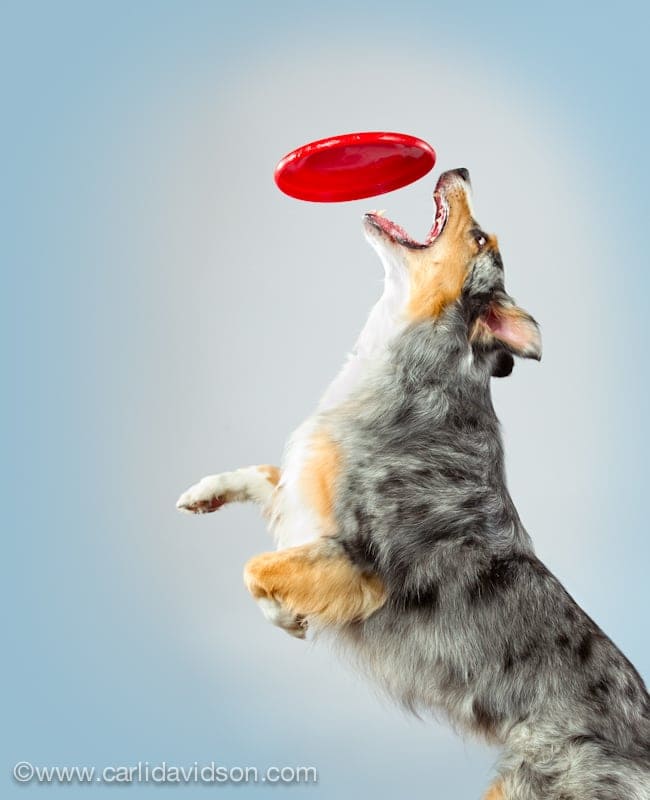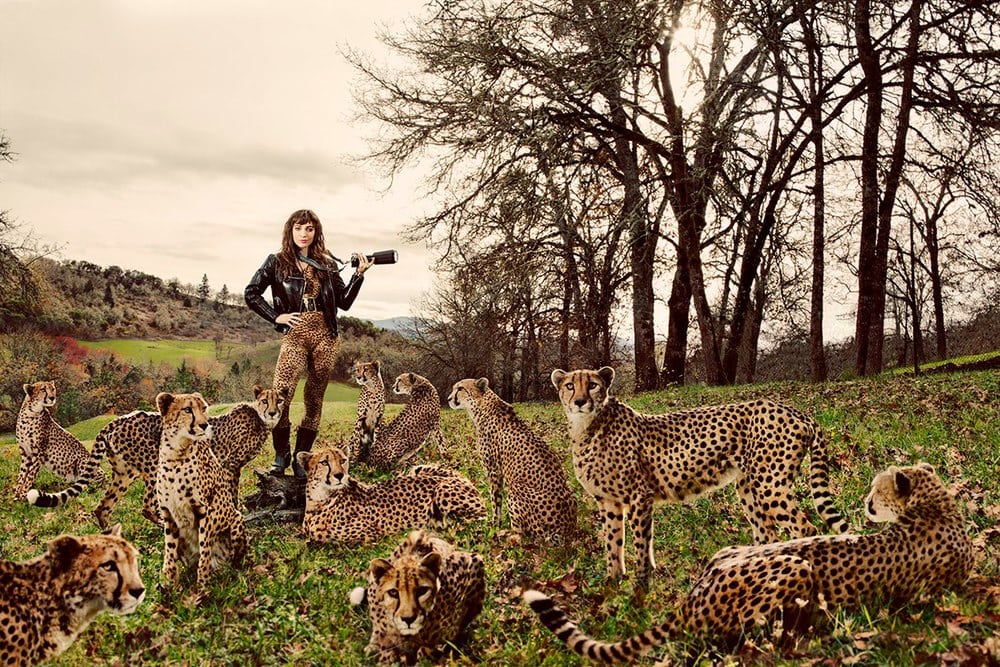
Carli Davidson is an American animal photographer known for high-speed portraits that freeze a dog, cat, or other creature at the exact instant it shakes, blinks, or moves through a fleeting expression. Her work combines animal handling experience, technical timing, and studio lighting to turn an ordinary bodily motion into a clean, comic image.
- She built her practice around photographing animals at the moment of motion, especially mid-shake.
- Her breakthrough series, Shake, drew wide online attention in 2011 and made her name widely known.
- Her photographs depend on patient handling, trust, and very fast shutter speeds, not on luck alone.
- Her images are tightly framed, brightly lit, and centered on texture: fur, droplets, ears, whiskers, and expressions.
- She works in the overlap between pet portraiture, commercial photography, and animal training.
What Carli Davidson photographs
Davidson photographs animals in motion, but not in the glossy, posed style associated with studio pet portraits. Her best-known images catch the instant after an animal emerges from water, shakes off dust or drool, or snaps its head with enough force to blur the body while the face stays legible. The result is part portrait, part scientific freeze-frame: a split second becomes a visual event.
That approach matters because it changes the way animals are seen. Instead of presenting pets as still, obedient subjects, Davidson shows them as bodies in action, full of texture and timing. The work is funny, but it is also carefully made. The camera, flash, and shutter speed have to work with the animal’s movement, not against it.
Where did her style come from?
Davidson’s style grew out of a background in animal care and training, which gave her a practical understanding of how animals move and respond. That experience is central to the photographs. A dog or cat has to be comfortable enough to act naturally, and the photographer has to anticipate movement instead of trying to force it. In that sense, the work sits between photography and handling.
Her visual instincts were shaped early, too, by darkroom practice. She has described making photographs as a teenager and learning through printing and experimentation. That mix of hands-on craft and close observation shows in the finished images: the pictures are polished, but they keep the physical energy of the moment that produced them.
How are the images made?
Davidson’s photographs depend on technical precision. Animals shake in a fraction of a second, so the camera has to be ready with fast shutter speeds and controlled lighting, often in a studio or similarly managed space. Lighting is usually bright and even, which keeps fur detail visible and turns flying droplets into sharp, separate forms. The background is often simple so the animal’s face and movement stay dominant.
The process also relies on repetition and timing. A good frame may come after many missed attempts, because the body does not repeat exactly. That is part of the appeal of the work: it captures something unstable without making the image feel accidental. The spontaneity in the picture is built from preparation, patience, and a trained eye.
Why did Shake matter?
Shake, the series that brought Davidson broad attention, mattered because it turned a common animal gesture into a recognisable visual language. The pictures circulated widely online because they were immediately readable: people recognised the shake, the comic distortion, and the moment of release. That directness helped the work travel beyond art and photography circles.
The series also helped define Davidson’s reputation as an animal photographer with a specific point of view. Rather than treating animals as decorative subjects, she made their movement the subject itself. That gave the work a clearer identity than standard pet photography and made it useful across editorial, commercial, and book-length formats.
Frequently Asked Questions
Is Carli Davidson mainly a pet photographer?
Yes, but that label only partly fits. Her work is rooted in pet portraiture, yet its real subject is motion and expression rather than the simple likeness of an animal. The photographs feel lively because they capture behaviour, not just appearance.
What makes her photographs different from ordinary animal portraits?
Ordinary portraits usually aim for calmness, symmetry, and a composed gaze. Davidson looks for instability: fur in motion, ears flung sideways, water droplets in the air, a face caught half-way between one expression and the next. That choice gives the images a stronger sense of time and action.
Does her animal-care background matter to the work?
It matters a great deal. Photographing animals at close range requires reading behaviour, reducing stress, and knowing when an animal is ready to move or settle. Without that knowledge, the pictures would be much harder to make and much less natural in result.
Articles mentioning Carli Davidson