
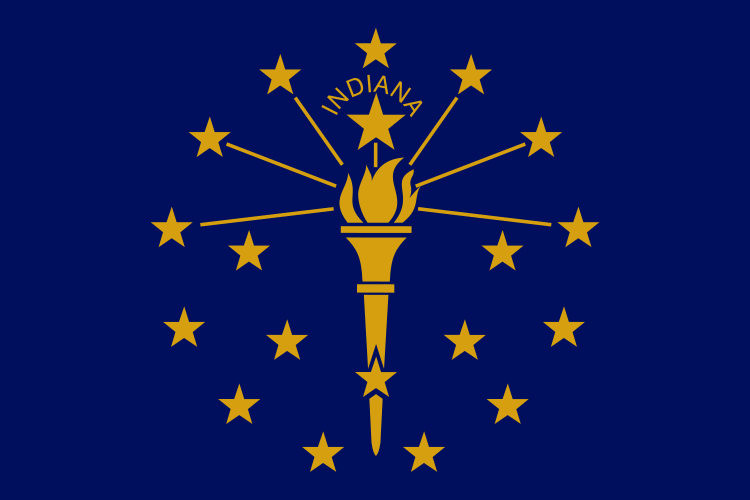
Indiana is a U.S. state in the Midwestern and Great Lakes regions, with Indianapolis as its capital and largest city. Admitted to the Union in 1816 as the 19th state, it sits between Lake Michigan to the north and the Ohio River to the south, with a landscape that moves from flat agricultural ground to wooded hills in the south. Its economy, cities, and institutions shape a large share of the visual and material culture associated with the American Midwest.
- State in the American Midwest and Great Lakes region
- Capital and largest city: Indianapolis
- Admitted to the United States in 1816
- Known for a mix of agriculture, manufacturing, universities, and design culture
- Its visual identity often combines civic restraint with sports, road, and industrial imagery
Where is Indiana, and what defines it?
Indiana borders Michigan, Ohio, Kentucky, and Illinois, with a short frontage on Lake Michigan that connects it to the Great Lakes system. Most of the state is shaped by glacial plains, which helped make large-scale farming and transport corridors central to its development. Southern Indiana is more varied, with river valleys and limestone terrain that have supported quarrying, architecture, and regional craft traditions.
That physical geography matters because Indiana has long been a place where movement and making meet: roads, rail, freight, grain, clay, limestone, steel, and paper all play visible roles in the state’s built environment. In design terms, the state is less about a single dominant style than about a pragmatic mix of civic institutions, campus culture, industrial production, and small-city commercial life.
Why does Indiana matter in American visual culture?
Indiana matters because it sits at a crossroads of Midwestern identity. It is home to major universities, museums, and design-adjacent institutions, but it also carries a strong legacy of manufacturing and vernacular building. That combination gives rise to a visual language that can shift from polished civic branding to plainspoken utility in a few miles.
The state’s cultural influence appears in sports design, local signage, municipal identity systems, and architecture built from regional materials. Limestone from southern Indiana has helped shape landmark buildings far beyond the state itself, while printed ephemera, fair graphics, auto culture, and college-town branding have made Indiana familiar even to people who have never visited.
What does Indiana look like in practice?
On the ground, Indiana often looks functional first. Warehouses, farm structures, campus buildings, county courthouses, and modest main streets make up much of the visible landscape. Indianapolis adds a different register: larger civic projects, event graphics, sports branding, and downtown redevelopment create a more contemporary urban surface.
Design and craft in Indiana often reflect available materials. Limestone remains important in architecture and carving; clay, glass, textiles, metalwork, and digital print all have strong practical footholds in local studios and institutions. That material base helps explain why a state page like this can connect to articles about logos, sculpture, and meticulously arranged objects: Indiana supports both public-facing design disputes and hands-on, process-driven work.
How has Indiana been represented?
Indiana’s public image has often been tied to reliability rather than spectacle. Highway corridors, collegiate athletics, county fairs, and industrial towns have all fed a visual identity built from repetition, order, and plain utility. That makes the state a useful backdrop for discussions of organization, typology, and the aesthetics of everyday systems.
At the same time, Indiana has a strong culture of local variation. Bloomington, for example, brings together university life, civic debate, and a more experimental visual scene than the state stereotype suggests. Across the state, designers, artists, and makers work inside a tension between standardization and regional specificity, which is where much of its interest lies.
Frequently Asked Questions
Is Indiana considered part of the Midwest?
Yes. Indiana is widely classified as a Midwestern state, and it is also often grouped with the Great Lakes region because of its lake access in the northwest corner. Its agricultural landscape, transport networks, and settlement history all fit the broader Midwest pattern.
What is Indiana known for besides Indianapolis?
Indiana is known for universities, manufacturing, limestone, agriculture, and a strong sports culture. Bloomington, South Bend, Fort Wayne, and several smaller cities each contribute distinct cultural and visual identities. The state also has a long association with practical building materials and civic architecture.
Why does Indiana appear in design and art articles?
Indiana appears in design and art coverage because it is home to artists, universities, museums, and local design debates, but also because its material culture is visible and specific. A logo controversy, a sculptor working in ceramic illusion, or a project about neat organization can all connect to the state through place, institution, or maker. Indiana is not just a location label; it is part of the context that shapes how work is made and read.