
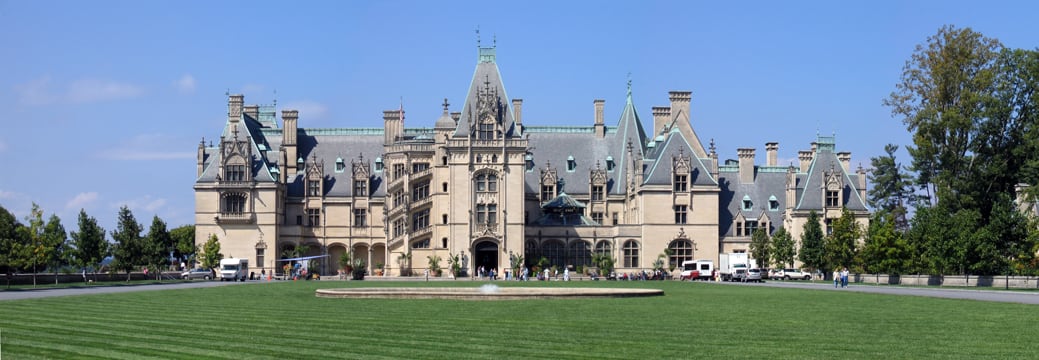
Biltmore Estate is a private estate and historic visitor attraction in Asheville, North Carolina, centered on Biltmore House, the largest privately owned house in the United States. George Washington Vanderbilt II commissioned the property in the late 19th century, and the main house, completed in 1895, helped define American Gilded Age display through scale, craftsmanship, and landscape design.
| Fact | Detail |
|---|---|
| Location | Asheville, North Carolina, United States |
| Founder | George Washington Vanderbilt II |
| Built | 1889–1895 |
| Main house style | Châteauesque |
| Size of Biltmore House | 178,926 square feet; 250 rooms |
| Current use | Private estate, museum, gardens, winery, and tourist destination |
What makes Biltmore Estate notable?
Biltmore Estate matters because it compresses several ambitions into one property: architectural spectacle, managed landscape, collecting, and elite domestic life. The estate was conceived as a self-contained country seat, with formal gardens, working agricultural land, and a house built to project wealth through imported-looking stonework, steep roofs, carved ornament, and a disciplined interior plan.
It also survived as a living place rather than a frozen shell. That makes it a useful example of how historic estates can move from private family residence to public cultural site without losing their material identity. Its preservation depends on maintaining both the building fabric and the designed landscape around it.
How was Biltmore House built?
Biltmore House was built between 1889 and 1895 under Vanderbilt’s direction, with architect Richard Morris Hunt designing the mansion and landscape architect Frederick Law Olmsted shaping the grounds. The house uses a Châteauesque vocabulary borrowed from French Renaissance châteaux: limestone walls, towers, gables, dormers, and a roofline that rises and falls in deliberate rhythm.
Construction required large-scale masonry, carpentry, metalwork, and interior finishing from many craftsmen and industrial suppliers. Inside, the rooms combine carved wood, stone fireplaces, paneling, decorative plaster, textiles, and a library of rare books, all arranged to signal connoisseurship as much as comfort. The result is not just a big house, but a coordinated display of materials and labor.
What does the estate look like today?
Today the estate includes the house itself, formal gardens, park-like grounds, and visitor facilities that support tours, exhibitions, dining, lodging, and retail. The approach still depends on contrast: the dense, ornate house set against open land and carefully staged scenery. That contrast helps explain why the place reads so strongly in photographs and in memory.
For many visitors, the appeal lies in how much of the estate remains legible as design. The gardens show color, texture, and seasonal planting as a visual system, while the interiors preserve the hierarchy of grand rooms, service spaces, and private apartments. Even with tourism layered on top, the property still communicates the organization of a late-19th-century aristocratic household.
Why does it matter in visual culture?
Biltmore Estate occupies a central place in American visual culture because it translates European historic styles into a U.S. setting at a monumental scale. It is often cited as a symbol of Gilded Age excess, but it is equally important as a record of how wealth was made visible through architecture, landscaping, and collecting.
It also appears in discussions of preservation, heritage tourism, and the afterlife of elite domestic interiors. The estate offers a case study in how a private fantasy of grandeur becomes a public image, with photography, guided tours, and seasonal programming turning a once-exclusive environment into a repeatable visual experience.
Frequently Asked Questions
Is Biltmore Estate a museum?
Not exactly. It is a privately owned estate that functions as a historic house museum and tourist destination. That means it preserves the main house and grounds while also operating as an active business with hospitality and commercial services.
Why is Biltmore House so famous?
Its fame rests on size, style, and survival. It remains the largest privately owned house in the United States, and its Châteauesque design makes it instantly recognizable. The house also retains enough original material and furnishing to make the scale feel tangible rather than abstract.
What is the connection between Biltmore Estate and books?
The house includes a notable library, which often draws attention in discussions of literary spaces and bookish interiors. More broadly, estates like Biltmore are associated with large private libraries because books signaled education, taste, and cultural authority. At Biltmore, the library helps anchor the house as a place of collecting, not only display.