
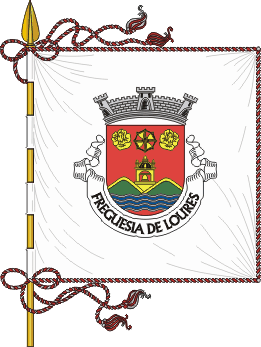
Loures is a civil parish and urban settlement in the municipality of Loures, just north of Lisbon, Portugal. It combines a dense town centre with surrounding suburban neighbourhoods and a resident population of 66,231, making it one of the more substantial places in Greater Lisbon outside the capital itself.
- Type: Civil parish and urban agglomeration
- Municipality: Loures
- Region: Greater Lisbon, central Portugal
- Population: 66,231 residents
- Character: A built-up mix of city streets, housing estates, civic buildings, and commercial areas
Where is Loures?
Loures sits in the Lisbon metropolitan area, close enough to the capital to function as part of its wider urban system, but distinct in its own municipal identity. It is not a rural parish or a historic village set apart from the city; it is an active, everyday urban place shaped by commuting, local commerce, and expanding residential development.
The parish shares its name with the municipality, which can be confusing at first. In Portuguese administrative terms, a freguesia is a civil parish, while the municipality is the larger local government unit. In this case, the parish of Loures contains the urban core commonly referred to as the city of Loures.
What does Loures look like on the ground?
Loures reads as a working suburban city rather than a ceremonial centre. Its streets, apartment blocks, schools, shops, and municipal facilities support a large local population, while roads and infrastructure tie it closely to Lisbon and neighbouring districts. The built environment is practical and mixed, with newer construction sitting alongside older town fabric.
For visual culture, that matters because places like Loures often provide the surfaces and settings for public-facing art. The article tagging this place discusses optical illusion murals that turn buildings into apparent gateways, and that sort of intervention depends on the scale and texture of ordinary urban facades. Loures offers exactly that: walls, corners, and apartment blocks that can be made to disappear, fold, or open up through paint.
Why Loures matters in Portuguese urban life
Loures matters as part of the everyday geography of Greater Lisbon. It houses a significant population outside the historic centre, and it reflects the pressures and patterns common to metropolitan Portugal: growth, suburban density, transport links, and the constant adaptation of older municipal structures to contemporary city life.
It also shows how local identity persists inside a large urban region. Even when a place functions as part of a wider commuter belt, it still has its own administration, civic life, and built character. That combination makes Loures more than a transit name on a map; it is a lived-in place with enough scale to support its own public culture and visible urban face.
How is Loures used in art and public space?
Loures is the kind of place where murals and façade painting can do real visual work. Large-scale illusionistic painting depends on architecture that is ordinary enough to be transformed, and on a public that encounters the image in passing rather than in a gallery. A mural on a residential block or municipal building in Loures can shift how the street is read, even briefly, by making flat concrete or plaster appear layered, recessed, or animated.
That practical relationship between place and image is part of what makes urban murals effective. They do not float free of context. In Loures, as in many Greater Lisbon suburbs, the architecture, the street grid, and the scale of the buildings become part of the artwork’s meaning and effect.
Frequently Asked Questions
Is Loures a city or a parish?
It is both, depending on the level of administration being discussed. Loures is a civil parish, and it also contains the urban area commonly called the city of Loures. The parish sits within the larger municipality of the same name.
Is Loures part of Lisbon?
Loures is not part of the city of Lisbon, but it is part of the Lisbon metropolitan area. It lies in Greater Lisbon and functions as a suburban urban centre linked to the capital by everyday movement and infrastructure. That makes it close to Lisbon without being administratively absorbed into it.
Why would an artwork be tagged with Loures?
A place tag usually indicates where a work was made, installed, or discussed. In the case of murals or façade-based art, the location can be essential because the architecture and street setting shape the work’s effect. Loures provides the kind of urban surface that artists use for large-scale public image-making.
At a glance
- Address
- Lisbon, Portugal
- Coordinates
- 38.84412, -9.19565
Articles mentioning Loures
