
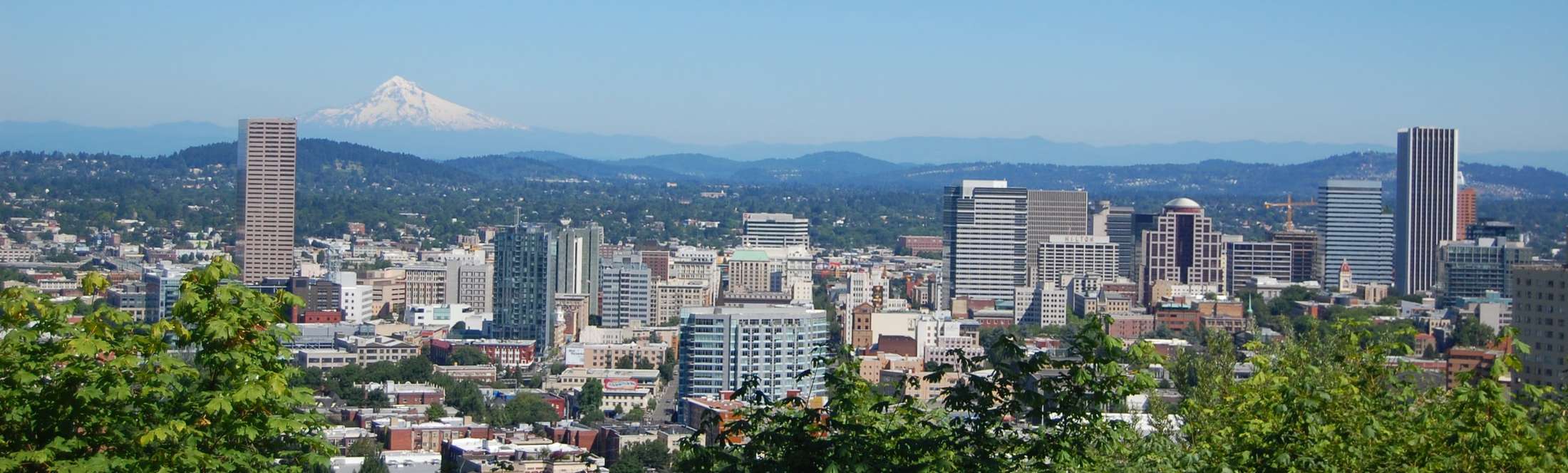
Portland is Oregon’s largest city and the seat of a distinctive design and arts culture shaped by river geography, timber industry history, climate, and a strong local maker scene. It sits near the confluence of the Willamette and Columbia rivers, where shipping, manufacturing, and later technology and creative work all concentrated. For artists, architects, and studios, Portland often functions less as a generic U.S. city than as a shorthand for sustainable materials, hands-on fabrication, and an independent visual identity.
- Location: Northwestern Oregon, at the junction of the Willamette and Columbia rivers
- Status: Oregon’s most populous city
- Regional role: Major cultural and economic center of the Pacific Northwest
- Built identity: Known for craft, reuse, environmental design, and small-scale production
- Creative relevance: Common setting and source point for artists, architects, illustrators, and animation studios
Why Portland matters in visual culture
Portland matters because it became a place where making stayed visible. The city’s legacy includes woodworking, furniture, metalwork, print culture, and architecture tied to local materials and practical climate concerns. That mix helped produce a public image of Portland as a city that values process, not just finished form: exposed joinery, reclaimed wood, ceramic surfaces, handmade signage, and interiors that foreground craft rather than conceal it.
This reputation is not only branding. Portland’s design culture has long been linked to small studios, independent restaurants, animation houses, illustrators, and fabricators who work close to the object. When Portland appears in an article about stone, clay, paper sculpture, narrative illustration, or experimental animation, it usually signals a city where artisanship and production infrastructure still matter.
What does Portland look like as a place?
Portland’s physical setting shapes its visual character. Bridges, riverfront edges, dense tree cover, wet winters, and a backdrop of volcanic and forested terrain all influence how the city is seen and built. Architecture often responds with weather-aware materials, deep overhangs, muted palettes, and a preference for durability. Public spaces and commercial interiors frequently lean on wood, brick, concrete, tile, and other surfaces that age plainly rather than theatrically.
The city’s neighborhoods also contribute to its look. Older industrial districts have been reused for studios, galleries, breweries, and restaurants, so the city often presents a layered urban fabric: converted warehouses beside new infill, hand-painted signs beside carefully detailed contemporary storefronts. That mix makes Portland useful as a reference point for work that wants to feel local, contemporary, and materially grounded at once.
How did Portland become associated with craft and design?
Portland’s association with craft developed through several overlapping histories. The timber economy left behind skills in woodworking and building, while the city’s later growth supported a broad culture of fabrication, design, and independent commerce. In the late twentieth and early twenty-first centuries, Portland’s food, beverage, furniture, apparel, and architectural scenes reinforced a city image built around local production and low-key aesthetics.
Environmental values also shaped the city’s reputation. Adaptive reuse, bike-oriented planning, and interest in low-impact materials encouraged designers to treat sustainability as part of style, not an afterthought. That is why Portland often appears in conversations about reclaimed timber, recycled materials, daylight-filled interiors, and buildings that make structure visible rather than hiding it behind decorative finish.
What does “Portland” signal in an art or design article?
In a visual culture article, Portland usually signals more than geography. It can indicate a maker with access to a strong local studio ecosystem, a project shaped by the city’s sustainable ethos, or an aesthetic that favors tactile surfaces and practical detail. A Portland illustrator, architect, or animation studio may be described through the city’s broader reputation for independent production and careful craft.
That reputation is powerful, but it can also flatten a complex city into a style label. Portland contains plenty of work that does not fit the familiar clichés of bikes, beards, and reclaimed wood. Still, the city remains a useful reference because it has consistently supported practices where material honesty, reuse, and small-team making are central to the final result.
Frequently Asked Questions
Is Portland a city or a state?
Portland is a city in the U.S. state of Oregon. It is not a state itself. It also serves as Oregon’s largest city and a major urban center in the Pacific Northwest.
Why is Portland often mentioned in design and art coverage?
Portland has a strong reputation for craft, sustainability, and independent production. That makes it a natural setting for stories about architects, illustrators, animators, restaurants, and object makers. The city’s built environment and creative economy both reinforce that identity.
What kind of visual style is associated with Portland?
Portland is often associated with honest materials, reuse, and a restrained, practical aesthetic. Common visual cues include wood, brick, concrete, and industrial spaces converted for creative work. The style is less about polish for its own sake and more about visible process and material character.
}
At a glance
- Address
- Multnomah County, United States
- Coordinates
- 45.52, -122.681946
Articles mentioning Portland, Oregon


