
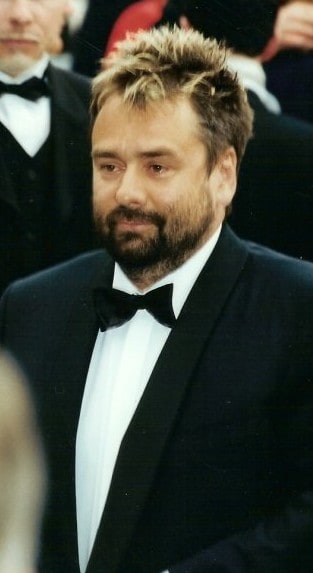
Luc Besson is a French film director, screenwriter, and producer best known for sleek action films, stylised science fiction, and for building EuropaCorp into a major French production company. His work blends fast pacing, graphic visual design, and commercially minded filmmaking.
| Field | Film directing, screenwriting, producing |
|---|---|
| Nationality | French |
| Active since | 1980s |
| Known for | Stylised action cinema, science fiction, EuropaCorp |
| Associated company | EuropaCorp |
What kind of filmmaker is Luc Besson?
Besson emerged from French cinema in the 1980s and became one of its most visible commercial auteurs. He wrote, directed, or produced a long run of films that often favour clean compositions, hard-edged colour, and kinetic movement over psychological realism. His films typically put design, costume, vehicles, and architecture in strong visual control, which is one reason they are remembered as much for their surfaces as for their plots.
He helped shape a strain of French popular filmmaking that could compete with Hollywood action cinema while retaining a distinct European look. That balance matters in his career: Besson works at the intersection of spectacle and production design, using genre forms such as thriller, crime film, and science fiction as vehicles for strong visual identity.
How did he come to prominence?
Besson first gained attention with a group of films that established his interest in stylised violence, youthful outsiders, and urban spaces. Subway, La Femme Nikita, and Le Grand Bleu helped define his reputation in France and abroad. These films are different in tone, but they share a polished look, a strong sense of rhythm, and an emphasis on image-led storytelling.
He later expanded into larger productions and international casts. The Fifth Element became his best-known science-fiction film, with elaborate costumes, synthetic cityscapes, and bright, hyperreal colour. That film shows his recurring method clearly: build a world through design, then move characters through it at speed.
What does his filmmaking look like in practice?
Besson’s films often rely on precise blocking, crisp camera movement, and a preference for instantly legible visual ideas. He tends to use bold contrasts, glossy surfaces, and sharply defined environments. The production design usually does a great deal of narrative work, especially in his action and science-fiction films, where sets, props, and wardrobe establish class, danger, or futurity at a glance.
As a writer-producer-director, Besson has often controlled several stages of production at once. That combination makes his work unusually unified in tone, even when the films vary in genre or scale. In practice, it also means his influence reaches beyond directing: he has shaped casting, financing, packaging, and the industrial side of French genre cinema through EuropaCorp.
Why does Luc Besson matter?
Besson matters because he helped prove that French-language commercial cinema could travel globally without giving up a distinctive visual style. His films influenced later action filmmaking through their pacing, their reliance on clean visual storytelling, and their mix of pop imagery with tightly managed production design. He also became a significant producer, giving space to projects that sat between art-house prestige and mass-market genre film.
His career is also important as a case study in authorship inside industrial filmmaking. Few directors have been so closely associated with the building of a production company, a recognisable style, and a repeatable genre formula. For designers, filmmakers, and observers of visual culture, his work shows how cinematic identity can be built through materials, colour, movement, and scale as much as through script or performance.
Frequently Asked Questions
Is Luc Besson mainly a director or a producer?
He is both, along with being a writer. The directing work made him famous, but the producing side is important because he helped organise and finance a broader range of films through EuropaCorp.
That dual role shaped his influence on European genre cinema. It allowed him to steer projects from development through release, which is unusual for a director with a strong commercial profile.
What is EuropaCorp?
EuropaCorp is the film company Besson founded to produce and distribute feature films. It became a major French production outfit and a key part of his professional identity.
The company matters because it helped support a pipeline of commercially oriented genre films made in France. It also extended Besson’s reach beyond his own directing career.
Which films are most associated with him?
Le Grand Bleu, La Femme Nikita, Subway, and The Fifth Element are among the best-known. They show the range of his work, from intimate character drama to sleek action and large-scale science fiction.
These films are often discussed for their look as much as their stories. Costume, lighting, and set design are central to how they work.