

Before she was known for dramatic buildings across the world, Zaha Hadid was designing sets for opera, dance and pop. A new London exhibition brings five of those zaha hadid stage designs out of the archive.
The show, Zaha Hadid: Architecture of Performance, is the Zaha Hadid Foundation‘s first collection-based exhibition devoted to her stage and set work. It opens during the foundation’s return to its home in Clerkenwell, London.
That building was Hadid’s former office, a Victorian schoolhouse on Bowling Green Lane. Studio KA refurbished it for the reopening, which falls on the 10th anniversary of Hadid’s death.

Catherine Howe, the foundation’s senior researcher, co-curated the show with Libby Sellers, a design historian who acted as guest curator. The five projects appear through archival models, drawings, video footage and a costume.
Taken together, the objects trace how Hadid’s complex geometries and digital design methods developed. They also show how she applied those ideas to dance, opera and pop music.
For another stage-maker who moved between theatre, pop and gallery work, see Es Devlin’s 2,000-Book Installation Celebrating Three Decades, a look at how that crossover has developed.

Howe said the exhibition grew out of routine work. Staff kept finding records of these zaha hadid stage designs while unpacking boxes. Hadid, she said, never wanted to be limited to one approach and worked across many media.
The team realised that the public knew Hadid for her buildings, but not for her hadid set designs or how her work crossed disciplines. That gap led them to focus on performance. The show came together from there.
Rana Hadid, the foundation’s chairman and Hadid’s niece, called the reopening a deeply emotional moment for her. She described the exhibition as a starting point rather than a final statement. The foundation’s archive, which holds an estimated 300,000 items, includes many zaha hadid stage designs.
She said the archive reaches well beyond architecture. It includes paintings, drawings, sketchbooks, and digital and personal material. For her, its real value lies in showing how an idea starts, changes and gets built, with technology helping at each stage.
Five zaha hadid stage designs from the archive
The Zaha Hadid Foundation is an independent charity founded by Hadid in 2013. The Architecture of Performance exhibition runs from 3 November 2026 until 27 March 2027.

The first object is a model for Così fan tutte, Mozart’s opera. Hadid designed the staging in 2014 for a production at Frank Gehry’s Walt Disney Concert Hall in Los Angeles.
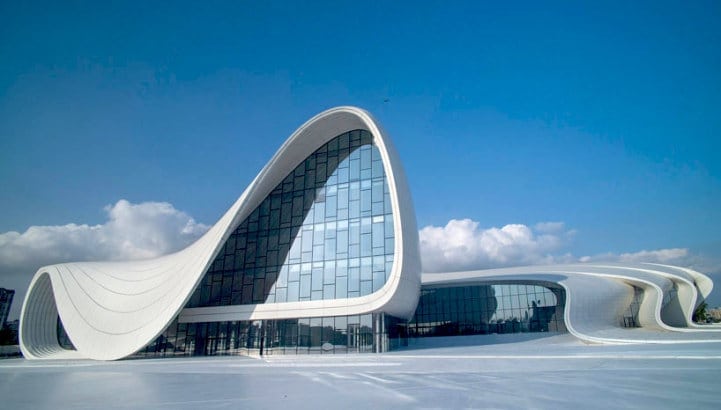
Her set centred on a spiralling white platform. Sections of it could rise and fall, mirroring the shifting relationships among the performers. Its curves echo many of her buildings, including the Heydar Aliyev Centre in Baku, which opened two years earlier.

Night Life, from 1999, is the second object. Hadid designed the stage for the Pet Shop Boys’ Nightlife World Tour, which ran from 1999 to 2000.
The set used a network of ramps that could be rearranged for each venue while keeping the same overall look. Projection surfaces turned the stage into a multimedia space. The foundation describes it as Hadid’s first commission for a major pop concert.

The third object, Metapolis from 1999, comes from her work on the Metapolis Ballet. The digital drawings show the abstract design language that made Hadid well known.
The stage design became a set of lightweight bridge structures. Dancers moved them across the stage, reconfigured them and wore them. The exhibition displays a costume Hadid designed for the same ballet alongside the drawings.
Set design also shapes how bodies move through a space, as Reimagining Runways: From Amphitheaters to Mirror Dialogues shows in fashion staging.

The fourth object is a set of three models for the Music Video Pavilion, made in 1990. Hadid created the pavilion for What a Wonderful World! Music Videos in Architecture, an event in Groningen in the Netherlands.
The brief asked designers to explore how music videos, a screen-based form, could move into public space. Hadid answered with a bright palette, a grid-like structure, shifting floors and angled walkways. The foundation says the pavilion asked how architecture could shape the experience of watching.
The pavilion appeared alongside work by other deconstructivist architects, among them Rem Koolhaas, Bernard Tschumi, Peter Eisenman and Coop Himmelb(l)au.

The final object is d1, a sketch from 1989. It shows an abstract architectural project that Hadid first developed for Hamburg. The British choreographer Rosemary Butcher later turned the sketch into a dance performance also called d1.
The project was Hadid’s first made specifically for performance. Its monochrome network of lines was laid out on a floor, and dancers moved across it as if they were crossing a city. The sketch shows how an architectural idea can become a physical stage, a principle that runs through all of these zaha hadid stage designs.

H/T dezeen.com
Frequently asked questions
When and where is the Zaha Hadid Architecture of Performance exhibition held?
The exhibition runs from 3 November 2026 until 27 March 2027. It opens in London during the Zaha Hadid Foundation’s return to its home in Clerkenwell.
What was Zaha Hadid’s set for the Così fan tutte production?
Hadid designed the staging in 2014 for a production at Frank Gehry’s Walt Disney Concert Hall in Los Angeles. Her set centred on a spiralling white platform, sections of which could rise and fall to mirror the shifting relationships among the performers.
What was the Night Life stage design Hadid created for the Pet Shop Boys?
Hadid designed the stage for the Pet Shop Boys’ Nightlife World Tour, which ran from 1999 to 2000. It used a network of ramps that could be rearranged for each venue, and projection surfaces turned the stage into a multimedia space.
What was the Music Video Pavilion that Hadid designed in 1990?
Hadid created the pavilion for the What a Wonderful World! Music Videos in Architecture event in Groningen, Netherlands. Its design featured a bright palette, a grid-like structure, shifting floors and angled walkways.
More in
Art
All Art


More like this

Victorian Schoolhouse Transformed: Zaha Hadid's Iconic London Studio Becomes Cultural Hub

Dennis Vanderbroeck's Transformative Stage Designs for Diesel and Miu Miu Set New Standards in Fashi...

Clerkenwell Home Remodel: Integrating Art, Architecture, and Bespoke Design
Zaha Hadid's Fluid New Cultural Center For Azerbaijan

"Inside 'Primetime': How Alex DiGerlando's Design Captures Suburban Unease in Lance Oppenheim's Film...
