

Architect and designer Antonio Di Oronzo, of New York studio Bluarch, is known for a practice that treats interior architecture and lighting as a single, inseparable discipline. That philosophy found one of its most compelling expressions in the design of the Omonia Bakery, a Greek–American café and pastry shop located in the Bay Ridge neighborhood of Brooklyn.
A Space Designed Around Light and Memory
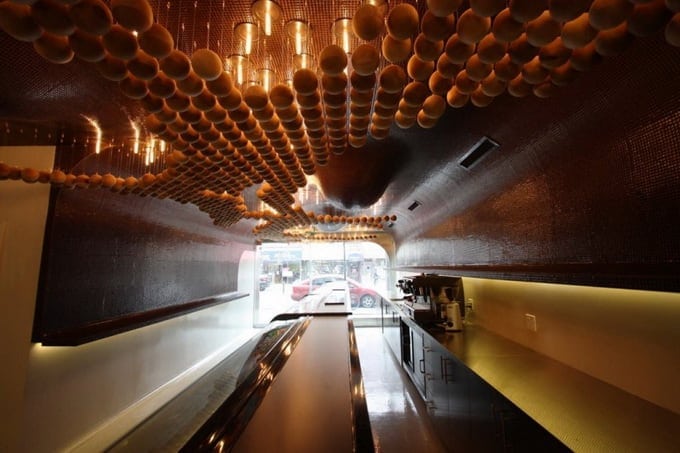
Bluarch approached the Omonia project with the conviction that a neighborhood bakery should feel both refined and deeply familiar. The design layers warm timber finishes with white marble surfaces, creating a visual rhythm that references traditional Mediterranean pastry culture while remaining unmistakably contemporary. Lighting is integral throughout: custom pendant fixtures cast a golden warmth across the service counter, while recessed sources wash the walls and display cases in a soft, inviting glow.
The spatial organization is thoughtful and efficient. A long counter runs the length of the ground floor, giving staff clear sightlines and customers a continuous procession of pastries, breads, and coffee preparations. Seating alcoves along the perimeter offer a degree of privacy without sacrificing the communal atmosphere that defines a good bakery. Subway tile, dark grout, and aged brass hardware ground the scheme in materials that age gracefully.
Bluarch’s Signature Approach
Antonio Di Oronzo has built a reputation for hospitality interiors that manage to feel both considered and effortless. At Omonia, that balance is achieved through restraint: there is no single decorative gesture that dominates, only a careful accumulation of detail — a subtly coffered ceiling, a mosaic floor at the entrance threshold, display shelving that frames product as much as it stores it.
The result is a space that has become a genuine anchor for its neighborhood. Omonia Bakery demonstrates that commercial food-service design need not be flashy to be memorable. When architecture works quietly in service of the experience it frames, the pastries and the coffee tend to taste better for it. Bluarch’s project remains a model of how thoughtful spatial thinking can elevate even the most everyday of rituals.
More in
Interior Design
All Interior Design


More in
Architecture
All Architecture


More like this

Hidalgo Tané Designs Prefab Concrete Pavilion in Girona

Crafting Connections: How Sustainable Architecture Thrives on Artisan Techniques

Wutopia Lab's Striking Blue Whale Gateway: A Symbolic Entrance in Henan’s Urban Landscape

Jaewan Park's Tsugite Pencil System: A Reusable Pencil with a Japanese Joinery Method

"Life on Mars": A Look at the Future of Human Habitats as Constructed by ICON and Bjarke Ingels Grou...
