Adriana Lima is a Brazilian model and actress whose career has been built on high-visibility fashion campaigns, runway work, and long-term beauty contracts. She became one of the best-known faces of the 2000s through her work for Victoria’s Secret, Maybelline, and major editorial shoots, and she is often recognized simply by her surname, Lima.
- Brazilian model and actress born in 1981.
- Broke through after winning Ford’s Supermodel of Brazil competition at 15.
- Placed second in Ford’s Supermodel of the World contest the following year.
- Became a Victoria’s Secret Angel in 2000, a role that made her globally recognizable.
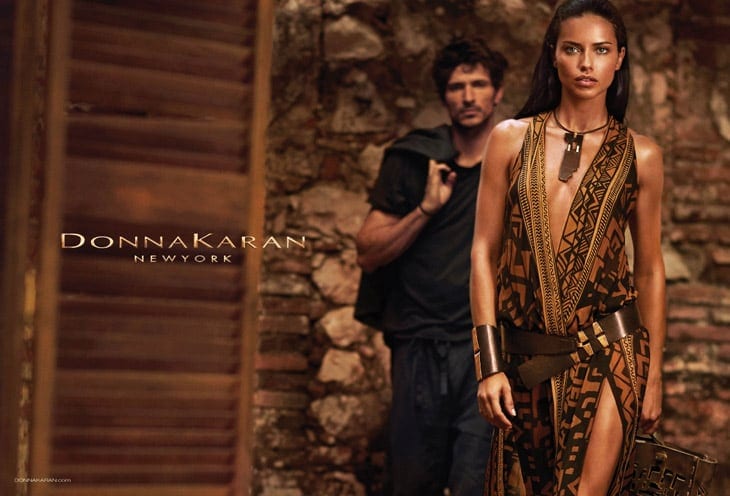
- Fronted Maybelline campaigns from 2003 to 2009 and appeared in fashion advertising for brands such as Donna Karan.
How Adriana Lima became a major model
Lima started modeling as a teenager in Brazil, where she won Ford’s Supermodel of Brazil competition in 1996 and then finished second in the international Supermodel of the World contest the next year. Those results gave her access to agencies and editors outside Brazil, and she soon signed with Elite Model Management in New York. That path mattered because late-1990s modeling careers often depended on competition visibility and agency placement as much as on local bookings.
Her early work was commercial and fashion-oriented at the same time. She could sell cosmetics, lingerie, and luxury clothes without being confined to one lane, which is one reason her name traveled so widely across magazines, billboards, and television campaigns. The combination of high glamour and broad commercial appeal made her a reliable face for brands that wanted recognition rather than niche fashion credibility alone.
Why was she so visible in fashion media?
Lima became a Victoria’s Secret Angel in 2000, and that role defined much of her public image. The Angel position was more than a modeling job: it turned models into recurring characters in a branded visual system built around runway shows, holiday campaigns, and mass-market publicity. Lima’s look fit that machine well, and she stayed associated with it long enough to become one of its most familiar figures.
At the same time, she worked continuously in beauty advertising, especially for Maybelline from 2003 to 2009. Beauty campaigns depend on recognizability, clean lighting, and a face that can carry product without distraction, and Lima’s photographs often emphasize those qualities. In print and on packaging, her work tends to show polished skin, direct eye contact, and controlled styling rather than complicated narrative.
What does her image look like in practice?
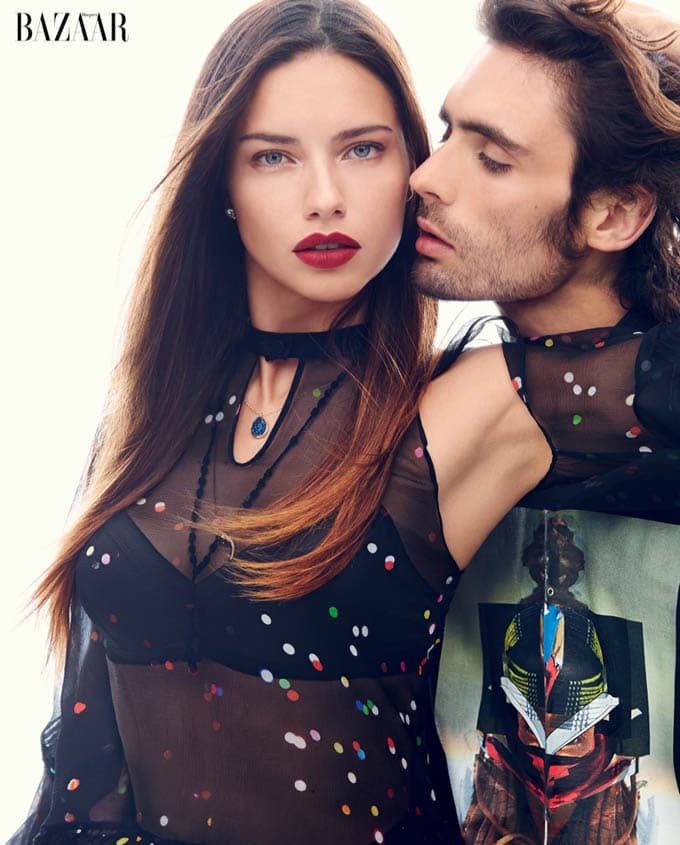
Lima’s fashion image usually combines symmetry, intensity, and strong frontal presentation. In editorial and campaign photography, that can mean sleek hair, sculpted makeup, and poses that place the body as a graphic form rather than a casual presence. She has also appeared in character-driven fashion imagery, such as the Harper’s Bazaar US “Romeo and Juliet” spread, where the model’s role is to support a broader visual idea instead of simply displaying clothes.
Her work for Donna Karan shows another side of her image: elegant, urban, and polished rather than overtly theatrical. Donna Karan campaigns often rely on confidence and refinement, and Lima’s expression and posture help communicate those values quickly. The result is a visual shorthand that reads instantly in magazine layouts and advertising panels.
What has her career meant beyond one brand?
Lima’s longevity matters as much as her fame. Many models have short peaks tied to a single season or campaign, but she maintained relevance across runway, print, beauty, and celebrity media for years. That longevity makes her a useful example of how modeling careers can expand from a competition win into a durable commercial identity.
She also helped define a specific era of global fashion imagery: heavily polished, highly circulated, and designed to move easily between luxury, beauty, and entertainment. For editors, photographers, and brands, Lima represented a face that could carry both aspiration and mass visibility. For viewers, she became one of the most recognizable models of the early twenty-first century.
Frequently Asked Questions
Is Adriana Lima mainly a fashion model or a celebrity?
She began as a fashion model and built her reputation through modeling work, not through film or television. Over time, however, her Victoria’s Secret profile and beauty campaigns made her a mainstream celebrity as well. That crossover is part of why her name remains familiar outside fashion circles.
What made her different from many other models of her era?
Lima combined runway appeal with strong commercial usefulness. She could appear in lingerie campaigns, cosmetics ads, and fashion editorials without needing a complete reinvention for each market. That versatility made her attractive to brands looking for a consistent, recognizable face.
Why is she mentioned so often in fashion articles?
She is often used as a reference point for the look and business of early-2000s modeling. Articles mention her because she was visible across major brands, especially Victoria’s Secret and Maybelline, and because her image helped define a polished, globally marketable ideal. In fashion history, that makes her more than a celebrity name; she is part of the visual language of the period.
Articles mentioning Adriana Lima