
Anthropology is the study of humans, their societies, and their cultures, with a strong interest in how people live, make meaning, and change over time. The term comes from Greek roots: anthrōpos, meaning human being, and -logia, meaning study or discourse. It grew from a mix of philosophy, natural history, colonial collecting, and later social science, and it now spans both laboratory work and long-term field observation.
Stories from Anthropology
10 stories






About Anthropology
- Anthropology examines human life across time, place, and scale: bodies, language, kinship, ritual, material culture, and political life.
- The field includes several branches, especially cultural anthropology, biological anthropology, archaeology, and linguistic anthropology.
- Its methods range from participant observation and interviews to excavation, bone analysis, and DNA research.
- Anthropology matters because it connects everyday practices to larger histories of migration, power, environment, and technology.
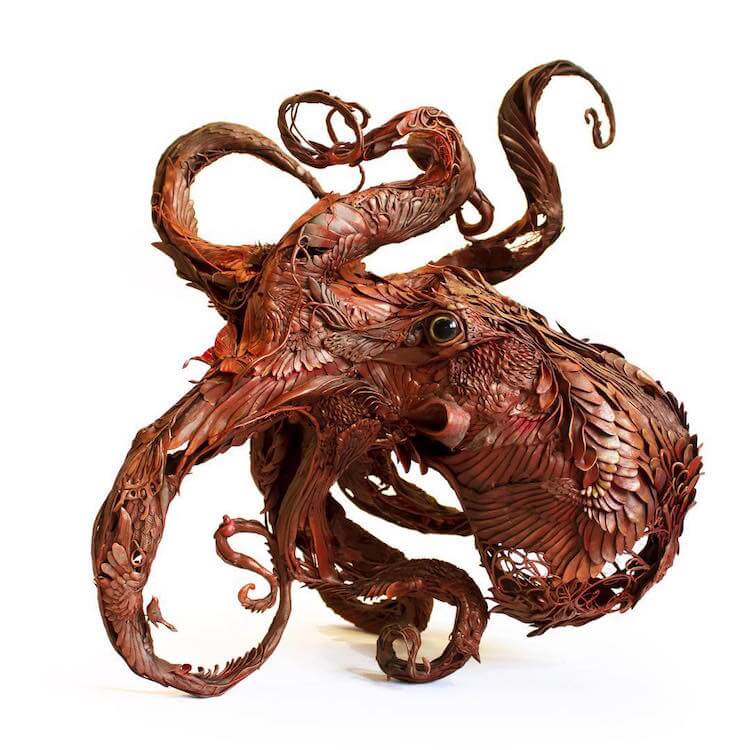
- In visual culture and design, it helps explain how objects, images, and materials carry social meaning.
Read the full overviewWhat anthropology studies, Where did anthropology come from?, How anthropology is practiced, Why anthropology still matters
What anthropology studies
Anthropology asks what humans make, why they make it, and how those acts are shaped by environment, belief, labor, and exchange. It does not treat culture as decoration or folklore. Instead, it treats dress, food, tools, images, ritual objects, architecture, and gestures as evidence of social life. A carved tool, a recipe, or a textile can all become sources for understanding how a community organizes work, status, memory, and taste.
The field is usually divided into four broad branches. Cultural anthropology studies living communities and social practice. Biological anthropology looks at human evolution, variation, and adaptation. Archaeology studies past societies through material remains. Linguistic anthropology examines language as social action. These branches overlap often, especially when researchers study migration, trade, disease, or technology across long stretches of time.
Where did anthropology come from?
Anthropology emerged in the nineteenth century, when European scholars tried to classify human difference alongside plants, animals, and climates. Early work often relied on colonial travel accounts, museum collections, and racial hierarchy. That history matters because the field has had to confront its own role in empire, extraction, and the making of “the other” as an object of study. Modern anthropology carries that burden and, in many places, has worked to correct it.
By the early twentieth century, anthropologists such as Franz Boas, Bronisław Malinowski, and Margaret Mead helped shift the field toward fieldwork, language learning, and direct observation. They treated local knowledge as something to document carefully rather than to rank from a distance. Their influence gave anthropology one of its defining methods: long-term immersion in the daily life of a community, often called participant observation. That method remains central because it captures habits and meanings that are easy to miss in surveys or archives alone.
How anthropology is practiced
Anthropology is not one technique but a way of asking questions through evidence. In cultural anthropology, that often means interviews, note-taking, mapping social relations, and studying objects in use. In archaeology, it means excavation, stratigraphy, cataloging, and analysis of pottery, bone, stone, seed, and residue. In biological anthropology, it can mean measuring skeletons, studying ancient DNA, or comparing modern populations. In linguistic anthropology, it may involve recording speech, analyzing conversation, or tracking how terms shift across settings.
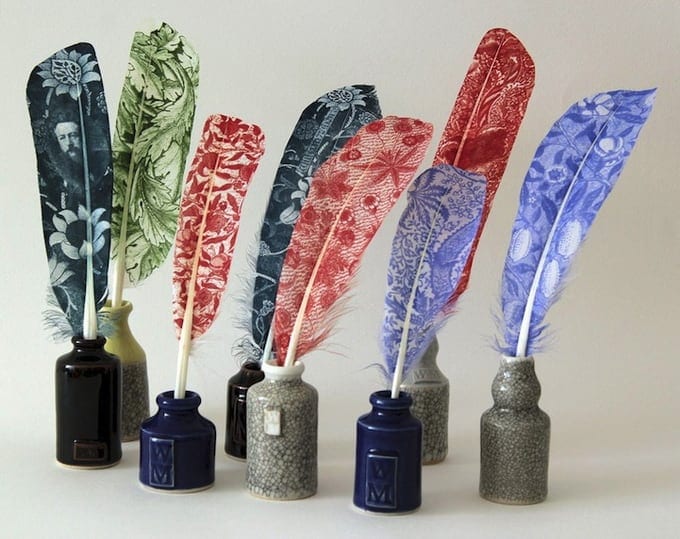
For design and visual culture, anthropology offers a way to read form as social practice. It asks who made an object, with what tools, under what conditions, and for whom. A loaf scored with a decorative pattern, a feather drawing, or a digital dating profile can all be approached anthropologically because each reveals conventions of appearance, exchange, and identity. That is why anthropology often appears in articles about craft, food, image-making, and the reuse of old materials: it explains the human systems behind the surface.
Why anthropology still matters
Anthropology matters because human life is never only technical or economic. People attach value to materials, repeat gestures across generations, and build social worlds through objects as much as through laws or institutions. Anthropology makes those habits visible. It also resists simple explanations by showing that the same material can mean different things in different settings: a shell may be ornament, currency, memory, or evidence of migration.
The field has also become more methodologically diverse. Ancient DNA, isotopic analysis, and digital archives now sit alongside notebooks and interviews. Those tools have expanded what anthropologists can study, from prehistoric movement to contemporary online behavior. The core question has stayed the same: what do human beings make of the world they inhabit, and what does the world make of them?
Frequently Asked Questions
Is anthropology the same as sociology?
No. Sociology usually concentrates on modern institutions, groups, and social structures, often at national or urban scale. Anthropology has traditionally emphasized close fieldwork, comparison across cultures, and the study of material and bodily practices. The two fields overlap, but anthropology has usually been more comfortable moving between objects, rituals, language, and historical evidence.
Why does anthropology use objects so much?
Objects preserve traces of labor, exchange, belief, and status. A pot, garment, or tool can show how people solved practical problems and how they marked identity at the same time. Anthropology treats material culture as evidence that human life is made visible through things.
Is anthropology only about distant or traditional societies?
No. Anthropology studies hospitals, offices, online platforms, museums, factories, and kitchens as readily as rural communities or ancient sites. Its methods work wherever human beings organize meaning and material life. That flexibility is part of what makes the field useful for art, design, and media criticism.