
Bauhaus was a German art and design school, founded by Walter Gropius in Weimar in 1919, that joined fine art, craft, architecture, and industrial production into a single teaching programme. The school lasted until 1933, but its methods outlived it. Bauhaus became shorthand for a stripped-back modern design language built from simple forms, honest materials, and careful attention to function.
Stories from Bauhaus
15 stories


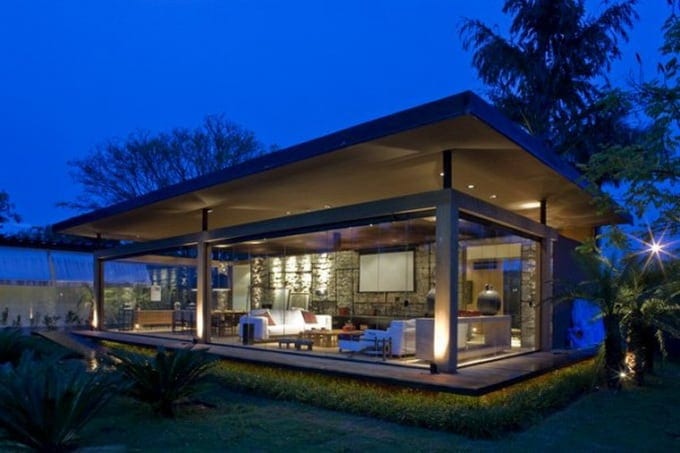


About Bauhaus
- Founded in Weimar in 1919 by Walter Gropius.
- Moved to Dessau in 1925, then to Berlin before closing in 1933.
- Combined workshop craft with architecture, typography, furniture, textiles, and product design.
- Promoted functional forms, limited decoration, and industrial materials such as steel, glass, and plywood.
- Its teachers and students spread its ideas across Europe, the United States, and beyond.
Read the full overviewWhat made Bauhaus different?, How did Bauhaus evolve?, What does Bauhaus look like in practice?, Why does Bauhaus still matter?
What made Bauhaus different?
Bauhaus did not treat art and utility as separate categories. Students learned by making: they worked in workshops for metal, wood, weaving, ceramics, wall painting, stage design, and printing, often under artists and craftspeople who brought different skills into the same room. The school tried to unite handwork with machine production, so objects could be both well made and suitable for modern industry.
That idea shaped the look most people now associate with Bauhaus. Chairs used tubular steel and exposed structure. Posters and books used asymmetrical layouts, sans serif type, strong grids, and clear hierarchy. Buildings favored flat roofs, glass curtain walls, and plain surfaces. The goal was not austerity for its own sake, but a design language that matched mass production and modern life.
How did Bauhaus evolve?
The school went through distinct phases. In Weimar, early teaching carried strong expressionist and craft-based influences, with Johannes Itten’s preliminary course emphasizing material experiments, form, and color. At Dessau, under Gropius and later Hannes Meyer, the school became more closely tied to architecture, standardization, and social housing. Under Ludwig Mies van der Rohe in Berlin, the institution narrowed and became more vulnerable to political pressure before the Nazi regime forced it to close.
Politics mattered to Bauhaus from the beginning. The school emerged after World War I in the unstable Weimar Republic and faced criticism from conservative forces that saw it as radical, internationalist, and too progressive. Its closure did not end the movement. Teachers and alumni emigrated, especially after 1933, carrying Bauhaus ideas into architecture schools, design firms, and government projects abroad.
What does Bauhaus look like in practice?
In practice, Bauhaus appears in objects and spaces that reduce visual noise and make structure visible. A chair may show its frame rather than hide it beneath upholstery. A lamp may combine a simple sphere or cylinder with metal tubing. A building may use repeated window bands, modular planning, and a clear division between load-bearing structure and enclosure. Even in graphic design, Bauhaus influence often means diagonal composition, bold primary color, and letterforms treated as functional shapes rather than ornament.
The school was not one style but a teaching method that produced several styles. Some works feel geometric and severe; others are warm, tactile, and handmade. Textiles from the Bauhaus workshops used pattern, color, and thread structure to explore modern abstraction. Furniture and interiors often relied on bent steel, birch plywood, glass, and enamel. The unifying principle was that form should arise from purpose, material, and process.
Why does Bauhaus still matter?
Bauhaus remains central because so much of modern design education passed through it or through institutions built in response to it. Its influence can be seen in architecture, product design, identity systems, exhibition design, and furniture that prizes clarity over decoration. Many current design clichés—white walls, modular furniture, open plans, minimal typography—trace back to the school, even when they no longer follow its deeper social aims.
Its legacy is also contested. Bauhaus is often reduced to a clean visual style, but the original project had broader ambitions: to reform education, improve housing, and align design with the realities of industrial production. That makes it useful to study not only as a look, but as a model for how workshops, materials, and social goals can be linked.
Frequently Asked Questions
Was Bauhaus a style or a school?
It was first a school, then a movement, and only later a style label. The institution taught design through workshops and experimentation, but its alumni and admirers turned its principles into a wider visual language. That language is now often called Bauhaus even when it appears far from the original school.
Why is Bauhaus associated with Germany?
The school was founded in Germany and operated there throughout its life. Its three main locations were Weimar, Dessau, and Berlin. German industry, politics, and architecture shaped its development, even though its influence quickly became international.
Did Bauhaus only make minimal, white objects?
No. Bauhaus work ranged from bright color studies and woven textiles to experimental stage sets and expressive early paintings. The famous minimal look came from only part of the school’s output, especially later architecture and industrial design. The full history is more varied and more handmade than the stereotype suggests.