
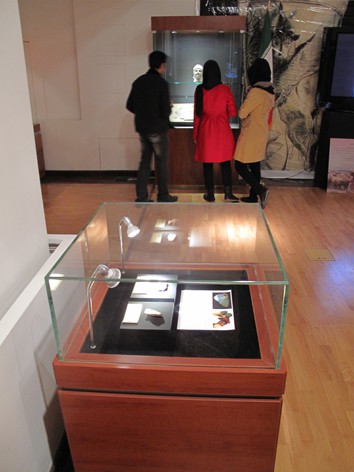
Exhibit design, also called exhibition design, is the planning and making of a three-dimensional display space that presents objects, ideas, or stories to an audience. It combines spatial design, graphics, lighting, materials, fabrication, and curatorial thinking to turn an empty room, gallery, museum hall, trade fair stand, or temporary pavilion into a legible experience.
- It shapes how visitors move, what they notice first, and how long they stay with an object or idea.
- The field sits between architecture, interior design, scenography, graphic design, and curatorship.
- Good exhibit design makes information readable in space, not just on a wall label.
- It uses practical materials and construction methods: timber frames, painted panels, vitrines, textiles, lighting rigs, digital screens, and modular systems.
- It can serve museums, art galleries, science centres, trade shows, brand activations, and temporary cultural events.
What does exhibit design actually do?
Exhibit design organizes experience. It decides where a visitor enters, where the focal point sits, how circulation works, and how displays relate to one another. A strong scheme can make a dense historical argument feel clear, or give a small object the presence of a sculpture. It also manages scale, sightlines, accessibility, conservation, and atmosphere, which means the work is as technical as it is visual.
The finished result is usually a coordinated environment rather than a single object. Walls may be built or clad to frame narratives; cases protect fragile items; plinths, mounts, and supports hold objects at the right height and angle; labels and graphics control pacing; light reveals texture and reduces glare. In contemporary practice, digital projections, audio, interactive screens, and moving media often sit alongside physical materials rather than replacing them.
Where did it come from?
Exhibit design grew from older traditions of display in museums, world fairs, department stores, and theatrical staging. Nineteenth-century museums often arranged objects in crowded cases according to scholarship and classification, while expositions such as the Great Exhibition of 1851 turned display into spectacle, using architecture, ornament, and industrial fabrication to persuade audiences that progress had a visible form. As museums professionalized in the twentieth century, display became more planned, more interpretive, and more focused on the visitor’s route through space.
The term now covers a broad field that developed alongside modern architecture, industrial design, and graphic identity systems. In many institutions, exhibit designers work with curators, conservators, educators, architects, and fabricators from the earliest concept sketches through installation. That collaboration matters because an exhibition is both a cultural argument and a construction project, with deadlines, budgets, fire rules, structural loads, and object-handling requirements.
How is an exhibition built?
The process usually begins with a brief or curatorial concept, followed by planning diagrams, sketches, models, and layout drawings. Designers test how people will enter, pause, turn, gather, and exit. They also choose materials that match the tone and practical demands of the project: raw plywood for a temporary installation, powder-coated steel for durable fixtures, painted MDF for shaped walls, glass for protected display, fabric for acoustic control, or paper-based systems for lightweight graphics and modular panels.
Fabrication is where the idea becomes real. Joiners, model makers, graphic producers, electricians, AV technicians, and installers build and fit the components on site. Good exhibit design hides or softens the mechanics where needed, but it also knows when to expose structure, fasteners, or raw finishes as part of the visual language. A well-designed exhibition often feels inevitable because every element, from a floor change to a caption line, supports the same story.
Why does exhibit design matter?
Exhibit design affects how knowledge is experienced. A display can make archives feel alive, clarify scientific processes, or give contemporary art enough breathing room to be seen properly. Poor design can overwhelm objects, confuse movement, or force too much information into too little space. Because exhibitions are public and time-bound, the design decisions made for them shape what is remembered after the objects return to storage or the temporary structure is dismantled.
The field also matters because it is one of the places where visual culture meets making in a direct way. It brings together printed matter, built space, lighting, craft, and digital media. In the best projects, that combination creates more than a backdrop. It produces an argument in space, one that visitors read with their bodies as much as with their eyes.
Frequently Asked Questions
Is exhibit design the same as interior design?
No. Interior design usually deals with permanent or semi-permanent occupied spaces such as homes, offices, hospitality venues, or retail interiors. Exhibit design is more temporary and more narrative-driven, with a specific job: present content, guide movement, and shape interpretation.
The two fields overlap in their concern for space, materials, and atmosphere. Exhibition projects often borrow interior techniques, but they also require conservation knowledge, object mounting, labeling systems, and audience flow planning that go beyond typical interior work.
Who works on exhibit design?
Exhibit design is normally a team effort. Curators define the content, designers shape the spatial experience, graphic designers handle texts and visual identity, and fabricators build the physical elements.
Depending on the project, architects, conservators, lighting designers, AV specialists, and accessibility consultants may also be involved. Large museum exhibitions can take months or years of coordination before a single panel is installed.
What materials are commonly used?
Common materials include timber, plywood, MDF, steel, aluminum, glass, acrylic, paint, vinyl graphics, textiles, and paper-based mounts or labels. Temporary exhibitions often rely on modular systems and lightweight construction so they can be installed, transported, and removed efficiently.
The material choice depends on budget, duration, object safety, and the visual tone of the show. A serious conservation display may use inert materials and controlled lighting, while a temporary cultural installation may allow for more visible structure and rougher finishes.
Articles mentioning Exhibit design


