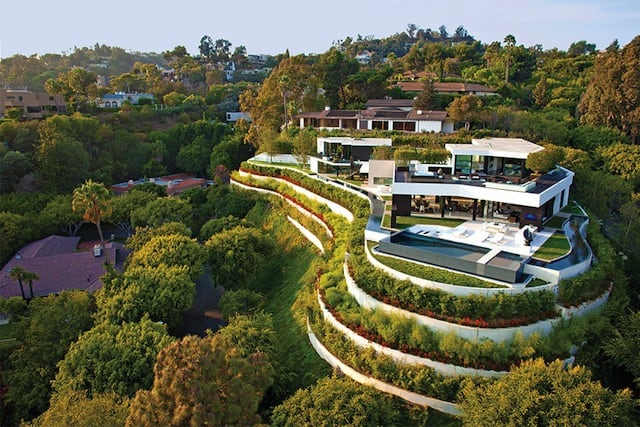
Beverly Hills is a city in western Los Angeles County, California, known for its compact grid of luxury shopping streets, celebrity homes, hotel culture, and carefully maintained public image. It began as a modest planned community and grew into one of the most recognizable addresses in the United States, shaping how fashion, film, and luxury retail present themselves.
- It sits as an enclosed, affluent municipality inside the Los Angeles metropolitan area.
- Its identity was built through real estate, landscape design, hospitality, and high-end retail.
- Rodeo Drive became the best-known symbol of its luxury economy.
- The city matters less for any single building than for the image it produces: polished, exclusive, and highly staged.
How did Beverly Hills begin?
Beverly Hills was established in the early 20th century after oil exploration on the site failed to produce a profitable field. Developers shifted from extraction to speculation, subdividing the land into a residential suburb laid out with broad streets, planted medians, and controlled access to services. The name was chosen to suggest refinement and to separate the new town from the industrial character associated with nearby Los Angeles.
That origin matters because the city was not built around a port, a factory district, or a civic center. It was built around real estate value and atmosphere. From the start, landscaping, architecture, and urban planning worked together to create a place that would read as exclusive.
What does Beverly Hills look like in practice?
The city is known for low-rise commercial streets, large single-family homes set behind gates, and an unusually manicured streetscape. Palms, ornamental trees, clipped hedges, and clean sidewalks are part of the visual language. Buildings often favor restrained façades, pale stone, glass, and storefronts designed to frame goods rather than overwhelm them.
Rodeo Drive is the clearest example of this appearance. Luxury labels, polished shop windows, private security, and expensive cars create a retail environment where display matters as much as merchandise. Nearby hotels and restaurants extend the same logic: service is choreographed, interiors are finished to a high standard, and the entire setting is meant to communicate wealth without clutter.
Why does Beverly Hills matter in visual culture?
Beverly Hills became a shorthand for status, aspiration, and access. Film and television used it repeatedly as a backdrop for wealth, often relying on its streets, homes, and storefronts to signal a character’s social position immediately. That repetition turned the city into an image before it became an experience, and the image now shapes expectations about American luxury far beyond California.
The city also matters because it shows how place can function as a brand. Architecture, zoning, retail mix, and public maintenance all reinforce the same message. In design terms, Beverly Hills is not only a location but a managed visual system, where the built environment supports a narrative of exclusivity.
What kinds of design and making are associated with it?
Several forms of making converge here: landscape maintenance, storefront design, residential architecture, and hospitality interiors. The city rewards surfaces that are immaculate and controlled, from stone paving and brass fixtures to custom millwork and carefully lit façades. Materials are selected to read as durable, expensive, and discreet rather than expressive.
That has made Beverly Hills influential for luxury branding. Fashion houses, jewellers, and hotels borrow its codes in other cities: pale stone, generous spacing, subdued signage, and a sense of privacy. The city’s importance lies in that exportable style. It helped define what luxury should look like in a modern retail and media economy.
Frequently Asked Questions
Is Beverly Hills its own city?
Yes. Beverly Hills is an incorporated city, not just a neighborhood of Los Angeles. It has its own municipal government, services, and zoning rules, which have helped preserve its residential character and controlled commercial image.
Why is Rodeo Drive so famous?
Rodeo Drive became famous as a concentrated strip of luxury shopping where brand presentation matters as much as sales. Its storefronts, signage, and street life are designed to project exclusivity. Film and celebrity culture amplified that image until the street became a global symbol of high-end retail.
Why do designers and brands use Beverly Hills as a reference?
Designers and brands use Beverly Hills because it instantly communicates wealth, polish, and social aspiration. The city offers a ready-made vocabulary of pale materials, controlled landscapes, and discreet luxury. Those cues are easy to adapt in stores, hotels, and campaigns that want to feel expensive without appearing loud.
At a glance
- Address
- Los Angeles County, United States
- Coordinates
- 34.073056, -118.399444
Articles mentioning Beverly Hills