
Christine McConnell is a Los Angeles-based photographer, stylist, and costume-maker known for highly staged images that combine fashion, set design, and hand-built objects. She works across editorial photography, commercial campaigns, and hair-and-makeup styling, often creating the clothes, props, and scenery herself so that the final image has a single, unified look.
Christine McConnell on FreeYork

About Christine McConnell
- She works as a photographer and stylist in Los Angeles.
- Her images often rely on handmade clothing, props, and set dressing.
- She has appeared in magazines, billboards, and national advertising campaigns.
- She also works in hair and makeup styling, including period looks.
- Her practice sits between fashion photography, craft, and theatrical scene-making.
What makes her work distinctive?
McConnell’s work stands out because the image is usually built from the ground up. Rather than photographing a finished scene assembled by others, she commonly designs the look of the models, makes or alters garments, and shapes the surrounding environment. That gives her photographs a controlled, handmade quality that can feel eerie, humorous, glamorous, or nostalgic depending on the subject.
This way of working matters because it collapses several roles into one practice. Photographer, stylist, costume designer, and maker all overlap. In commercial and editorial settings, that can produce images with a strong signature: polished enough for advertising, but still visibly shaped by craft and physical making.
How does she work in practice?
McConnell’s process often begins with an aesthetic idea rather than a simple portrait brief. She builds the visual world around that idea by choosing fabrics, shaping garments, arranging hair and makeup, and controlling the set. The result is not just a photograph of a person, but a complete scene with a specific atmosphere.
Her background in styling also shows up in her ability to recreate historical hair and makeup. That skill is especially useful when a shoot calls for a particular era or personality type. It also explains why her work appears in contexts beyond art photography, including advertising and celebrity styling, where consistency and visual precision matter.
Why do makers and design readers care about her?
McConnell is relevant to visual culture because she treats photography as a craft practice rather than only an image-making one. The clothes, props, and styling are not decorative extras; they are part of the meaning of the work. For readers interested in how images are made, that makes her a useful example of a hybrid creative role that depends on both technical skill and a strong eye for composition.
Her work also connects domestic craft to public visual culture. Homemade clothing, sculpted sweets, haunted-house facades, and polished studio photography can all sit in the same practice. That range helps explain why her name comes up in discussions of elaborate seasonal display, fantasy interiors, and other projects where making is inseparable from presentation.
What does her work look like?
McConnell’s images often feature dense surfaces, carefully arranged textures, and an intentionally staged sense of fantasy. In one setting, that might mean ornate costume and theatrical makeup; in another, it might mean a handmade environment built for a holiday or publicity shoot. The visual language is detailed, slightly surreal, and strongly controlled.
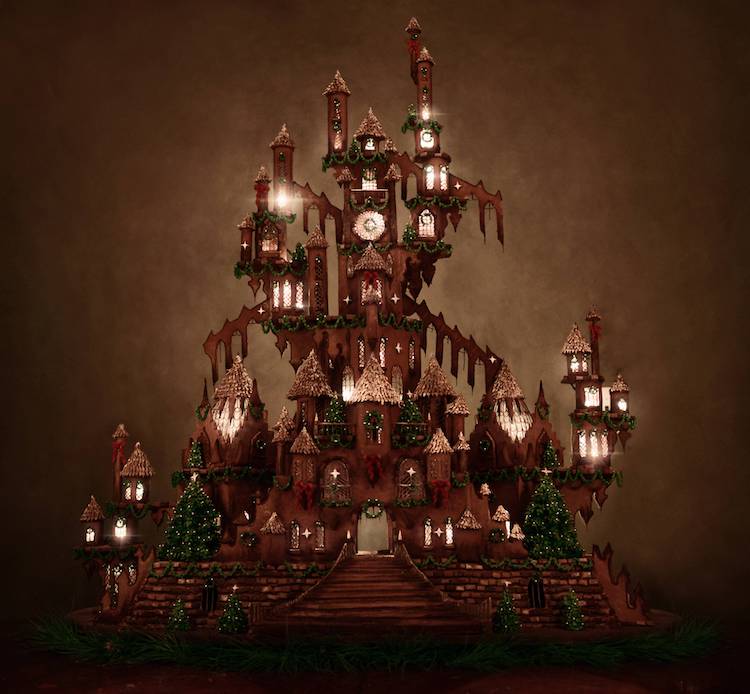
Her broader public projects suggest the same sensibility outside the studio. Whether building a gingerbread castle or transforming a family home into a haunted house, the work depends on construction, decoration, and a precise eye for mood. The result is less about minimalism than about accumulation: fabric, frosting, paint, lighting, and props used together to create a complete scene.
Questions
Is Christine McConnell mainly a photographer or a stylist?
She is both, and that overlap is central to her work. Photography gives her the frame, but styling determines the objects, clothing, and atmosphere inside it. In practice, she often behaves like a full visual director, shaping the whole image rather than a single part of it.
What kind of projects is she known for?
She is known for elaborately staged photos, custom styling, and made objects that support the scene. Her public projects include seasonal installations and highly detailed decorative builds, alongside editorial and advertising work. The common thread is a handcrafted, theatrical look.
Why does her work appear in design and visual culture coverage?
Because her practice shows how styling, fabrication, and photography can function as one process. The clothes, makeup, sets, and props are all part of the final image, which makes her work useful for readers interested in production rather than just appearance. It is a clear example of making as image-making.