
Coco Rocha is a Canadian fashion model known for sharply articulated poses, precise movement, and a career that helped define digital-era fashion image making. Born Mikhaila Rocha in 1988, she rose in the 2000s as one of the most recognisable runway and editorial models of her generation. Her work matters because it sits at the point where high-fashion posing, performance, and online circulation meet.
Stories from Coco Rocha
7 stories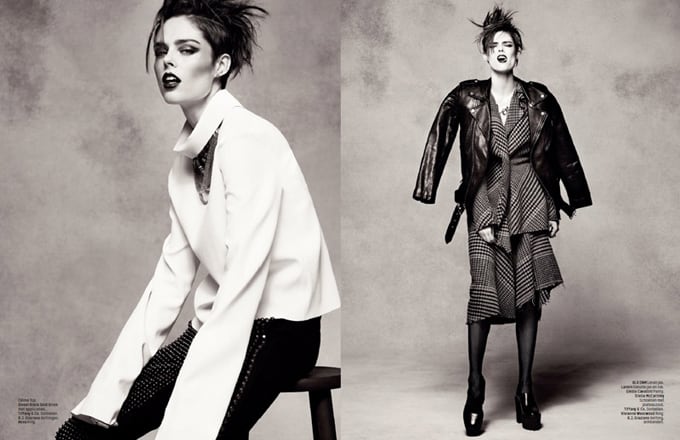

About Coco Rocha
- Known for: angular poses, expressive movement, and strong control of body line
- Background: Canadian model, born in 1988
- Career context: emerged during the transition from print-dominant fashion publishing to digital image culture
- Why she matters: turned modelling into a visibly choreographed, media-conscious practice
- Common setting: runway shows, glossy editorials, campaign shoots, and fashion films
Read the full overviewWhat makes Coco Rocha distinctive?, How did she come to prominence?, What does Coco Rocha’s modelling look like in practice?, Why does she matter in fashion image culture?
What makes Coco Rocha distinctive?
Rocha became widely known for a style of posing that looks almost architectural. Her body often reads as a series of clean angles, compressed curves, and quick shifts in weight, rather than the softened, static glamour that once dominated fashion photography. That style gave photographers and editors a model who could supply energy on set without relying on props, heavy retouching, or elaborate staging.
Her work also highlighted modelling as a skill rather than just a presence. In practice, that means controlled facial expression, fast adaptation to direction, and an ability to create multiple images in a short time with visible differences in posture and mood. For publications and brands, that translated into photographs that felt animated even when the frame was still.
How did she come to prominence?
Rocha emerged in the mid-2000s, when fashion media was still rooted in print but already beginning to move online. That timing mattered. Editorials and campaigns were no longer only judged as magazine spreads; they also had to survive website crops, slide shows, GIFs, and social sharing. Her pose-driven approach worked especially well in that environment because each frame carried a clear visual impact.
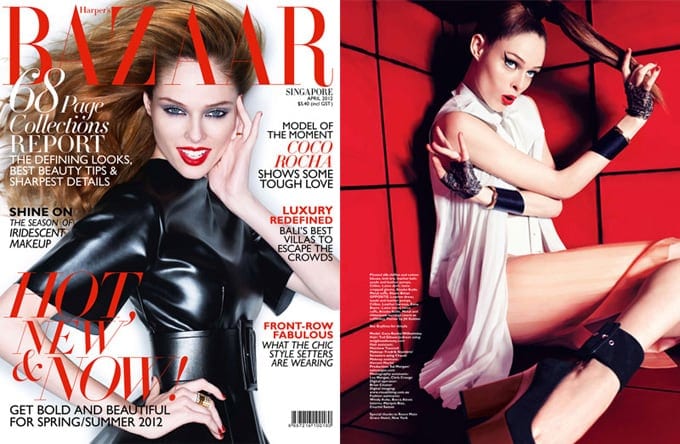
She became closely associated with runway work and with editorials that favored dramatic body language. Fashion houses and magazines used her to signal confidence, movement, and a slightly theatrical sense of control. In that period, a model like Rocha could function as both performer and graphic element: a person whose silhouette helped structure the page.
What does Coco Rocha’s modelling look like in practice?
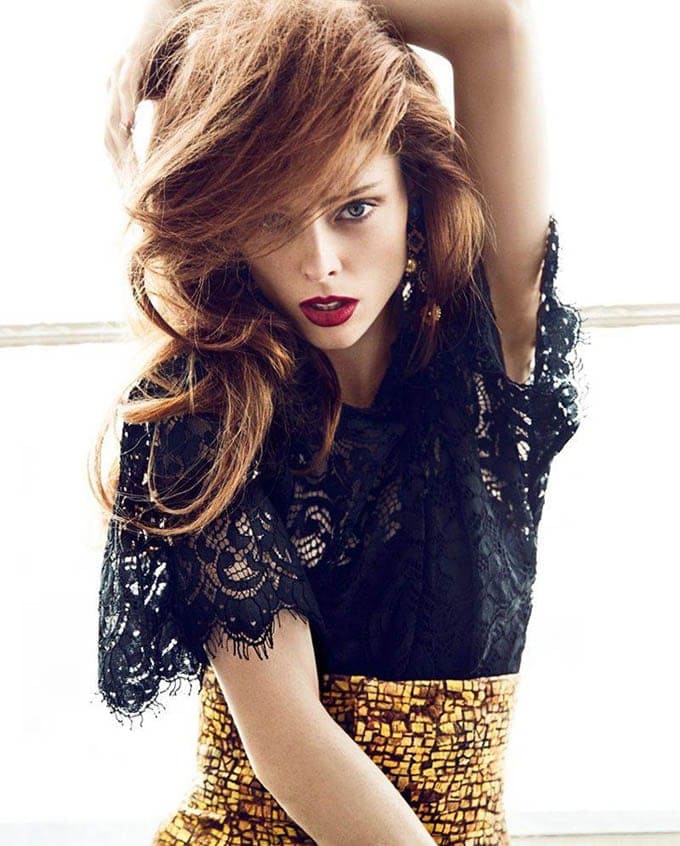
In a Rocha image, the details often appear deliberate: a pointed hand, a bent knee, a sudden turn of the neck, or a shift that breaks the body into distinct shapes. She uses articulation rather than stillness. That makes her useful in fashion photography where clothing needs to be shown as dynamic fabric rather than as a frozen display.
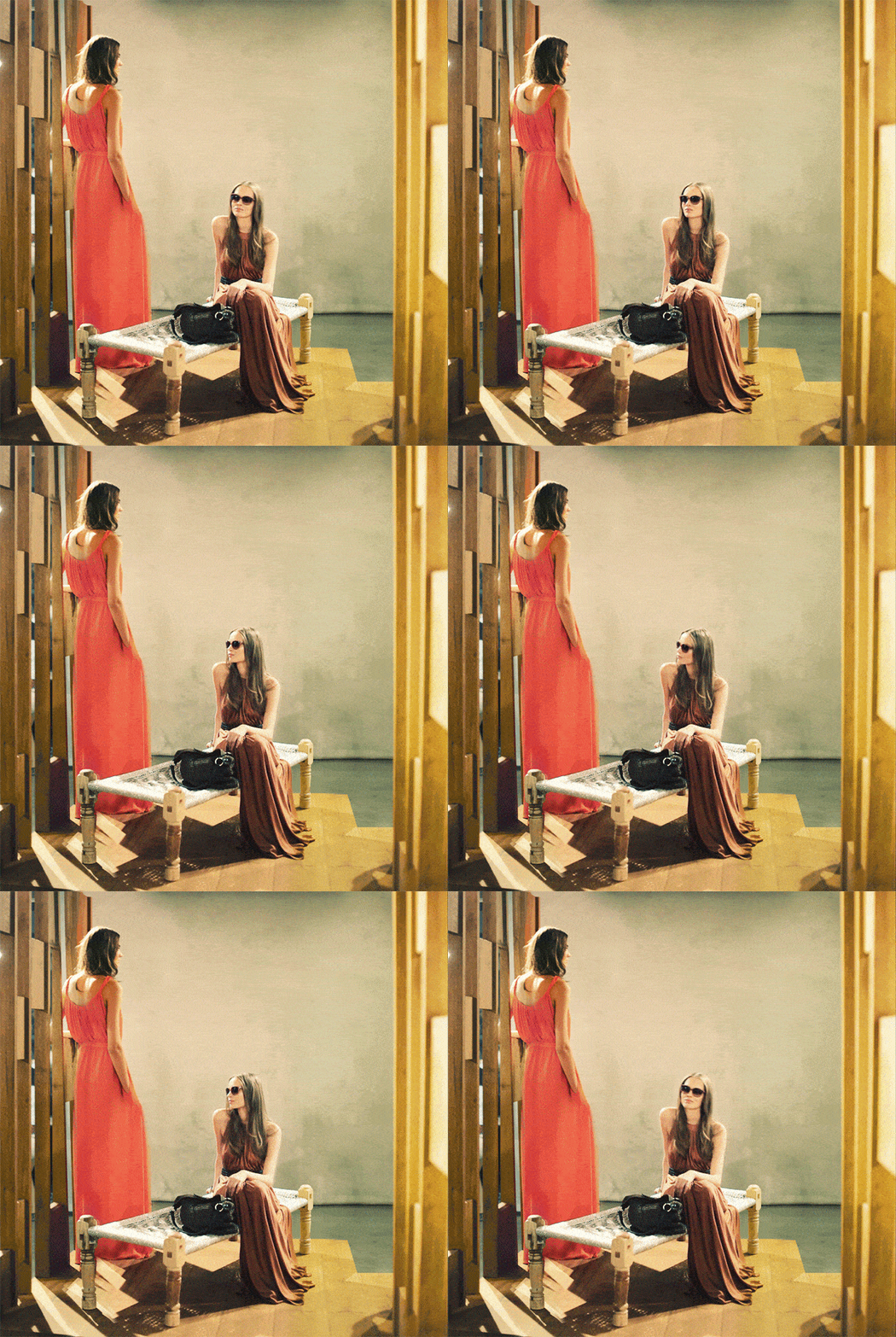
Her presence also works well in motion-based formats. Fashion films, animated GIFs, and sequence imagery can capture the way she changes position from one beat to the next. This is one reason her work appears alongside projects that explore digital image circulation: her modelling rewards repetition, looping, and close visual comparison.
Why does she matter in fashion image culture?
Rocha is part of a generation of models whose careers were shaped by the migration from magazine-only fashion to networked fashion media. That shift changed what a model needed to do. Static elegance was no longer enough; an image had to remain legible on a homepage, in a social feed, or as a short loop. Rocha’s high-contrast posing fit that new economy of attention.
She also helped make visible the craft behind modelling itself. In older fashion writing, models were often treated as interchangeable surfaces. Rocha’s career made it harder to ignore posing as a learned technique with rhythm, timing, and bodily intelligence. That has influenced how fashion audiences, photographers, and younger models think about the job.
Frequently Asked Questions
Is Coco Rocha mainly a runway model or an editorial model?
She has worked strongly in both areas. Runway work helped establish her visibility, while editorial and campaign photography amplified her distinctive posing style. In practice, the two sides reinforce each other: the runway shows her movement, and the still image isolates it.
What is meant by her “posing style”?
It refers to the way she constructs clear, sharply defined body positions for the camera. Rather than holding a single neutral pose, she changes angle, line, and expression with precision. The result is a sequence of images that feel animated and intentional.
Why is she associated with digital fashion culture?
Her work arrived as fashion images began circulating beyond print magazines. Her strong silhouettes and quick transitions adapted well to web slideshows, GIFs, and short-form video. That made her especially visible in projects that treated fashion imagery as something to be replayed and shared, not just published once.