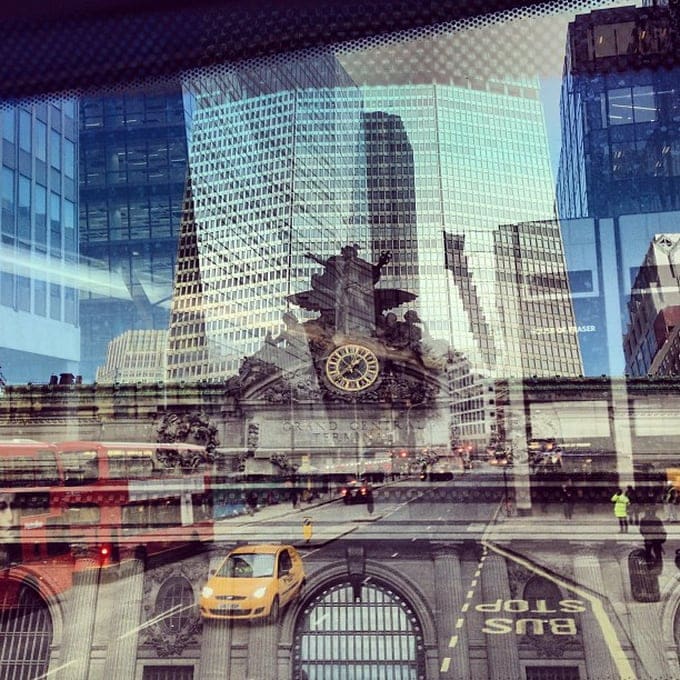
Daniella Zalcman is a documentary photographer whose work focuses on the afterlives of colonialism, forced assimilation, and identity. Based between London and New York, she photographs long-form projects that connect present-day communities to historical systems of power, often in collaboration with reporters, editors, and advocacy organisations.
- She works primarily in documentary photography, with projects published in newspapers, magazines, and report-led media.
- Her subjects often include Indigenous communities, migration, education, gender, and the legacy of state violence.
- She is a multiple grantee of the Pulitzer Center on Crisis Reporting and a fellow with the International Women’s Media Foundation.
- Her project Signs of Your Identity won the 2016 FotoEvidence Book Award and also received the Magnum Foundation’s Inge Morath Award and the Magenta Foundation’s Bright Spark Award.
- She studied architecture at Columbia University, a background that informs her attention to space, structure, and how people inhabit built environments.
What does Daniella Zalcman photograph?
Zalcman makes documentary photographs that follow the human consequences of colonial systems. Her projects have examined the rise of homophobia in East Africa and the forced assimilation of Indigenous children in North America, among other subjects. Rather than treating these as isolated stories, she frames them as continuing structures with social, political, and visual traces.
That approach gives her pictures a distinct register. They are not only portraits or news images; they often include interiors, schools, landscapes, and objects that hold memory. The work tends to be quiet and observed, with an emphasis on what everyday life looks like after policy, religion, and law have shaped it.
Why is she important in contemporary documentary photography?
Zalcman matters because she uses photography to make historical violence visible in current life. Her reporting does not stop at description. It asks how colonial rule still appears in family life, education, language, and public identity, and it presents those questions in a form that can circulate through journalism, exhibitions, and books.
Her recognition from the Pulitzer Center, the International Women’s Media Foundation, Magnum Foundation, and FotoEvidence places her within a network of photographers working where visual storytelling meets public-interest reporting. That matters in a field where the strongest documentary projects often depend on both artistic judgment and access to editorial platforms.
How does her background shape the work?
Zalcman graduated from Columbia University with a degree in architecture in 2009. That training is visible in the way her photographs often register environments: rooms, facades, schools, streets, and domestic settings are treated as active parts of the story rather than neutral backdrops. The images frequently feel built around relationships between people and space.
She is also based between London and New York, two cities with different media ecosystems and different colonial histories of their own. That mobility supports the cross-border reach of her assignments and long-term projects, which have appeared in publications including The Wall Street Journal, National Geographic, CNN, and Mashable.
Where has her work appeared?
Her photographs have been published widely in international media and exhibited internationally as well. Select work is represented by Anastasia Photo Gallery, LUMAS, and Subject Matter, which places her practice in both editorial and gallery contexts. That split is common in contemporary documentary photography, where images may serve both reporting and exhibition.
She also lectures at schools, universities, museums, and seminars. That public-facing role is part of the field around her work: documentary photography often depends on explanation, context, and discussion, especially when it addresses trauma, identity, and representation across different audiences.
Frequently Asked Questions
Is Daniella Zalcman a photojournalist or an artist?
She works in documentary photography, which sits between photojournalism and art. Her images are made for editorial publication, but they also function as authored bodies of work that can be shown in galleries and books. The distinction matters less than her commitment to long-form visual reporting.
What is Signs of Your Identity?
Signs of Your Identity is one of Zalcman’s best-known projects. It examines the legacy of Indigenous residential and boarding schools in North America and the lasting effects of forced assimilation. The project received major awards, including the 2016 FotoEvidence Book Award, and helped establish her reputation.
Why does her architecture degree matter?
Architecture trains attention on structure, scale, and the organisation of space, all of which are useful in documentary work. Zalcman often photographs places that are shaped by institutions such as schools, churches, and homes, where design and power meet. The result is work that reads as much about environment as about individual subjects.
Articles mentioning Daniella Zalcman