
Driftwood is wood that has been carried by water and left on a shore, beach, riverbank, or lakeshore by waves, tides, currents, or flooding. It is a natural material and a kind of marine debris, but it also plays a role in coastal and riparian ecosystems, where it shelters animals, slows erosion, and eventually breaks down into nutrients.
Stories from Driftwood
10 stories



About Driftwood
- Driftwood begins as branches, logs, roots, or worked timber that enters water and travels until it strands on land.
- Salt water, sand, sun, and abrasion bleach and smooth the surface, giving it a pale, weathered look.
- It matters ecologically because it provides habitat and food for birds, insects, fish, and microorganisms.
- It matters culturally because makers use it as a ready-made sculptural material in furniture, decoration, jewelry, and assemblage.
- Its appearance and shape make every piece unique, which is why artists often treat it as both material and form.
Read the full overviewHow driftwood forms, Why does driftwood matter ecologically?, How makers use driftwood, What does driftwood look like in practice?
How driftwood forms
Driftwood usually starts as fallen timber from forests, riverbanks, storm damage, logging waste, or discarded wood from human activity. Water moves it downstream or out to sea, where it may travel for long distances before washing ashore. The journey changes the wood: edges round off, bark loosens, and surface fibers erode. In saltwater, mineral staining and repeated drying can leave a pale gray or silver finish.
The final form depends on the species of wood and the conditions it passed through. Dense hardwoods may survive for years with dramatic curvature and split grain, while softer woods break down faster. Pieces found on a beach can range from tiny sticks to large root masses and whole trunks. That variability is part of why driftwood is so useful to artists and designers.
Why does driftwood matter ecologically?
Driftwood is not just litter washed up by accident. In rivers, estuaries, and coastal zones, it creates structure in otherwise open habitat. Logs can trap sediment, slow water flow, and create sheltered places where young fish and invertebrates can hide. On beaches and dunes, accumulations of wood can stabilize sand and provide nesting or resting sites for birds.
As driftwood decays, fungi, bacteria, gribbles, and shipworms help break it down. That decomposition returns carbon and nutrients to the ecosystem. In this sense, driftwood sits between material and process: it is a physical object, but it is also a temporary stage in the movement of organic matter through water and soil.
How makers use driftwood
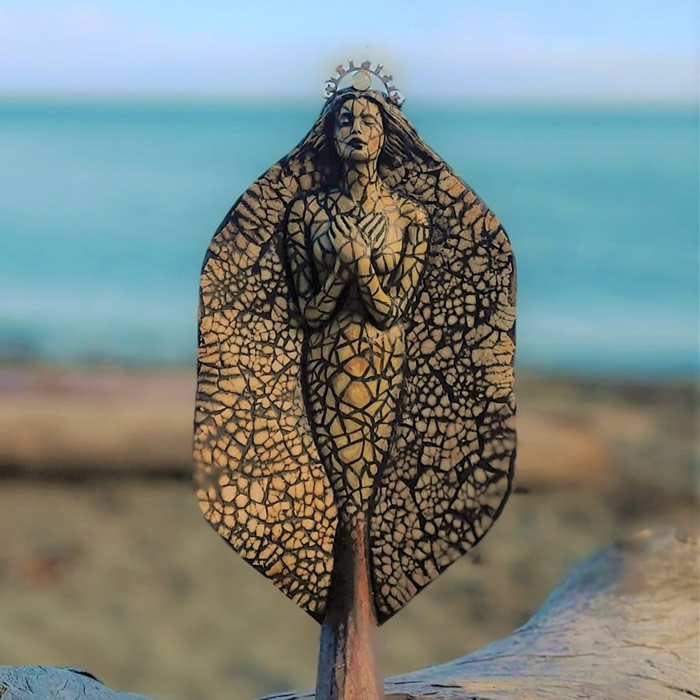
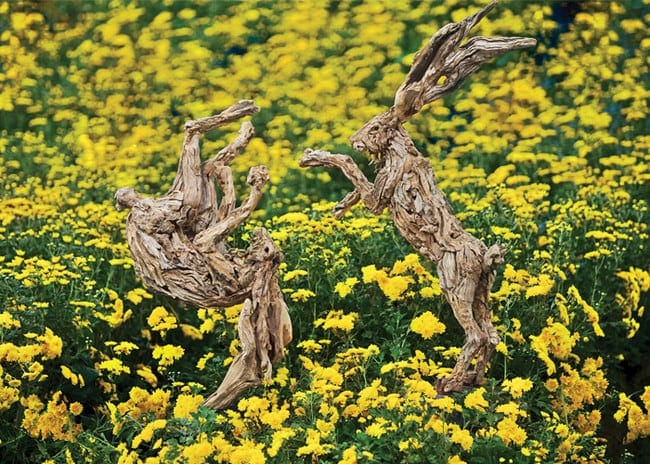
Artists and craft makers value driftwood because weathering gives it an expressive surface before any tools touch it. Some build figurative sculpture around a found branch or root, letting the natural curve suggest a body, limb, or face. Others sand, cut, and join several pieces into furniture, wall pieces, lamps, or decorative objects. The material often stays visibly irregular, because its knots, cracks, and bleached grain are the point.
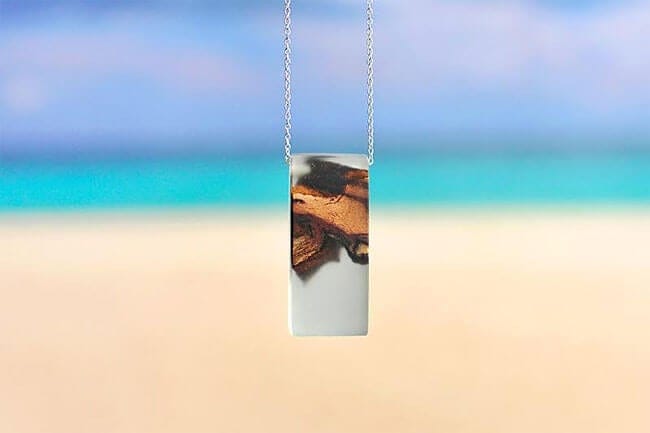
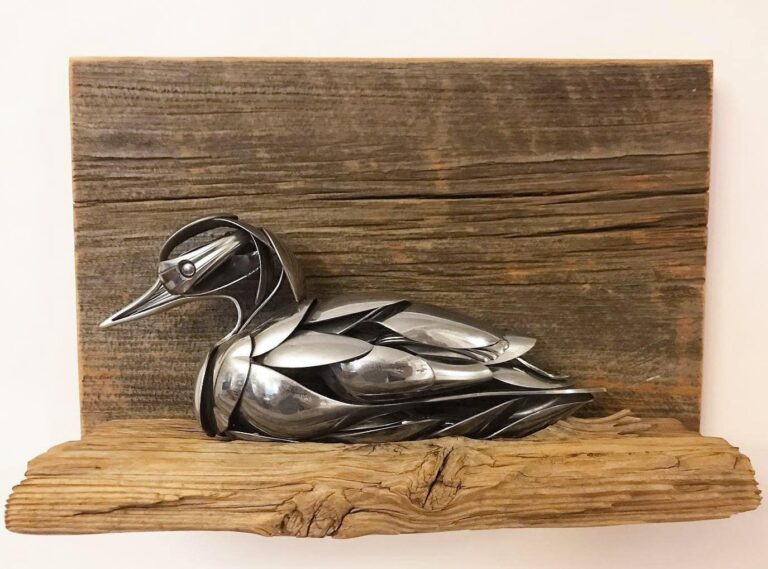
In jewelry and small objects, driftwood is often paired with resin, metal, glass, or cord. The contrast between rough wood and polished synthetic material makes the object read as both natural and constructed. In more ambitious sculptural work, makers preserve the sense of the find: a piece may be mounted on a base with minimal intervention, treated as something already composed by tide and time.
What does driftwood look like in practice?
Fresh driftwood can appear waterlogged, dark, and heavy. After weeks or months in sun and salt, it often becomes lighter in color, with a surface that feels dry, cracked, and worn smooth in places. Grain lines show clearly once bark and outer fibers are removed. Holes bored by insects or marine borers can add texture, and twisted branches often create sinuous silhouettes.
That visual character explains its appeal in visual culture. Driftwood reads as evidence of movement and exposure. It carries marks of distance, weather, and chance, which gives even a small fragment a strong presence in sculpture, display, and interior design.
Frequently Asked Questions
Is driftwood the same as dead wood?
No. Dead wood is any wood that no longer grows, while driftwood is wood that has been transported by water and deposited on land. Driftwood can be dead wood, but dead wood found in a forest or garden is not driftwood unless it has been washed ashore or onto a bank by current, tide, or flooding.
Can driftwood be used safely in art or interiors?
Usually, yes, but it often needs cleaning and drying first. Salt, sand, insects, and mold can remain in the wood, so makers commonly scrub it, soak it, or let it dry thoroughly before using it indoors. If the piece will support weight or be handled often, its internal condition matters as much as its surface.
Why do artists choose driftwood instead of fresh timber?
Artists choose driftwood because the material already carries shape, texture, and history. Its weathered surface can suggest figures, animals, landscapes, or movement without much alteration. Fresh timber offers more control, but driftwood offers accident, irregularity, and a visible record of environmental forces.