
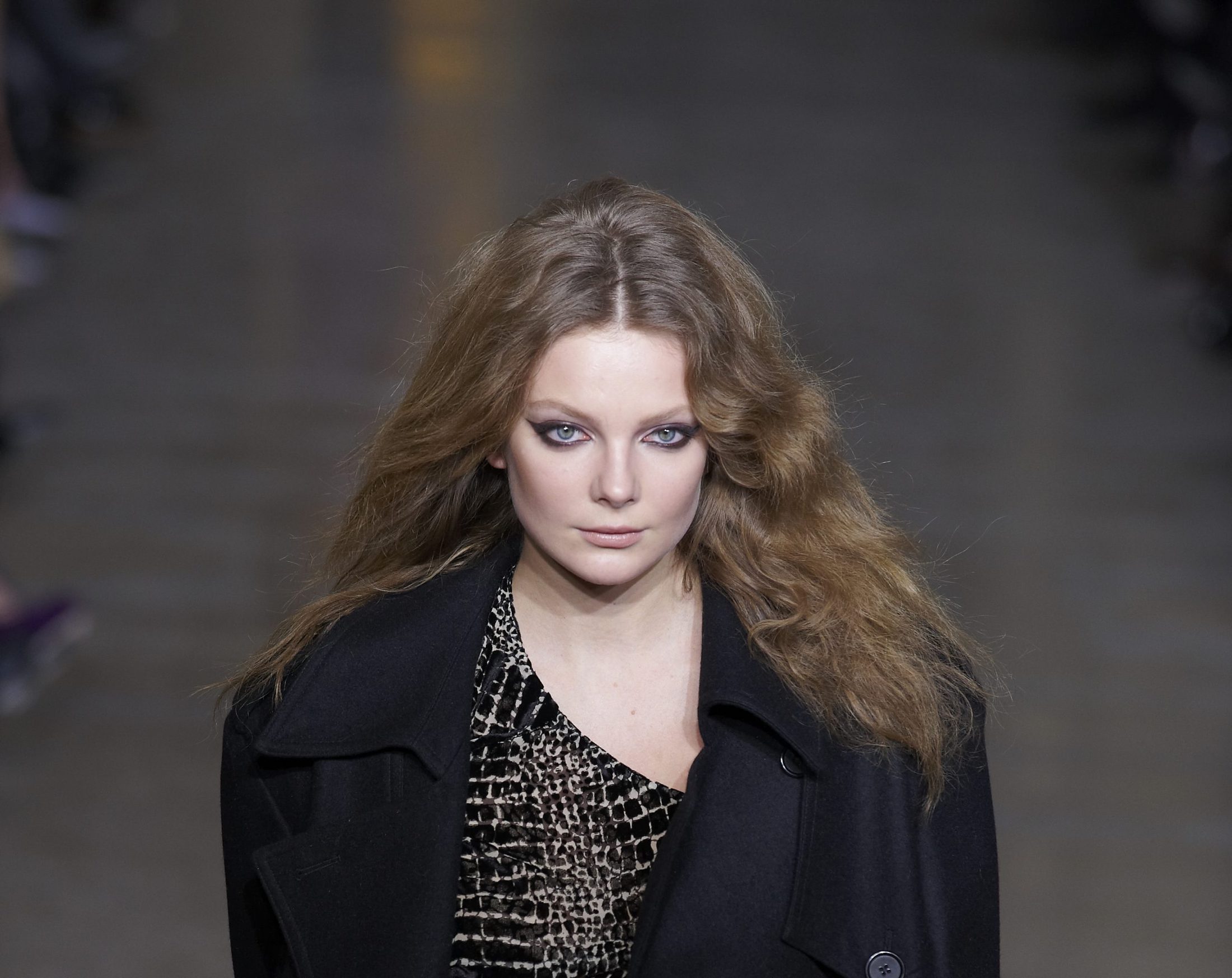
Enikő Mihalik is a Hungarian fashion model known for her runway presence, editorial work, and long-running collaboration with high-profile photographers and magazines. She became internationally visible after placing fourth in Elite Model Look 2002 and later built a career in lingerie, couture, and fashion editorial, where her proportions and controlled, slightly detached expression made her useful to image-makers working in both commercial and art-directed contexts.
| Born | Hungary |
|---|---|
| Known for | Fashion modelling, lingerie campaigns, editorial work |
| Breakthrough | Elite Model Look 2002, fourth place internationally |
| Associated photographers | Inez van Lamsweerde and Vinoodh Matadin, Ellen von Unwerth |
| Field | Fashion model |
How did Enikő Mihalik become known?
Mihalik first reached industry attention through Elite Model Look 2002, a modelling competition that functioned as a talent pipeline for fashion agencies and editors. A strong placement there mattered because it signaled not only physical presence but also camera readiness, discipline, and the ability to move quickly from scouting to professional work. For many models, that competition served as an entry point into a system driven by runway bookings, test shoots, and editorial commissions.
Her rise came during an era when fashion magazines and campaign teams looked for models who could carry a very specific image: polished, slightly remote, and adaptable across luxury, lingerie, and avant-garde fashion. Mihalik fit that brief. Her Hungarian background also placed her within a wider Eastern European wave of models who became prominent in the early 2000s fashion industry.
What made her distinctive on camera?
Mihalik became especially associated with lingerie modelling, where line, length, and balance matter as much as facial expression. Her long legs and slender frame gave photographers a strong silhouette to work with, especially in images built around pose, garment structure, and negative space. In fashion photography, those features can determine whether a garment reads as soft, sharp, sensual, or architectural.
She also worked well with photographers known for stylised, high-contrast imagery, including Inez van Lamsweerde and Vinoodh Matadin. Their work often depends on precise poses, controlled styling, and a model’s ability to hold tension without looking stiff. Mihalik’s value in that environment came from the combination of physical elegance and a face that could read as glamorous, cool, or impersonal depending on the brief.
Why did editorial photographers keep booking her?
Fashion magazines need models who can adapt to a concept rather than simply display clothing. Mihalik’s editorial work shows that flexibility. In one shoot she could appear ethereal and distant; in another, provocative or playful. That range made her useful for magazines such as Elle France and Vogue Italia, both of which rely on strong visual narration as much as product presentation.
Her continued presence in editorial work also reflects how fashion photography depends on recognisable but not overexposed faces. A model who can anchor a story without overwhelming it gives editors room to build mood through lighting, styling, and set design. Mihalik’s image suited that system because it could carry a look without flattening it into a single personality type.
What does her work represent in fashion history?
Mihalik represents a specific kind of early-21st-century fashion model: international, image-literate, and able to move between runway, lingerie, and magazine editorial. Her career reflects the broader shift toward models who function less like anonymous mannequins and more like repeatable visual signatures. Photographers and art directors did not just need a body that fit clothes; they needed a face and posture that could support a story.
She also shows how competitions, editorial culture, and celebrity photography overlap in fashion. A model may begin in a contest, then become known through magazine features, then gain value as a reliable presence in campaigns and themed shoots. Mihalik’s career sits inside that structure, where modelling success depends on visibility, repetition, and the ability to meet a changing visual brief.
Frequently Asked Questions
What is Enikő Mihalik best known for?
She is best known as a Hungarian fashion model who gained international attention after Elite Model Look 2002. Her career developed through lingerie work, runway appearances, and editorial shoots for major fashion publications. She became a familiar face in image-driven fashion photography.
Why do photographers like working with her?
Photographers often look for models who can hold a pose with clarity and adapt to different moods. Mihalik’s long, elegant proportions and controlled expression made her effective in lingerie and editorial settings. Those traits give image-makers more room to shape the story with styling, light, and composition.
Is Enikő Mihalik mainly a runway model or an editorial model?
She has worked across both, but her profile is especially strong in editorial and lingerie photography. That work relies on a model’s ability to transmit mood, not just walk a runway. Her image has been particularly useful in magazine and campaign contexts where a distinctive visual character matters.