
Jean Paul Gaultier is a French fashion designer known for sharp tailoring, striped sailor knits, cone bras, corsetry, and runway shows that mixed street culture with haute couture. He built a career moving between ready-to-wear and couture, and became one of the most recognizable designers of the late 20th and early 21st centuries.
Jean Paul Gaultier on FreeYork
 Sun, sea and stripes – nautical fashion through the decades
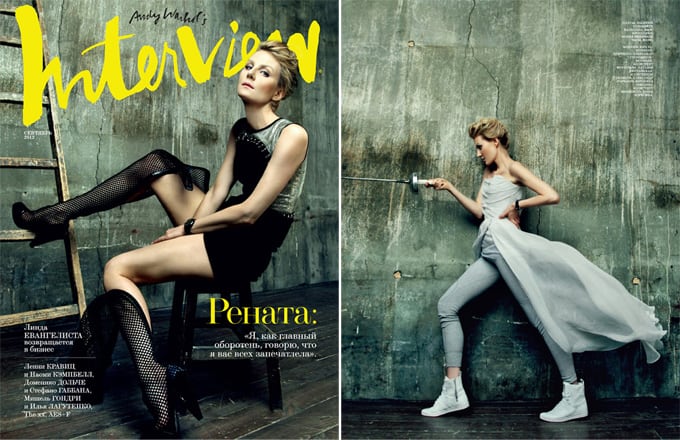 Renata Litvinova for Interview Russia
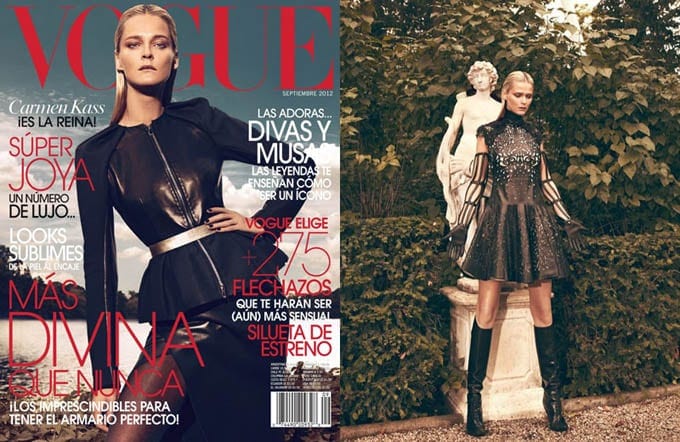 Carmen Kass Dons Jean Paul Gaultier for Vogue Latin America September 2012 by Mariano Vivanco
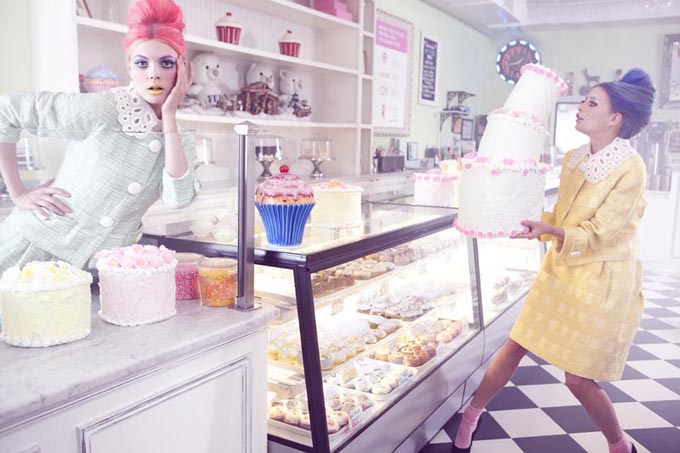 Masha P and Anna I in Marie Claire China
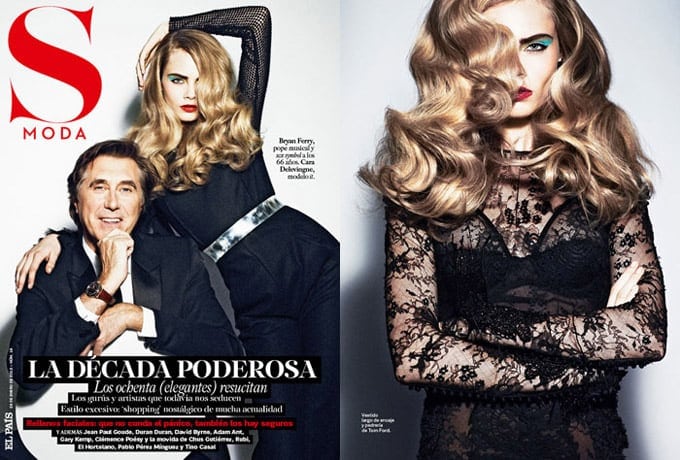 Cara Delevingne & Bryan Ferry for S Moda January 2012
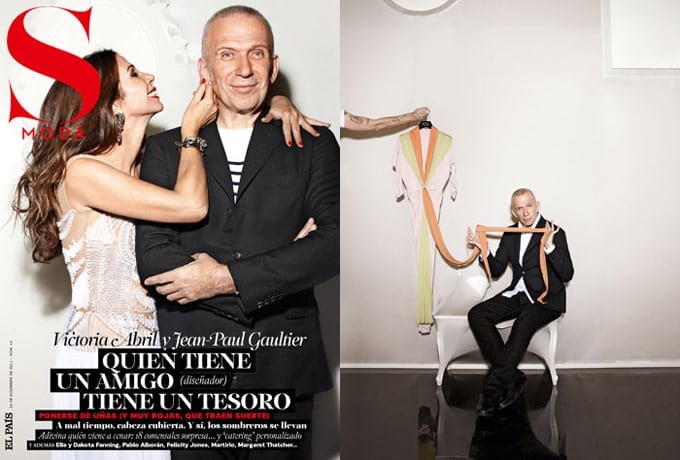 Jean Paul Gaultier & Victoria Abril for S Moda
About Jean Paul Gaultier
- Born in 1952 in Arcueil, near Paris
- Known for folding subcultural references into luxury fashion
- Made the Breton stripe, corset, and sailor shirt part of his signature vocabulary
- Served as creative director of Hermès from 2003 to 2010
- Also reached a wide audience through television, including Eurotrash
How did Jean Paul Gaultier become famous?
Gaultier began designing in France in the 1970s, first working for established fashion houses before launching his own label. He gained attention by bringing a restless, irreverent eye to fashion at a moment when French style still often prized polish over provocation. Rather than treating luxury as something distant, he pulled in working-class dress, punk energy, tattoos, underwear, uniforms, and club wear.
That approach made his work instantly recognisable. A sailor stripe, a sharply cut jacket, or a bra exposed as outerwear could be read as a Gaultier design even without a label. He was not simply making clothes that looked unusual; he was turning familiar garments into style arguments about gender, class, and performance.
What does Jean Paul Gaultier’s design style look like?
Gaultier’s work often starts with tailoring and then distorts it. He might narrow a blazer, exaggerate a shoulder, curve a corset into a sculptural shape, or place rigid structure against sheer fabric. He treated construction as something to be shown, not hidden, so seams, boning, straps, and fastenings could become decorative elements.
His use of nautical imagery became one of his clearest signatures. The Breton stripe, sailor collar, navy and white palette, and souvenir-like maritime references appeared repeatedly across collections and photographs. He also used lace, tulle, satin, denim, leather, and jersey in ways that let high fashion absorb streetwear, fetish wear, and stage costume without losing precision.
Why does he matter in fashion history?
Gaultier mattered because he made experimentation commercially visible. He showed that a designer could work between couture spectacle and popular culture without treating those worlds as separate. His clothes frequently challenged gendered dressing, especially through menswear that borrowed from feminine codes and womenswear that weaponised traditionally intimate garments such as the corset.
He also helped change how fashion images were made. His shows and campaigns relied on performance, theatrical casting, and strong visual identity, which made them circulate widely in magazines and on television. That visibility helped define a more elastic idea of luxury in which wit, irony, and references to subculture could sit beside skilled cutting and fine finishing.
What did he do at Hermès and in media?
As creative director of Hermès from 2003 to 2010, Gaultier worked inside a house best known for leather goods, equestrian codes, and restrained elegance. His role there was significant because it proved he could adapt his language to a more classical luxury brand without losing his sense of line and detail. The appointment also linked his name to a different model of French fashion: less provocation, more refinement, but still highly designed.
Outside the studio, he became a public figure through television, most famously co-hosting Eurotrash. That visibility helped make him one of the rare designers known well beyond fashion circles. He became part of the culture around fashion as much as the clothes themselves, which suited a career built on costume, character, and display.
Questions
Is Jean Paul Gaultier a couture designer or a ready-to-wear designer?
He is both. Gaultier built his reputation through ready-to-wear but also worked extensively in haute couture, where his ideas about construction and spectacle could be pushed further. The two sides of his career fed each other, with couture reinforcing his technical reputation and ready-to-wear spreading his signature looks more widely.
What is Jean Paul Gaultier most associated with?
He is most associated with Breton stripes, sailor motifs, corsetry, cone bras, and a deliberate mix of elegance and subversion. Those elements appear across his fashion, fragrance, and visual identity. The result is a style that is immediately readable and closely tied to ideas of performance and identity.
Why do photographers and magazines keep using his clothes?
His clothes photograph clearly because they have strong lines, recognizable references, and built-in contrast. A Gaultier look often carries a narrative before the model even poses: sailor, pin-up, rebel, fetishist, aristocrat, or club kid. That makes the garments useful in editorial work, where a strong silhouette and a quick visual idea matter.