Jimi Hendrix was an American musician, singer, and songwriter who became one of the defining electric guitarists of the 20th century. Active in public life for only a few years before his death in 1970, he changed how the electric guitar could sound, be performed, and be seen as a visual object on stage. His work sits at the meeting point of music, performance, amplification, feedback, and studio technique.
- Born James Marshall Hendrix in 1942; died in 1970 at age 27.
- Rose to fame in the late 1960s after moving between the US and the UK music scenes.
- Known for aggressive use of distortion, feedback, wah-wah, and controlled amplifier volume.
- Turned guitar playing into a visual performance through gesture, costume, and stage presence.
- Remains a reference point for rock, psychedelic music, and guitar design culture.
Why Hendrix matters
Hendrix mattered because he treated the electric guitar as more than a lead instrument. He used it as a source of noise, texture, and drama, pushing amplifiers into overdrive and making feedback part of the music rather than a problem to remove. That approach helped expand the vocabulary of rock music and influenced later players in blues, hard rock, funk, punk, and experimental music.
His significance also comes from timing. The electric guitar was already central to popular music when he emerged, but Hendrix showed how much further it could go in a live setting and in the studio. Recordings such as Are You Experienced, Axis: Bold as Love, and Electric Ladyland helped establish a new standard for guitar tone, arrangement, and sonic layering.
What did Hendrix actually do on guitar?
Hendrix’s playing combined blues phrasing, improvisation, and heavy sound manipulation. He bent strings aggressively, used the tremolo arm for pitch changes, and relied on pickup selector switches, fuzz pedals, wah-wah pedals, and overdriven amplifiers to create a wide range of timbres. The result could sound lyrical, percussive, or violently distorted within the same performance.
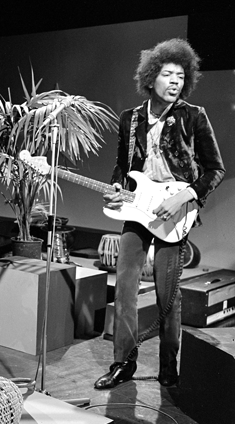
He also made technique visible. Playing left-handed on a right-handed Fender Stratocaster strung upside down became part of his look and his sound, changing the way the instrument sat in the hand and how the strings responded. Onstage, he often used physical gestures that framed the guitar as both tool and prop: playing behind his back, with his teeth, or while kneeling in front of the amp stack.
How did he shape the look of rock performance?
Hendrix helped establish the electric guitarist as a visual figure, not just a musician heard from the back of a room. His clothes, hair, and stance were part of the act: velvet jackets, military-inspired tailoring, bright prints, scarves, and decorative shirts placed him between psychedelic style and showmanship. The image matched the sound, which made his performances easy to remember and easy to copy.
That visual identity matters for design culture because Hendrix turned instruments, clothing, and stage equipment into one composed scene. The guitar became an object with symbolic weight, and the stage became a kind of live graphic composition of body, color, lighting, and motion. Later rock photography, poster design, and album art often borrowed that sense of heightened contrast.
Frequently Asked Questions
Was Hendrix only important as a guitarist?
No. He was also a songwriter, arranger, and studio thinker who paid close attention to how recordings were built. His work with studio layering, panning, and effects helped shape the sound of late-1960s rock records. The guitar made him famous, but the recording process was central to his legacy.
Why is Hendrix so often linked to feedback and distortion?
He made those sounds musical and intentional. Earlier players had used amplified noise, but Hendrix controlled it as part of phrasing and structure, treating feedback as a note source and distortion as a color rather than a flaw. That shift changed how later musicians understood the electric guitar.
Why does Hendrix still appear in visual culture?
His image is instantly recognisable and easy to adapt in posters, portraits, and graphic design. The silhouette of the Stratocaster, the hair, the clothing, and the intense stage pose all read clearly at a glance. For artists working with celebrity imagery, Hendrix offers a shorthand for performance, rebellion, and sonic excess.
Articles mentioning Jimi Hendrix