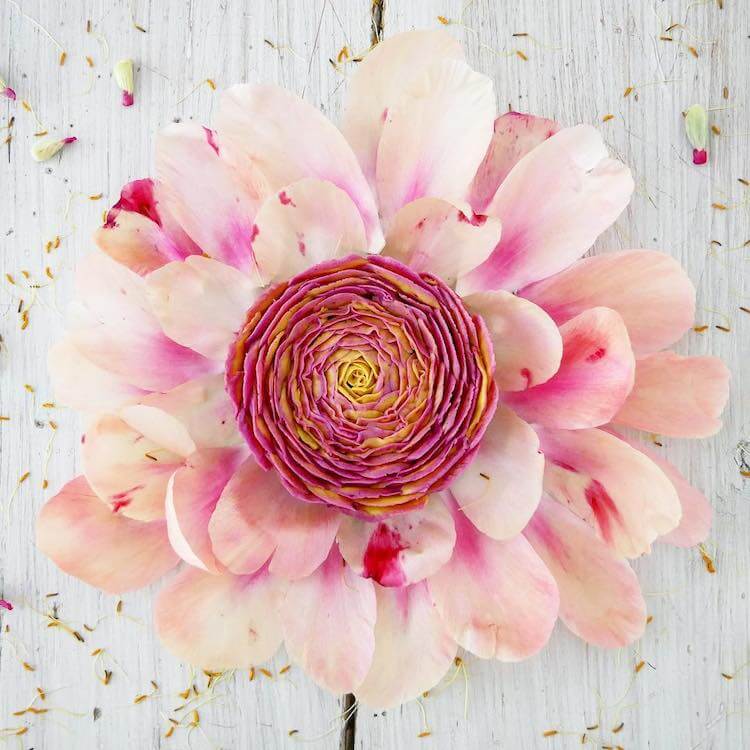
Juliana Tar is a cake artist and raw vegan pastry maker known for cakes and desserts that are shaped and finished to look like realistic flower bouquets. Her work sits at the intersection of food design, plant-based baking, and decorative craft, using edible ingredients to mimic the structure, color, and texture of florals.
| Field | Pastry, cake art, raw vegan desserts |
|---|---|
| Known for | Flower-like raw vegan cakes and bouquet-style dessert design |
| Materials | Nuts, fruit, plant-based sweeteners, natural colorings, decorative edible elements |
| Style | Hyper-realistic, ornamental, sculptural |
| Medium | Cold-set raw desserts assembled by hand rather than baked |
What makes her cakes distinctive?
Tar’s cakes are designed to be read first as bouquets and only second as dessert. Petals are built from piped or molded plant-based mixtures, with color gradients, layered edges, and carefully varied shapes that recall roses, peonies, and other florist staples. The effect depends on close control of texture: a smooth cream can become a flower center, while firmer mixtures hold the curled edges of petals and leaves.
That realism matters because it turns a cake into a visual object before it becomes a dish. The work belongs to a broader tradition of ornamental pastry, but it replaces fondant-heavy construction and baked sponge with raw vegan methods. The result is more sculptural than conventional celebration cake, and more dependent on hand modeling than on standard baking.
What is a raw vegan cake?
A raw vegan cake uses plant-based ingredients and avoids animal products, often skipping conventional baking altogether. Bases commonly rely on nuts, dates, coconut, cacao, fruit purées, and other ingredients that can be blended, pressed, chilled, and layered into a stable dessert. The texture is usually dense, creamy, or fudge-like rather than airy.
This approach changes both flavor and production. Without ovens or gelatin, the maker has to depend on refrigeration, natural fats, and structural ingredients to set the dessert. In Tar’s case, that method also serves the decoration: the same kind of mixture that can be spread into a cake layer can be tinted, piped, and shaped into petals.
Why does this kind of work matter?
Tar’s cakes show how contemporary food design borrows from sculpture, floristry, and surface patterning. They also reflect the growing visibility of vegan and raw dessert practices, where dietary choice and aesthetic ambition meet. A cake like this is not just a substitute for a traditional celebration dessert; it is a made object with its own visual logic.
The work is especially effective because it treats edible materials as if they were craft materials. Color has to come from ingredients that remain food-safe and attractive after chilling. Form has to survive handling, transport, and serving. That practical pressure shapes the finished look, giving the cakes a precision that feels handmade rather than industrial.
How is the bouquet effect built?
The bouquet effect comes from layering and repetition. A cake base is usually covered first, then the floral forms are added in clusters so that the whole surface reads like an arrangement rather than a flat decoration. Small changes in petal size, hue, and angle help keep the flowers from looking stamped out.
In practice, this kind of decoration demands patience and a steady visual reference. Makers often rely on botanical forms as guides, but the flowers are not copied literally. They are translated into edible construction, which means a rose may become thicker, cleaner-edged, or more symmetrical than the real plant while still carrying its recognizable shape.
Frequently Asked Questions
Is Juliana Tar a baker or a cake decorator?
She is both, but the decorating side is what distinguishes her work. The cakes are not finished with simple icing or garnish; the decoration is the main event and often determines the identity of the piece. Her practice sits close to edible sculpture as much as to pastry.
Are these cakes actually baked?
Not necessarily. Raw vegan cakes are commonly assembled from chilled, unbaked mixtures that set in the refrigerator or freezer. That process supports the dense texture and helps the floral decoration hold its shape.
Why do people compare them to real flowers?
Because the surface treatment aims at botanical realism. Petal shape, color variation, and clustered composition all echo florist arrangements, so the dessert reads like a bouquet at first glance. That visual resemblance is central to the appeal of the work.
Articles mentioning Juliana Tar