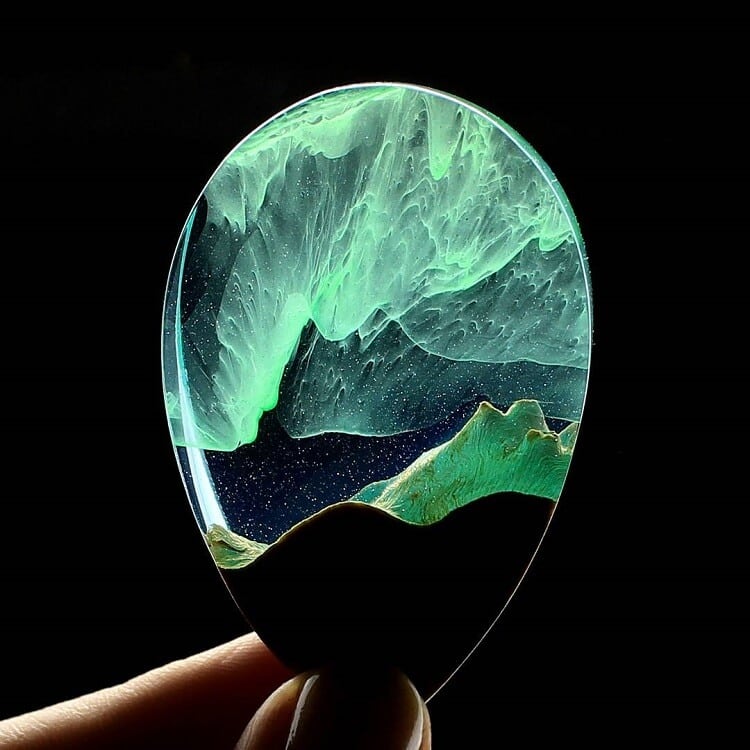
Miha Debeljak is a contemporary jewelry maker whose work appears in discussions of resin jewelry that preserves plants, objects, and other small finds inside cast synthetic forms. The name is associated with pieces that treat jewelry as a miniature display case: a way to hold a specimen, suspend it in clear material, and turn it into something worn.
| Field | Contemporary jewelry |
|---|---|
| Known for | Resin jewelry and encapsulated objects |
| Materials | Resin, embedded natural or found elements, metal findings |
| Context | Art jewelry and craft-driven accessory design |
| Notable for | Using transparency and preservation as part of the visual effect |
What kind of maker is Miha Debeljak?
Miha Debeljak belongs to a branch of contemporary jewelry that treats the object inside the piece as part of its meaning, not just its decoration. In resin jewelry, a flower, insect, mineral, fragment, or other small object is embedded in a clear or tinted polymer so that it remains visible, suspended, and protected. The result sits between adornment and specimen case.
That approach matters because it shifts jewelry away from purely ornamental surface treatment. The appeal comes from contrast: hard and soft, natural and synthetic, fragile and permanent, real and preserved. Debeljak’s name appears in that context, where making depends as much on selection and arrangement as on casting and finishing.
How is resin jewelry made?
Resin jewelry usually begins with a mold and a casting material, often epoxy or another clear synthetic resin. The maker places the chosen object into the mold, pours the resin carefully, and controls bubbles, alignment, and curing time so the item remains legible inside the finished piece. After hardening, the cast form is sanded, polished, and fitted with findings so it can be worn as a pendant, ring, brooch, or earring.
The process is technical, but the visual effect depends on restraint. Too much resin can flatten the object; poor placement can make the piece look cloudy or crowded. Good examples use transparency to create depth, making the embedded material seem to hover rather than sink into the plastic. That tension between precision and chance is part of the medium’s appeal.
Why do makers use natural specimens in jewelry?
Embedding botanical or found material gives resin jewelry its strongest visual identity. Leaves, petals, seeds, shells, stones, and insect forms are already rich in detail, so clear resin can amplify their structure and color. The piece becomes a small archive of the natural world, with the resin acting as both frame and preservative.
This is also where the work raises questions about value and authenticity. A real object inside a manufactured shell can feel precious because it is unique, but it can also feel uncanny because the material has been frozen and removed from its original life. That tension gives the work meaning beyond decoration and explains why it appears in craft, design, and art-jewelry contexts.
Where does this kind of work sit in jewelry history?
Contemporary resin jewelry draws from several older traditions at once. It echoes Victorian sentimental jewelry, natural history display, and the modern fascination with plastics and industrial materials. It also sits near studio jewelry, where makers often privilege concept, material experiment, and hand finish over mass-market repeatability.
Debeljak’s work belongs to that broader field of makers who use contemporary materials to describe the world rather than imitate fine jewelry conventions. In practice, that means clear casts, carefully selected inclusions, and forms that often feel closer to small objects or amulets than to luxury adornments. The style can be playful, but it usually depends on exact handling of materials.
Frequently Asked Questions
Is resin jewelry considered fine jewelry?
Not usually in the strict sense. Fine jewelry generally refers to precious metals, gemstones, and traditional bench techniques, while resin jewelry sits closer to contemporary craft or art jewelry. That said, some resin pieces are highly finished, conceptually serious, and collected for their design rather than their raw material value.
What makes embedded objects visible instead of cloudy?
Clarity depends on the resin quality, careful mixing, and clean placement of the object before curing. Bubbles, moisture, dust, and incompatible materials can all create clouding or distortion. Makers who work well with this medium manage those variables so the object remains crisp and readable inside the cast.
Can any natural object be cast in resin?
No. Many organic materials contain moisture or gases that cause defects, discoloration, or incomplete curing. Makers often dry, seal, or test specimens before using them, and some materials are simply better suited to the process than others. The best pieces respect those limits rather than forcing the material to behave like plastic from the start.
Articles mentioning Miha Debeljak