
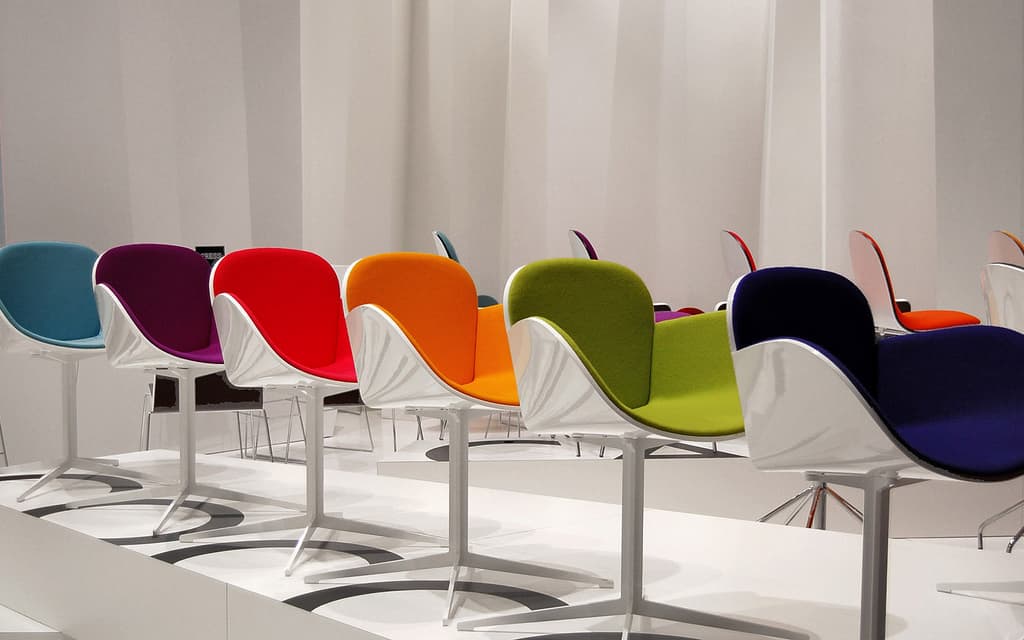
The Milan Furniture Fair is an annual trade fair in Milan for furniture, lighting, surfaces, fittings, and home accessories. Best known by its Italian name, Salone del Mobile, it has grown into the central event of Milan Design Week and one of the most important marketplaces for contemporary design. Manufacturers use it to launch new products, while designers, studios, and brands use the city-wide programme around it to show experiments, installations, and collaborations.
- What it is: A large international furniture and design trade fair.
- Where it happens: Milan, Italy, mainly at the Fiera Milano exhibition grounds, with off-site events across the city.
- What it shows: Furniture, seating, storage, lighting, kitchen systems, textiles, materials, and interior components.
- Why it matters: It sets the tone for product launches and design trends in the home and contract interiors sectors.
- Common alias: Milan Design Week, which refers to the fair plus the wider network of exhibitions, showrooms, and events.
What Milan Design Week actually is
The Milan Furniture Fair began in 1961 as a dedicated commercial fair for Italian furniture makers, then expanded into a global reference point for industrial and interior design. Its core remains a trade event: companies reserve stands, present new collections, and meet buyers, retailers, architects, and press. The fair now sits inside a larger ecosystem of launches and installations that turn Milan into a temporary design capital each spring.
That wider programme is why the event is so often called Milan Design Week. The fair itself is the anchor, but many of the most talked-about projects appear elsewhere: in courtyards, showrooms, warehouses, galleries, and temporary pavilions. These off-site presentations often matter as much as the fair stands, especially for experimental work that mixes product design with scenography, materials research, and brand storytelling.
How does the fair work?
The main fair takes place at a large exhibition complex on the outskirts of Milan, where exhibitors build stands to present collections in a controlled commercial setting. These stands are often treated as miniature interiors: a sofa line may sit in a room-like installation, while lighting, textiles, and kitchen systems are arranged to suggest how products will look in use. The physical setup matters because furniture design is judged not only by form, but by upholstery, joinery, finishes, hardware, and scale.
Across the same week, brands and designers use the city to stage a different kind of presentation. Some show a single object or prototype; others build immersive environments that emphasize mood, material texture, or an idea about domestic life. Recent editions have included modular seating systems, recycled materials, 3D-printed components, glass-front kitchen units, and sculptural objects that blur the line between furniture and installation.
Why does it matter to design culture?
The Milan Furniture Fair matters because it is where product design becomes visible at scale. For the home furnishings industry, it functions as a launch platform, a networking site, and a trend barometer. Retailers and contract clients come to see what will enter the market over the next season, while designers and journalists look for shifts in colour, form, function, and material use.
It also matters because it shapes how design is discussed. A new chair or kitchen system can be judged as a single object, but at Milan it is placed among a larger set of references: domestic rituals, sustainability claims, technical innovation, and the look of contemporary interiors. That mix makes the fair especially influential for furniture, lighting, and kitchen design, where industrial production and visual culture meet.
What does it look like in practice?
In practice, the fair produces two distinct but related kinds of work. The first is commercial: sofas, tables, shelving, lamps, cabinetry, and surface systems shown with technical clarity so buyers can assess dimensions, materials, and manufacture. The second is editorial and atmospheric: installation-heavy presentations that use foam, metal, wood, glass, recycled waste, or fabricated surfaces to create a memorable setting around a product or idea.
That is why Milan Design Week can host both highly engineered domestic goods and speculative objects. A kitchen brand may present seamless glass finishes and precision joinery; a studio may present a conversation pit or a modular foam sofa as a comment on social space. Both belong to the same ecosystem because the fair rewards objects that are useful, saleable, and visually legible in a crowded field.
Frequently Asked Questions
Is Milan Design Week the same as the Milan Furniture Fair?
Not exactly. The Milan Furniture Fair, or Salone del Mobile, is the main trade fair. Milan Design Week is the broader label for the fair plus the city-wide programme of exhibitions, installations, and showroom events that happen at the same time.
Who goes to the Milan Furniture Fair?
Designers, manufacturers, buyers, retailers, architects, editors, and style-conscious visitors all attend. The fair is primarily a business event, so exhibitors focus on industry contacts and press coverage. The off-site events attract a wider public because they are easier to enter and often more experimental.
What kinds of objects are launched there?
Furnishings dominate: chairs, sofas, tables, storage, beds, lighting, kitchens, and bathroom fittings. Materials and components matter too, including textiles, foam, glass, metals, wood veneers, and surface finishes. Many launches are less about one object than about a system or collection that shows how a brand wants interiors to look and function.
Articles mentioning Milan Furniture Fair


