
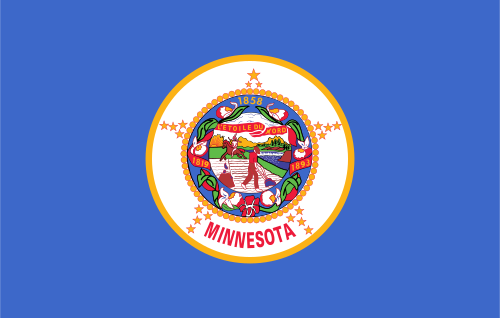
Minnesota is a U.S. state in the Upper Midwest, admitted to the Union in 1858, and known for its lakes, long winters, forests, prairie, and a strong culture of civic life and outdoor making. Its name comes from the Dakota phrase often translated as “sky-tinted water,” a reminder that the state’s landscape has shaped its identity as much as its cities have. In art and design writing, Minnesota often appears as a place where public murals, craft traditions, publishing, and environmental imagery meet everyday life.
- Statehood: 1858, as the 32nd state.
- Geography: lakes, river systems, prairie, forests, and a cold continental climate.
- Name origin: derived from a Dakota term for water colored by the sky.
- Cultural role: a major center for public art, craft, design education, and independent publishing in the Upper Midwest.
- Visual character: winter light, water, vernacular architecture, and large-scale outdoor spaces.
Where Minnesota comes from
Before statehood, the region was home to Dakota and Ojibwe peoples, whose languages, trade routes, and relationships to land and water shaped the area long before U.S. settlement. The Minnesota Territory was organized in 1849, and the eastern portion became the state of Minnesota in 1858. That history matters because the state’s cultural life sits on top of a deeper Indigenous geography that still influences place names, land use, and artistic practice.
The state’s modern identity grew through railroads, logging, milling, farming, and immigration from northern and eastern Europe. Minneapolis and St. Paul developed as paired industrial and civic centers, while smaller towns and rural counties maintained strong fair, festival, and handcraft traditions. Those threads still appear in everything from county fair sculpture and floral display to contemporary image-making and community murals.
Why Minnesota matters in visual culture
Minnesota has outsized importance in American visual culture because it combines institutional support with a strong vernacular base. Minneapolis and St. Paul support museums, art schools, studios, publishers, and public art programs, while state fairs, churches, lakeside cabins, and small-town main streets provide a very different visual vocabulary. The result is a place where polished contemporary work and handmade, practical forms often exist side by side.
That mix shows up in the articles that mention Minnesota. A photographer may draw on cabin summers, winter weather, or hospitality interiors; a muralist may use Minneapolis as a site for large civic image-making; a fiber artist may translate woods and trails into crocheted fungi; and a bookmaker or fair exhibitor may rely on the state’s long craft traditions. Minnesota is not just a backdrop. It is a source of motifs, materials, and modes of display.
What does Minnesota look like in practice?
In visual terms, Minnesota often reads as expansive and textured. There are broad horizons, reflective water, dense tree cover, pale winter skies, and the built forms of grain elevators, clapboard houses, lakeside cabins, and downtown towers. The climate also shapes what is made: heavy coats, functional interiors, durable public materials, and artworks that can survive snow, rain, and freeze-thaw cycles.
In practice, that means Minnesota’s culture is often physical and seasonal. County fairs foreground baked goods, quilting, canning, woodwork, and machinery; public art commissions favor scale and visibility; and local artists frequently use materials that connect to land and weather, such as fiber, pigment, graphite, paint, and found natural forms. Even when the work is contemporary or conceptual, it often retains a practical, place-based sensibility.
How the state shapes artists and makers
Minnesota’s institutions help explain why so much making happens there. Schools, residencies, galleries, and civic art programs in the Twin Cities give artists opportunities to produce ambitious work, while the broader state offers an audience familiar with handmade objects and public display. That environment can support both rigorous studio practice and art that is built for parks, roadsides, festivals, and shared civic space.
It also encourages a particular balance of seriousness and accessibility. A monumental mural in Minneapolis can carry a political or communal message without losing its role as street-level image. A floral composition, an art-book fair, or a hyperreal painting can feel rooted in local life without becoming purely regional. Minnesota’s strength is that it makes room for both refined production and durable everyday craft.
Frequently Asked Questions
Is Minnesota part of the Midwest or the Upper Midwest?
Minnesota is commonly described as part of the Midwest, and more specifically the Upper Midwest. That second term points to its northern latitude, colder climate, and close cultural ties to the Great Lakes and prairie states. In visual and material terms, the distinction often matters because weather, light, and landscape differ from the rest of the region.
Why is Minnesota called the Land of 10,000 Lakes?
The phrase refers to the state’s many lakes, which are a defining part of its geography and public identity. The number is not exact, but it captures the prominence of water in the landscape and in everyday recreation. Lakes are central to Minnesota’s visual character, from cabin culture and boating to reflections, ice, and shoreline forms used in art.
What makes Minnesota important to artists and designers?
Minnesota combines strong public institutions with a deep culture of making. Artists there work within a setting shaped by winter, water, fairs, civic mural programs, and a long history of craft and publishing. That combination supports work that is both conceptually ambitious and grounded in material practice.