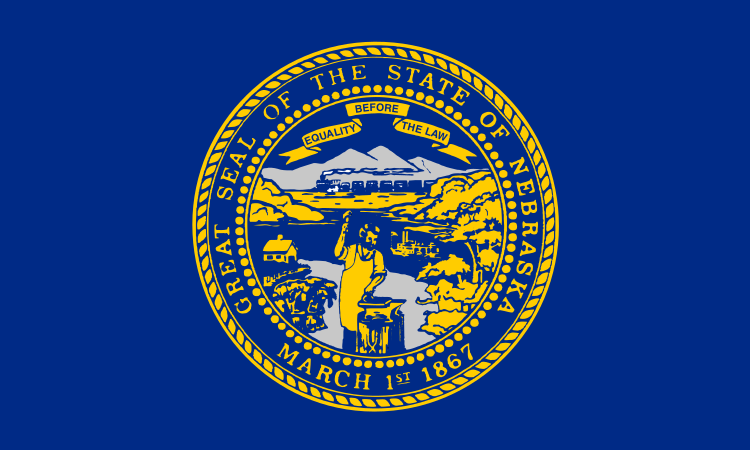
Nebraska

Nebraska is a state in the Great Plains of the Midwestern United States, known for wide prairies, river valleys, extreme weather, and a history shaped by migration routes, agriculture, and railroad expansion. Its capital is Lincoln, and its largest city is Omaha, on the Missouri River.

  • Type: U.S. state
  • Region: Great Plains, Midwest
  • Capital: Lincoln
  • Largest city: Omaha
  • Statehood: 1867

What Nebraska is like

Nebraska occupies a broad stretch of central North America where the land opens out into grassland, cropland, and long horizons. Much of the state sits on the Great Plains, though the terrain shifts from flat eastern fields to sandhills, river bluffs, and more rugged western country. The Missouri River forms an important eastern edge, while the Platte River cuts across the center and helped make the region a natural corridor for travel.

The state’s climate is sharply seasonal. Winters can be cold and dry, summers hot and humid, and weather can change quickly. Thunderstorms, hail, and tornadoes are part of the annual pattern, which has shaped building practices, farming decisions, and daily life for generations.

How did Nebraska develop?

Long before statehood, Nebraska was crossed by Indigenous trade and travel routes. In the nineteenth century it became a key passage for people moving west, especially during the California Gold Rush and the later era of overland migration. The Oregon Trail, the Mormon Trail, and other routes left a deep mark on the landscape and on the settlement pattern that followed.

Railroads, homesteading, and agriculture transformed the territory into a state economy built around land, grain, livestock, and transport. Nebraska joined the Union in 1867, after the Civil War, and Lincoln was chosen as the capital. Omaha grew into a major city because of its river position and railroad connections, while smaller towns spread along lines of farming and trade.

Why does Nebraska matter?

Nebraska matters because it sits at the intersection of movement and production. Trails, railroads, highways, and rivers all pass through it, making the state a practical route as well as a place of residence. That geography helped shape the national story of western expansion and still influences commerce and logistics today.

It also matters as an agricultural state with a strong material identity. Corn, soybeans, cattle, grain storage, packing, and transport all define the built and visual character of many Nebraska communities. Grain elevators, stockyards, bridges, depots, and irrigation systems are part of the everyday landscape, and they make the state legible as a place where land use and industry are closely tied.

What does Nebraska look like in practice?

In practice, Nebraska often appears as a sequence of working landscapes rather than a single image. Eastern Nebraska around Omaha and Lincoln has more urban density, universities, civic buildings, and industrial infrastructure. Central and western Nebraska show more open land, farmsteads, river towns, and the large-scale structures that support storage and shipping.

Design and making in the state often respond to climate and distance. Buildings need to withstand wind and storm, roads and bridges need to carry long freight routes, and farms depend on mechanical systems that manage water, grain, and livestock. The result is a visual culture shaped less by ornament than by utility, durability, and the plain logic of moving goods across a large region.

Frequently Asked Questions

Is Nebraska part of the Midwest or the Great Plains?

It is usually described as both. Geographically, much of the state belongs to the Great Plains, while culturally and economically it is often grouped with the Midwest. Those labels reflect different ways of reading the same place: one by landform, the other by regional history and settlement patterns.

Why is Omaha important?

Omaha matters because of its location on the Missouri River and its role as a transportation and business center. Railroads, river trade, finance, and later airline and corporate activity helped make it the state’s largest city. It also serves as a major urban anchor for eastern Nebraska.

What kind of weather should Nebraska be known for?

Nebraska is known for strong seasonal swings and severe storms. Cold winters, hot summers, thunderstorms, hail, and tornadoes are all part of the state’s climate profile. That weather has practical consequences for farming, construction, and infrastructure across the state.