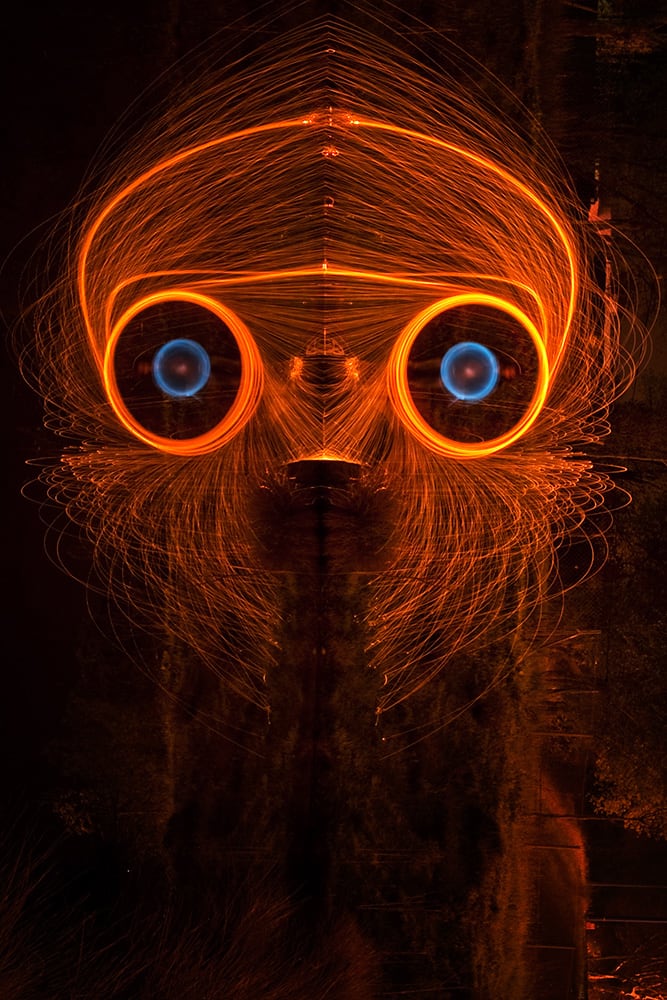
Nicolas Rivals is a Paris-based photographer whose staged images, portraits, and architectural studies use light, geometry, and precise composition to turn photography into a controlled visual construction. He is known for work that sits between documentary and plastic arts, with an emphasis on form, atmosphere, and the psychological presence of his subjects.
- Photographer based in Paris and a member of the collective Prisme Noir.
- Trained at ETPA, where he won the school’s Grand Prix in 2013.
- Works across portraiture, architecture, staged photography, and reportage.
- Uses careful lighting and framing to test the expressive limits of the photograph as an object and image.
What kind of photographer is Nicolas Rivals?
Rivals works in a mode that is often described as plastic, meaning he treats the photograph as a constructed visual object rather than a neutral record. His images are planned with a high degree of control: lighting is arranged, spaces are chosen for their graphic structure, and subjects are positioned to support a broader formal idea. The result is photography that feels deliberate and restrained, but not cold.
He moves between portraiture, architecture, and reportage, which gives his practice a wider range than a single genre label suggests. In each case, the same concerns recur: how a body sits inside a frame, how lines and surfaces create rhythm, and how light can change the meaning of a space or face.
What defines his visual style?
Rivals’ work is marked by precision and a visible interest in structure. Shapes often appear cleanly separated, with strong contrasts, clear edges, and carefully balanced compositions. This gives his images a sense of stillness that can verge on the sculptural, especially in his architectural photographs and his more abstract light-based pieces.
The emotional tone comes from restraint rather than spectacle. Instead of chasing dramatic action, he uses staging, repetition, and simplified forms to ask how a photograph can carry thought and mood at the same time. That combination of discipline and atmosphere is central to his identity as a photographer.
How do light drawings and geometric installations work in his practice?
The projects associated with Rivals’ name often rely on light as both subject and tool. In his light drawings, illumination becomes an active line or shape within the frame, producing images that feel closer to constructed graphics than spontaneous snapshots. In geometric light installations, the room itself becomes part of the composition, with light used to define planes, angles, and spatial tension.
These works matter because they show photography operating at the boundary of documentation and design. Rather than merely recording an installation, Rivals uses the camera to refine and extend it, making the final photograph part of the artwork’s meaning. The image is not an afterthought; it is the finished form.
Why does Nicolas Rivals matter?
Rivals belongs to a contemporary strain of photography that treats the medium as a place for formal research. His work is useful for understanding how photographers can borrow from sculpture, set design, and graphic composition without leaving photography behind. That approach has made him relevant to exhibitions and festivals that value image-making as an artistic process, not just a means of capture.
His membership in Prisme Noir also places him within a collective context, where shared attention to mood, construction, and visual language strengthens the work’s impact. For readers encountering his name in connection with light drawings or geometric installations, the important point is that his photographs are built, not simply taken.
Frequently Asked Questions
Is Nicolas Rivals mainly a documentary photographer?
No. Although he has worked in reportage, his practice is better understood as staged and composed photography. He uses documentary methods selectively, but his main interest lies in formal control, lighting, and the visual construction of an image.
What is meant by a “plastic approach” in his work?
Here, “plastic” refers to the visual and material qualities of the image: shape, surface, structure, and composition. Rivals uses photography as if he were arranging forms in space, which brings his work close to sculpture or installation in its concern for design.
Where did Nicolas Rivals study?
He graduated from ETPA in 2013 and won the school’s Grand Prix that same year. That training forms part of his professional background, but his reputation rests on the images themselves and the controlled visual language he developed after graduation.
Articles mentioning Nicolas Rivals