
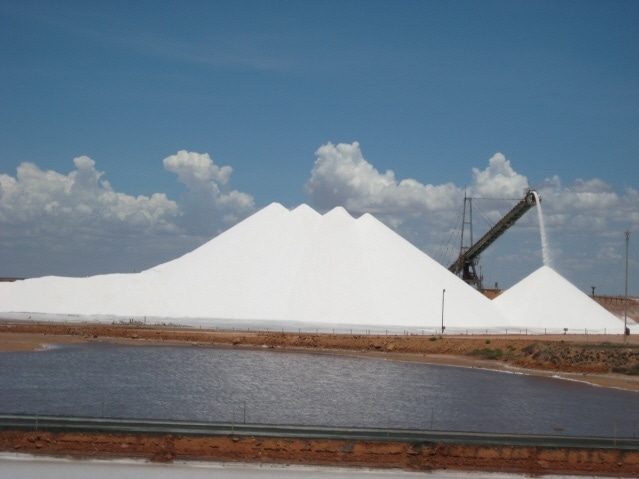
Onslow is a coastal town in the Pilbara region of Western Australia, set on the Indian Ocean and known for its hot, arid climate, cyclone risk, saltworks, and fishing history. It began as a port town in the late nineteenth century and was later rebuilt inland after repeated storm damage threatened the original settlement.
- Onslow sits on the northwest coast of Western Australia, well north of Perth and south of the Burrup Peninsula.
- The town has existed in two main forms: the original coastal settlement and the later relocated townsite.
- Its economy has long depended on shipping, pastoral trade, fishing, and more recently resource industry support.
- Salt production at nearby salt ponds is one of the most visible industrial landscapes associated with the area.
- Severe weather, especially cyclones and storm surges, has shaped both the town’s layout and its public memory.
Why was Onslow moved?
Onslow was founded in 1883 as a port town serving the Ashburton River district and nearby pastoral stations. The original settlement sat close to the coast, which made it convenient for shipping wool and supplies but exposed it to flooding, storm surge, and erosion. Over time, the site proved difficult to defend against the weather that regularly lashes the Pilbara coast.
In 1925, after repeated damage and an increasingly untenable coastal position, the town was relocated to a higher site inland. The old townsite did not disappear entirely, but the move changed the geography of everyday life. The relocated town is the Onslow that exists today, and the original settlement survives as a historical reference point.
What does Onslow look like on the ground?
Onslow has the scale and feel of a small outback coastal town: low buildings, wide roads, open ground, and a landscape dominated by light, salt, heat, and wind. The built form is modest rather than monumental. Infrastructure matters more than skyline, because the town functions as a service centre for a remote region rather than as a dense urban place.
Nearby saltworks create a striking visual field of white evaporation ponds against red-brown earth and blue sea. The surrounding country is flat and exposed, with mangroves, tidal flats, and long distances between settlements. That physical setting explains much of the town’s character: practical, sparse, and shaped by logistics and weather.
How is Onslow connected to the west coast dust storm?
Onslow entered wider public attention through dramatic weather imagery, including severe dust storms that sweep across the north-west coast when dry winds, bare ground, and changing pressure systems combine. In such events, dust can roll over the town as a dense, ochre-coloured front, reducing visibility and turning the sky into a moving wall of sediment. These storms are not just visual spectacles; they are local expressions of a harsh climate that constantly remakes the landscape.
For photographers and journalists, Onslow offers a compact stage where the interaction of wind, sand, salt, and infrastructure becomes visible at once. The town’s open surroundings and remote location make weather feel immediate. That is why Onslow often appears in reports about extreme conditions on the West Australian coast.
Why does Onslow matter?
Onslow matters because it shows how settlement in northern Australia has had to adapt to climate rather than dominate it. Town planning, transport, and building decisions there respond directly to cyclones, tides, heat, remoteness, and the demands of export industries. Its relocation is a clear example of a town being physically redrawn by environmental pressure.
It also matters as part of the visual language of the Pilbara: salt pans, low buildings, long horizons, and weather fronts that can turn the air opaque. For articles about dust storms, coastal industry, or remote Australian settlements, Onslow is not a backdrop only. It is a place where weather and built form meet in plain view.
Frequently Asked Questions
Is Onslow the same as the original townsite?
No. The present town of Onslow occupies a relocated inland site, while the original coastal settlement was established earlier and later abandoned as the main town centre. Both locations are part of Onslow’s history, but most everyday activity now happens in the newer townsite.
What industries shape Onslow today?
The area has long been tied to maritime trade and pastoral supply, but modern Onslow also supports salt production and resource-sector activity in the broader Pilbara. Fishing and tourism add to the local economy, although the town remains small and remote. Its industries are closely tied to the coast and to the logistics of operating in a harsh environment.
Why do weather events in Onslow attract attention?
Onslow sits in a region where extreme heat, dust, and cyclones are ordinary possibilities rather than rare surprises. When a dust storm or cyclone moves through, the conditions are often visually dramatic and easy to photograph. Those events draw attention because they show environmental forces acting directly on a town built to survive them.
At a glance
- Address
- Western Australia, Australia
- Coordinates
- 21.633333, 115.11667
Articles mentioning Onslow, Western Australia
