
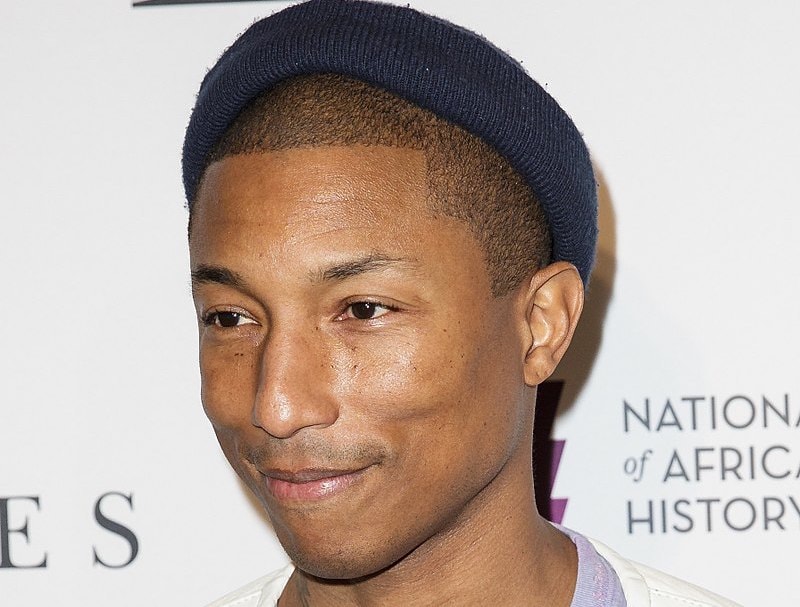
Pharrell Williams is an American musician, producer, fashion designer, and cultural figure whose work moves between pop music, luxury fashion, and visual branding. He became known first as one half of The Neptunes, the production duo with Chad Hugo that shaped hit records in hip-hop and R&B, then as the frontman of N.E.R.D. and a solo artist. In fashion, he has worked as a designer and creative director, making him one of the best-known examples of a musician whose image and authorship extend into product, runway, and retail design.
- Best known as a producer, performer, and fashion collaborator rather than a single-discipline artist
- Co-founded The Neptunes, a production team influential in 2000s pop, hip-hop, and R&B
- Formed N.E.R.D. with Chad Hugo and Shay Haley, combining live band performance with rap and rock
- Has used fashion as a second platform for authorship, especially in luxury and streetwear contexts
- His public image often connects music, design, celebrity branding, and product culture
How did Pharrell Williams become so influential?
Williams emerged in the late 1990s and early 2000s as a behind-the-scenes producer with a distinct sound: spare, rhythmic, and polished, but still playful. The Neptunes produced for major hip-hop, R&B, and pop artists, and their records helped define the sound of radio at the time. That production success made Williams visible beyond the usual boundaries of a producer, because his name carried weight as a maker rather than only as a performer.
His influence grew because he did not stay in one role. He moved between studio production, performance, fashion campaigns, and design partnerships, and each amplified the others. That cross-disciplinary career made him useful to brands and publications that wanted a recognisable creative name attached to clothing, objects, interiors, and visual identity.
What does his work look like in practice?
Williams’s output tends to be highly image-conscious and collaborative. In music, that means tightly built tracks with crisp beats, melodic hooks, and a strong sense of arrangement. In fashion, it means garments, accessories, and campaigns that borrow from both luxury codes and streetwear references. His projects often depend on a clear visual persona: sunglasses, jewellery, bold tailoring, bright colour, and a polished but informal stance.
That same approach appears in the way he is used in editorial and brand contexts. Photographs of Williams often present him as a designerly subject as much as a celebrity, with attention to silhouette, material, and styling. He functions as a bridge figure: someone whose fame comes from sound, but whose public value also lies in how he helps shape the look of contemporary luxury culture.
Why does Pharrell Williams matter to design culture?
Williams matters because he represents a shift in how creative authority works. A musician used to be seen mainly as a performer or recording artist; Williams helped make it normal for a music figure to also act as a fashion collaborator, brand face, and aesthetic director. That shift matters in visual culture because it changes where design influence comes from.
His work also reflects how luxury and street culture have merged in the 21st century. The same figure can move from a record studio to a runway, from sneakers to tailoring, without that seeming unusual. For editors, brands, and designers, Williams is part of the language of contemporary taste: someone whose name signals credibility across music, image-making, and commercial design.
How is he usually presented in visual media?
In photography and editorial layouts, Williams is often framed as composed, stylish, and slightly futuristic. The styling tends to emphasise texture and contrast: matte and gloss, structured tailoring and relaxed sportswear, minimal palettes and bright accents. That visual flexibility makes him useful in magazine and campaign imagery, where he can stand in for either avant-garde refinement or mass-market cool.
He is also frequently photographed in contexts that stress authorship and status. Whether the setting is a studio, a runway, a luxury store, or a domestic interior, the image usually implies control over taste. That matters because his public role is not just to wear clothes or make music, but to help define what contemporary creative authority looks like.
Frequently Asked Questions
Is Pharrell Williams mainly a musician or a fashion designer?
He began as a musician and producer, and that remains the core of his career. But fashion has become central to his public identity because it gives him another platform for creative direction. In practice, he is best understood as a cross-disciplinary cultural maker rather than as one thing only.
What is The Neptunes?
The Neptunes are the production duo formed by Pharrell Williams and Chad Hugo. They became known for producing hit records for a wide range of artists, especially in hip-hop, R&B, and pop. Their sound helped define mainstream music in the early 2000s.
Why does he appear in design and architecture articles?
Williams appears in design coverage because his career extends into fashion, interiors, branding, and luxury culture. Publications often use him as a reference point for contemporary taste and celebrity-led design language. His presence in those stories usually signals a project shaped by image, collaboration, and high-profile authorship.